 118 citations
,
January 2016 in “Current Topics in Developmental Biology”
118 citations
,
January 2016 in “Current Topics in Developmental Biology” The document concludes that while significant progress has been made in understanding skin biology and stem cells, more research is needed to fully understand their interactions with their environment.
 3 citations
,
October 1979 in “Laboratory animals”
3 citations
,
October 1979 in “Laboratory animals” Hairless rats are good for testing anti-inflammatory drugs, similar to haired rats, without needing to remove fur.
 March 2015 in “Plastic and reconstructive surgery”
 Human skin has multiple layers and functions, with key roles in protection, temperature control, and appearance.
 418 citations
,
September 2012 in “Nature”
418 citations
,
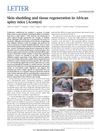
September 2012 in “Nature” African spiny mice can regenerate skin, hair, and cartilage, but not muscle, and their unique abilities could be useful for regenerative medicine.
 23 citations
,
January 2015 in “Journal of The American Academy of Dermatology”
23 citations
,
January 2015 in “Journal of The American Academy of Dermatology” People with myotonic dystrophy type 1 have a higher chance of getting skin tumors, including melanoma.
 21 citations
,
June 2004 in “International Journal of Dermatology”
21 citations
,
June 2004 in “International Journal of Dermatology” Most skin diseases in Hajjah, Yemen, were dermatitis, infections, and acne, influenced by local socioeconomic and environmental factors.
 7 citations
,
January 2012 in “Dermatology”
7 citations
,
January 2012 in “Dermatology” Most hospitalized internal medicine patients have undiagnosed skin problems and want them treated.
 6 citations
,
November 2018 in “Histochemistry and Cell Biology”
6 citations
,
November 2018 in “Histochemistry and Cell Biology” Mongolian gerbils heal wounds differently than mice, with unique protein levels and gene expression that affect skin repair.
 5 citations
,
September 2015 in “Journal of The American Academy of Dermatology”
5 citations
,
September 2015 in “Journal of The American Academy of Dermatology” Taking photos of your own skin can lead to fewer skin biopsies for mole monitoring.
 1 citations
,
April 2023 in “African Scientific Reports”
1 citations
,
April 2023 in “African Scientific Reports” Natural compounds can lighten skin by reducing melanin.
The document concludes that dermatology training and grading scales need to better represent dark-skinned individuals to improve diagnosis and assessment of skin conditions.
 August 2015 in “Free Radical Biology and Medicine”
 Some treatments can improve skin's defense against damage, but overuse may cause other skin problems.
 August 2015 in “Free Radical Biology and Medicine”
 Nrf2 helps protect skin from damage but too much can cause skin problems.
 6 citations
,
March 1999 in “Journal of pediatric health care”
6 citations
,
March 1999 in “Journal of pediatric health care” The document emphasizes the need for primary care providers to understand and care for African American children's hair and skin to boost their self-esteem.
 1 citations
,
January 2013 in “Springer eBooks”
1 citations
,
January 2013 in “Springer eBooks” The document concludes that skin and nail changes can indicate various underlying health conditions.
 106 citations
,
December 2015 in “Journal of The American Academy of Dermatology”
106 citations
,
December 2015 in “Journal of The American Academy of Dermatology” Correct skin biopsy techniques are crucial to avoid misdiagnosis of skin diseases.
 788 citations
,
February 2007 in “Nature”
788 citations
,
February 2007 in “Nature” The document concludes that skin stem cells are important for hair growth and wound healing, and could be used in regenerative medicine.
 253 citations
,
March 1994 in “Developmental dynamics”
253 citations
,
March 1994 in “Developmental dynamics” Apoptosis is essential for human skin development and forming a functional epidermis.
 185 citations
,
June 2011 in “Molecular and cellular endocrinology”
185 citations
,
June 2011 in “Molecular and cellular endocrinology” Skin cells produce and activate vitamin D, which regulates skin functions and supports hair growth.
 84 citations
,
January 2008 in “Cold Spring Harbor Symposia on Quantitative Biology”
84 citations
,
January 2008 in “Cold Spring Harbor Symposia on Quantitative Biology” Skin stem cells help maintain skin health, grow hair, and heal wounds.
 38 citations
,
September 2014 in “Cell and Tissue Research”
38 citations
,
September 2014 in “Cell and Tissue Research” The hair follicle infundibulum plays a key role in skin health and disease, and understanding it better could lead to new skin disease treatments.
 33 citations
,
December 2004 in “Differentiation”
33 citations
,
December 2004 in “Differentiation” Mouse amnion can turn into skin and hair follicles with help from certain cells and factors.
 19 citations
,
February 2017 in “Journal of radiation research”
19 citations
,
February 2017 in “Journal of radiation research” High-dose radiation speeds up aging in skin stem cells.
 7 citations
,
April 2011 in “Expert review of dermatology”
7 citations
,
April 2011 in “Expert review of dermatology” The document concludes that patients with skin of color need specialized dermatological care and education to manage unique skin conditions effectively.
 1 citations
,
October 2012 in “Elsevier eBooks”
1 citations
,
October 2012 in “Elsevier eBooks” Skin stem cells can help improve skin repair and regeneration.
 1 citations
,
July 2016 in “Elsevier eBooks”
1 citations
,
July 2016 in “Elsevier eBooks” Understanding skin structure and development helps diagnose and treat skin disorders.
 1 citations
,
January 2009 in “Elsevier eBooks”
1 citations
,
January 2009 in “Elsevier eBooks” The document concludes that a deeper understanding of skin aging and photodamage is needed to create better skin treatments.
 January 2026 in “Biomaterials Science”
 The formulation helps improve wound healing and skin repair.
 October 2023 in “bioRxiv (Cold Spring Harbor Laboratory)”
 Immune cells are essential for early hair and skin development and healing.
Bovines can have rare inherited skin diseases with specific symptoms like hair loss, fragile skin, and abnormal porphyrin buildup.