 November 2018 in “Skin appendage disorders”
 The document concludes that a woman has both Frontal Fibrosing Alopecia and Lichen Simplex Chronicus, a previously unreported combination of conditions.
 August 2023 in “Authorea (Authorea)”
 Tinea capitis should be considered in adults with scalp issues for proper treatment.
July 2018 in “Elsevier eBooks” Early treatment is key to prevent permanent hair loss from scalp conditions that cause scarring.
 1 citations
,
April 2022 in “The Journal of Family Practice”
1 citations
,
April 2022 in “The Journal of Family Practice” CCCA causes progressive hair loss in Black women, starting from a central scalp patch.
 11 citations
,
January 2013 in “Indian Dermatology Online Journal”
11 citations
,
January 2013 in “Indian Dermatology Online Journal” CCCA is a common, progressive hair loss condition that may not always be linked to hair care practices and requires a biopsy for diagnosis.
 May 2010 in “Journal of the Dermatology Nurses' Association”
 Cicatricial alopecia causes permanent hair loss and is treated to relieve symptoms and stop progression.
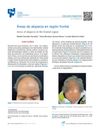 January 2025 in “Revista del Centro Dermatológico Pascua”
 Early diagnosis and treatment can help manage fibrosing alopecia in older women.
40 citations
,
May 1999 in “International Journal of Dermatology” Early diagnosis and treatment are crucial to prevent permanent hair loss from scalp trauma.
May 2025 in “Skin Appendage Disorders” Frontal fibrosing alopecia can be diagnosed by examining facial areas and treated with specific medications to stop its progression.
 7 citations
,
December 2016 in “British Journal of Dermatology”
7 citations
,
December 2016 in “British Journal of Dermatology” The report suggests that hair loss in Cronkhite-Canada syndrome may be caused by alopecia areata incognita, as shown by a patient's improvement with treatment.

The document concludes that diagnosing female hair loss requires careful examination, with treatments varying by condition and psychological support often necessary.
 August 1993 in “Journal of Dermatological Science”
 Testosterone metabolism in balding scalp cells may not be the main cause of hair loss.
 29 citations
,
January 2003 in “Dermatology”
29 citations
,
January 2003 in “Dermatology” The condition called 'acute diffuse and total alopecia of the female scalp' is actually a known condition named alopecia areata incognita.
 1 citations
,
May 2022 in “Dermatologic Therapy”
1 citations
,
May 2022 in “Dermatologic Therapy” Hair transplants can be used for rare types of scarring hair loss.
14 citations
,
September 1968 in “Archives of Dermatology” Using hot combs can cause permanent hair loss on the scalp's crown.
 June 2025 in “Italian Journal of Dermatology and Venereology”
 Thorough scalp examination is crucial for diagnosing alopecia areata incognita in men with diffuse hair loss.
 17 citations
,
December 2001 in “Dermatologic therapy”
17 citations
,
December 2001 in “Dermatologic therapy” Different treatments for alopecia areata have unpredictable results and varying success rates.
 1 citations
,
July 2018 in “Elsevier eBooks”
1 citations
,
July 2018 in “Elsevier eBooks” Triple horizontal scalp biopsies are 98% accurate in diagnosing hair loss, better than single biopsies.
July 2021 in “CRC Press eBooks” Healthy scalp is crucial for hair growth and preventing hair loss.
 48 citations
,
October 1996 in “Dermatologic clinics”
48 citations
,
October 1996 in “Dermatologic clinics” Some treatments can help with hair regrowth in alopecia areata, but results vary and long-term use is often needed without changing the disease's outcome.
September 2025 in “Surgeries” Hair transplants can work for stable cicatricial alopecia, but success varies by condition.
 44 citations
,
July 2005 in “Aesthetic Plastic Surgery”
44 citations
,
July 2005 in “Aesthetic Plastic Surgery” Hair transplantation successfully treated a woman's hair loss caused by a tight ponytail.
 April 2026 in “International Journal of Drug Delivery Technology”
 Alopecia can often be managed effectively with various treatments, but early diagnosis is crucial for preventing permanent hair loss.
107 citations
,
September 1968 in “Archives of Dermatology” Using hot combs can cause permanent hair loss on the scalp's crown.
February 2026 in “Journal of the American Academy of Dermatology”  January 2025 in “TURKDERM”
 Alopecia areata incognito in children can be effectively treated with triamcinolone acetonide and supplements, leading to full hair regrowth.
 March 2025 in “JEADV Clinical Practice”
 People with primary scarring alopecia have higher risks of other health issues like vitamin D deficiency and thyroid disease.
 August 2015 in “Dermatología Argentina”
 Frontal fibrosing alopecia causes hairline recession and eyebrow loss in postmenopausal women.
 41 citations
,
July 2017 in “Journal of The American Academy of Dermatology”
41 citations
,
July 2017 in “Journal of The American Academy of Dermatology” Men with Frontal fibrosing alopecia typically lose hair on the front scalp and sometimes on sideburns and upper lip, with treatments showing varied success.
 2 citations
,
February 2018 in “Journal of dermatology & cosmetology”
2 citations
,
February 2018 in “Journal of dermatology & cosmetology” Triangular temporal alopecia is a benign hair loss pattern best diagnosed with dermoscopy, with limited treatment options like surgery and hair transplantation.