 2 citations
,
August 2022 in “The journal of investigative dermatology/Journal of investigative dermatology”
2 citations
,
August 2022 in “The journal of investigative dermatology/Journal of investigative dermatology” A specific mutation in the K25 gene causes a rare genetic disorder with curly hair at birth and later hair loss, along with dental issues.
 April 2017 in “Journal of Investigative Dermatology”
 A boy with Oculodentodigital syndrome had a unique GJA1 gene mutation causing his symptoms.
 March 2025 in “OncoTargets and Therapy”
 A specific genetic trait in tumor cells is linked to longer survival without disease in certain lymphoma patients.
 13 citations
,
October 2010 in “Pharmacogenomics”
13 citations
,
October 2010 in “Pharmacogenomics” Researchers found that most genes affecting drug responses are not fully covered by commercial SNP chips, suggesting the need for more comprehensive tools to optimize drug selection based on genetics.
1 citations
,
June 2025 in “Pigment Cell & Melanoma Research” SASH1 gene mutations are linked to various inherited skin pigmentation disorders.
5 citations
,
April 2024 in “Science China Materials”  July 2021 in “Advances in laboratory medicine”
 Diagnosing sex development disorders requires combining medical history, physical exams, imaging, lab tests, and genetic data.
May 2005 in “Molecular Carcinogenesis” mrp/plf-mRNA can indicate tumor-promoting effects in skin.
 44 citations
,
February 2016 in “Science”
44 citations
,
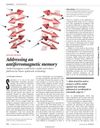
February 2016 in “Science” Researchers developed a new type of memory using antiferromagnets that is stable, not disrupted by magnets, and works at room temperature.
39 citations
,
July 1997 in “American Journal of Medical Genetics” The gene for Clouston syndrome in a large Indian family is located in the 13q11-q12.1 region.
Lack of certain cells causes abnormal nipple development and nursing failure.
 August 2022 in “Frontiers in genetics”
 A new genetic change in the DSC3 gene is linked to a rare condition causing hair loss and skin blisters in a child.
3 citations
,
October 2021 in “Turkish Journal Of Neurology” Genetic analysis is crucial for diagnosing and managing cerebral arteriopathy.
CCC1 is essential for pH balance and normal cell function in plants.
 April 2023 in “The journal of investigative dermatology/Journal of investigative dermatology”
 Deleting the Hoxc13 gene in frogs shows its crucial role in developing skin structures similar to hair.
46 citations
,
November 2019 in “Journal of Integrative Plant Biology” CaM7 and CNGC14 interaction controls root hair growth in Arabidopsis.
April 2019 in “Journal of Investigative Dermatology” Y27632 increases cell growth through EGFR signaling, not ROCK1/2.
5 citations
,
March 2021 in “F1000Research” A specific gene variation increases the risk of high uric acid and cholesterol in young Mexican males.
The study found genetic variations in sheep that affect traits like milk production, growth, and health.
5 citations
,
September 2021 in “Journal of Molecular Histology” LHX2, with other markers, can identify hair placodes in rats.
3 citations
,
April 2012 in “Cancer research” Mouse skin cancer progression involves a unique group of cells marked by ABCG2 and MTS24.
 January 2018 in “Genetic engineering & biotechnology news”
 A genetic mutation linked to longer life and less disease was found in the Amish, and a drug is being developed to replicate these benefits.
January 2025 in “Repository of Digital Objects for Teaching Research and Culture (University of Valencia)” Non-coding RNAs may be key in diagnosing and treating rare skin disorders.
Obstructive sleep apnea can be hereditary and linked to a genetic mutation in the COL1A2 gene.
December 2021 in “OPAL (Open@LaTrobe) (La Trobe University)” Disrupting the Hars2 gene in mice causes hearing loss due to mitochondrial problems and hair cell damage.
September 2003 in “Faculty Opinions – Post-Publication Peer Review of the Biomedical Literature” GLABRA2 gene controls root-hair growth by regulating phospholipid signaling.
9 citations
,
October 2017 in “Frontiers in plant science” The peach gene CTG134 helps control the interaction between auxin and ethylene, which could lead to new agricultural chemicals.
June 2023 in “bioRxiv (Cold Spring Harbor Laboratory)” Scientists created cell lines to study a genetic skin disorder using CRISPR technology.
3 citations
,
May 2016 in “Dermatopathology” Lrig1 could be a marker for advanced sebaceous carcinoma.