January 2016 in “프로그램북(구 초록집)” LED light promotes hair growth by stimulating cell proliferation and reducing cell death.
35 citations
,
January 2000 in “Journal of comparative neurology” Rat vibrissae have sensory terminals with specific structures that help detect hair movements.
27 citations
,
November 2010 in “JDDG Journal der Deutschen Dermatologischen Gesellschaft” New laser therapies are effective for skin damage, hair removal, and fat reduction.
6 citations
,
August 2016 in “Journal of Visualized Experiments” The CUBIC protocol allows detailed 3D visualization of proteins in mouse skin biopsies.
 2 citations
,
January 2020
2 citations
,
January 2020 The document describes a method for preparing hair for microscopy by embedding it in plastic, cutting it, and storing it cold before imaging.
 April 2018 in “Journal of Investigative Dermatology”
 BLZ-100 is safe for use in skin cancer surgery and may help identify cancerous tissue.

Laser therapy is effective for treating vascular lesions with the right light settings and trained professionals.
1 citations
,
August 2018 in “Dermatologic Surgery”  12 citations
,
January 2018 in “Journal of Drug Delivery Science and Technology”
12 citations
,
January 2018 in “Journal of Drug Delivery Science and Technology” The new particle system could be a promising treatment for diseases related to the 5-α reductase enzyme.
5 citations
,
March 2022 in “STAR Protocols” The method helps study hair follicle stem cells and calcium signals in mouse skin.
 15 citations
,
January 2017 in “Lasers in Surgery and Medicine”
15 citations
,
January 2017 in “Lasers in Surgery and Medicine” Laser treatment improved scalp skin condition with no side effects.
 161 citations
,
July 2003 in “ACM Transactions on Graphics”
161 citations
,
July 2003 in “ACM Transactions on Graphics” Researchers developed a new model for more realistic computer graphics rendering of hair by considering how light scatters on hair fibers.
January 2025 in “Indian Journal of Dermatopathology and Diagnostic Dermatology” Dermoscopy helps diagnose rare GLPLS in males.
3 citations
,
December 2021 in “Skin research and technology” Higher hair luminosity and shine mean higher perceived transparency.
6 citations
,
December 2021 in “Journal of Clinical Medicine” LiPADI is a useful tool for monitoring the severity and treatment of lichen planus.
50 citations
,
February 2004 in “Genomics” A gene mutation causes lanceolate hair in rats by disrupting hair shaft integrity.
January 2018 in “Archives of dermatology and skin care” Low level laser therapy may promote hair growth for patterned hair loss, but more research is needed.
13 citations
,
February 2019 in “Zoology” Lustre mutant sheep have normal hair structure and proteins but differ in felting properties.
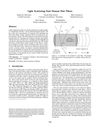
Researchers developed a new model for more realistic computer graphics of hair by considering how light scatters on hair fibers.
57 citations
,
December 2012 in “Journal of Biomedical Optics” Confocal microscopy is useful for studying how nanoparticles interact with skin.
Lhx2 is essential for effective Sonic Hedgehog signaling in early retinal development.

The 1540nm fractional erbium-glass laser helps treat hair loss caused by hormones.
1 citations
,
February 2023 in “IntechOpen eBooks” Targeted photodynamic therapy is a promising method for precise disease treatment and diagnosis.
Low-level laser therapy combined with Neoptide improved hair regrowth better than either treatment alone in rats.
September 2023 in “Journal of the American Academy of Dermatology”  January 2017 in “Lasers in Surgery and Medicine”
 The 2017 issue emphasized progress in laser and energy-based skin treatments, but noted the need for more research on certain procedures and technologies.
 January 1995 in “Surgical technology international”
 Using consecutive transposition flaps can manage gaps in hair growth after multiple hair loss surgeries.
 May 2024 in “Journal of cosmetic dermatology”
 Heat-treated Limosilactobacillus fermentum with menthol, salicylic acid, and panthenol promotes hair growth and balances scalp microbiome in people with androgenetic alopecia.
 April 2016 in “Proceedings of SPIE”
 UV-induced autofluorescence is effective for identifying different types of alopecia.
19 citations
,
August 2018 in “Journal of the American Academy of Dermatology” Both lasers are equally effective and safe for treating freckles.