13 citations
,
January 2018 in “Yonsei Medical Journal” A specific gene mutation causes Olmsted syndrome.
9 citations
,
June 2013 in “Journal of Cosmetic Dermatology” Lateral oblique forehead lines are caused by muscle movement, not sleep positions, and can be treated with botulinum toxin A.

Adding a zygomaticotemporal nerve block reduces pain more effectively during hair regrowth treatments.
47 citations
,
January 2003 in “Pharmaceutical Research” 1 citations
,
March 2024 in “Pediatric Dermatology” Neonatal nasal injuries can heal with basic care but often leave scars.
 February 2024 in “Curēus”
 Prompt diagnosis and treatment of hair tourniquet syndrome involving the uvula are crucial to prevent severe complications.
7 citations
,
August 2008 in “Immunogenetics” A gene mutation in mice causes increased mast cells and disorganized hair follicles in their skin.
January 2023 in “Reactions Weekly” 17 citations
,
July 2018 in “Environmental and Experimental Botany” Silencing NtNCED3-2 gene in tobacco reduces drought tolerance and impairs growth.
March 2023 in “Reactions Weekly” January 2023 in “Reactions Weekly” January 2023 in “Reactions Weekly” 9 citations
,
September 2024 in “Journal of Clinical Medicine” Hidradenitis suppurativa is linked to autoinflammation and immune system issues.
 26 citations
,
February 2020 in “Frontiers in genetics”
26 citations
,
February 2020 in “Frontiers in genetics” The CORT, FGF5, and CD36 genes are crucial for the cold weather adaptation of Yanbian cattle.
December 2018 in “Bioscience Journal” Leporacarus gibbus mite was found in a domestic rabbit in Espírito Santo, Brazil, for the first time.
 August 2024 in “Clinical Cosmetic and Investigational Dermatology”
 Enzyme injections can effectively treat epidermoid cysts without surgery.
 April 2024 in “bioRxiv (Cold Spring Harbor Laboratory)”
 A gene network led by RSL4 is crucial for early root hair growth in response to cold in Arabidopsis thaliana.
 5 citations
,
November 2022 in “Molecular Neurobiology”
5 citations
,
November 2022 in “Molecular Neurobiology” Melatonin may protect inner ear cells from damage by reducing cell death and oxidative stress, potentially treating sudden hearing loss.
12 citations
,
January 2000 in “Journal of cutaneous medicine and surgery” Microorganism overgrowth and hyperkeratosis may trigger immune reactions causing lichen planopilaris.
 August 2023 in “Acta Scientific Paediatrics”
 A baby from an Indian family had a rare genetic disorder causing no scalp or body hair due to a specific gene deletion.
2 citations
,
October 2023 in “JDDG Journal der Deutschen Dermatologischen Gesellschaft” Dupilumab significantly improved a 5-year-old girl's prurigo nodularis without side effects.
June 2015 in “Reactions weekly” December 2012 in “Reactions weekly”  September 2021 in “International Journal of Biomedicine”
 Certain gene variations are linked to a higher risk of severe acne, suggesting a genetic influence on the condition.
13 citations
,
May 2023 in “Journal of Dermatological Science” Reduced SIRT1 in hair cells may cause alopecia areata by triggering immune responses.
 4 citations
,
January 2009 in “Indian Journal of Dermatology, Venereology and Leprology”
4 citations
,
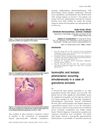
January 2009 in “Indian Journal of Dermatology, Venereology and Leprology” A patient with granuloma annulare experienced both isotopic and isomorphic responses, with skin lesions responding to steroids but relapsing after stopping treatment.
13 citations
,
August 2023 in “Developmental Cell” Mechanosensory neurons adapt to different skin types after birth.
16 citations
,
April 1998 in “Journal of Investigative Dermatology” ACTH promotes hair growth in mink, but α-MSH does not.
 40 citations
,
April 2014 in “Genes & Development”
40 citations
,
April 2014 in “Genes & Development” Hormones during pregnancy and lactation keep skin stem cells inactive, preventing hair growth.
 March 2018 in “Suez Canal University Medical Journal”
 NKG2D gene polymorphism doesn't affect SLE risk but may influence symptoms like rash and hair loss.