October 2021 in “bioRxiv (Cold Spring Harbor Laboratory)” A small BOTOX dose improved sperm production and movement in older mice.
 September 2021 in “C&EN global enterprise”
 Scientists have created a patch filled with tiny enzymes that can treat hair loss and regrow hair as effectively as common hair-loss drugs, but with fewer applications.
 July 2021 in “Asia-Pacific journal of convergent research interchange”
 Cauliflower Mushroom extract may help treat male hair loss by affecting hair growth-related genes.
 June 2021 in “Journal of The American Academy of Dermatology”
 The "spade sign" is a highly specific indicator for diagnosing acne keloidalis.
 June 2021 in “bioRxiv (Cold Spring Harbor Laboratory)”
 KIF18B is important for correctly positioning cell division machinery in skin cells, affecting hair follicle development.

The document suggests using convalescent plasma to treat COVID-19 Long Hauler Syndromes because it may contain beneficial elements that target the virus.
 April 2021 in “Animal Bioscience”
 5-Aminolevulinic acid can help chicken sperm move better at the right amount.
March 2021 in “Research Square (Research Square)” Ketoconazole's structure and dynamics are linked, aiding antifungal drug development.
Spiny keratoderma is a rare skin condition with small spines on palms and soles, possibly linked to abnormal hair formation.
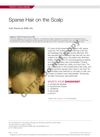
A 5-year-old girl has sparse, dry, and brittle hair but is otherwise healthy.
November 2020 in “World Journal of Integrated traditional and western Medicine(WJIM)” Shengyang Sanhuo Decoction effectively treats hair loss by supporting the spleen and stomach.
 July 2020 in “Journal of the American Academy of Dermatology”
 Spironolactone does not increase the risk of breast cancer recurrence.
 June 2020 in “Journal of Investigative Dermatology”
 The technique effectively shows how human skin and hair cells form into ball-like structures.
 May 2020 in “Research Square (Research Square)”
 Human stem cells can turn into functional eye cells that might help treat retinal diseases.
Spironolactone is a promising alternative to antibiotics for treating acne in adult females.
 March 2020 in “International journal of contemporary medical research”
 Patients with metabolic syndrome often have skin problems like acanthosis nigricans and skin tags, and early treatment is important to prevent serious issues.
 February 2020 in “Our Dermatology Online”
 A synthetic drug and a South American herb may help treat alopecia areata in Chinese men.
January 2020 in “Faculty Opinions – Post-Publication Peer Review of the Biomedical Literature” More research is needed to make sperm DNA fragmentation a reliable tool for diagnosing male infertility.
 January 2020 in “Modern Plastic Surgery”
 The traditional method of estimating skin graft success by looking is generally reliable but less so for inexperienced observers and in certain wound conditions.
Sphingosine 1-phosphate affects inflammation and gene expression in different aorta cells.
December 2019 in “Periodicals of Engineering and Natural Sciences (International University of Sarajevo)” Machine learning can predict hair health accurately using personal data.
 September 2019 in “Journal of Investigative Dermatology”
 Specialized ribosomes affect aging in human skin cells.
May 2019 in “International Journal of Research In Pharmaceutical Chemistry and Analysis” Researchers developed a simple and accurate method to measure Minoxidil in tablets using UV light.
April 2019 in “The journal of investigative dermatology/Journal of investigative dermatology” Spiny mice regenerate skin better than laboratory mice due to larger hair bulges, more stem cells, and different collagen ratios.
Ethanol and methanol extracts of Spirulina platensis do not kill WiDr colon cancer cells.
 November 2018 in “Springer eBooks”
 The document concludes that specialized hair transplant techniques can be effective, with varying success rates depending on the donor area and patient factors.
Certain KIR genes in Indian SLE patients are linked to disease severity and could be biomarkers.
April 2018 in “Journal of Investigative Dermatology” African spiny mice can regenerate skin and hair after wounds due to specific tissue mechanics.
April 2018 in “Dermatologic Surgery”  January 2018 in “Springer eBooks”
 Athletes need effective management of skin disorders for their performance and well-being.