 1 citations
,
October 2013
1 citations
,
October 2013 Different ectodermal organs like hair and feathers regenerate differently, with specific stem cells and signals involved in their growth and response to the environment.
87 citations
,
August 1974 in “Journal of Investigative Dermatology”  November 2022 in “Journal of Investigative Dermatology”
 Skin aging and cancer development are influenced by the competition between stem cells.
July 2025 in “Journal of Investigative Dermatology” September 2012 in “대한피부과학회지” Desmocollin 1 helps maintain skin structure during fetal development.
 June 2026 in “Institutional Repositories DataBase (IRDB)”
 Crickets have genetically controlled hair plates that help them sense and move their antennae.
13 citations
,
January 2001 in “Pediatric dermatology” A dark-haired Chinese girl had hair that looked banded under certain light but was normal under a microscope.
June 2023 in “Dermatopathology” A woman had a unique skin growth with hair follicle, oil glands, fat cells, spindle cells, and nerve fibers.
 14 citations
,
February 2020 in “Scientific reports”
14 citations
,
February 2020 in “Scientific reports” Telocytes in the scalp may help with skin regeneration and maintenance.
1010 citations
,
August 2000 in “Cell” Hair follicle stem cells can form both hair follicles and skin.
August 2023 in “Zenodo (CERN European Organization for Nuclear Research)” 252 citations
,
January 1991 in “Electron Microscopy Reviews” 32 citations
,
September 1996 in “Archives of Dermatological Research” 6 citations
,
September 1996 in “Archives of Dermatological Research” April 2019 in “The journal of investigative dermatology/Journal of investigative dermatology” Disrupting the Tsc2 gene in certain cells leads to thicker skin, larger hair, and changes in hair growth signaling, which can be partly reversed with specific treatment.
 May 2006 in “Frontiers in Neuroendocrinology”
 Progesterone and its metabolites affect myelin protein expression differently in male and female rat Schwann cells.
 8 citations
,
April 2010 in “JEADV. Journal of the European Academy of Dermatology and Venereology/Journal of the European Academy of Dermatology and Venereology”
8 citations
,
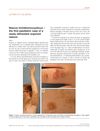
April 2010 in “JEADV. Journal of the European Academy of Dermatology and Venereology/Journal of the European Academy of Dermatology and Venereology” The first pediatric case of naevus trichilemmocysticus was documented.
 February 2026 in “Nature Communications”
 A specific group of immune and skin cells may cause chronic inflammation in atopic dermatitis.
6 citations
,
June 2012 in “PloS one” A new mRNA variant of the SCF gene in sheep skin produces a shorter, different protein.
 123 citations
,
November 2012 in “Stem cells”
123 citations
,
November 2012 in “Stem cells” MicroRNA-302 helps improve the conversion of body cells into stem cells by blocking NR2F2.
 99 citations
,
January 2014 in “Nature communications”
99 citations
,
January 2014 in “Nature communications” Scientists created stem cells that can grow hair and skin.
 January 2025 in “Nature Communications”
 Large-scale reconstructions enhance understanding of vibrissal sensory mapping in the brain.
March 2020 in “Faculty Opinions – Post-Publication Peer Review of the Biomedical Literature” The dermal sheath's contraction is crucial for hair follicle regression and stem cell relocation.
 January 2020 in “Journal of Entomology and Zoology Studies”
 Canine hair follicle stem cells are located in the isthmus/bulge region of the hair follicle.
September 2024 in “Dermatologica Sinica” Early and accurate diagnosis of congenital smooth muscle hamartomas is crucial to distinguish them from other conditions.
 31 citations
,
May 2019 in “Nature communications”
31 citations
,
May 2019 in “Nature communications” Single Blimp1+ cells can create functional sebaceous gland organoids in the lab.
March 2007 in “Journal of Plastic Reconstructive & Aesthetic Surgery” A new method was developed to create better skin models for healing and reconstruction.
April 2019 in “The journal of investigative dermatology/Journal of investigative dermatology” Spiny mice regenerate skin better than laboratory mice due to larger hair bulges, more stem cells, and different collagen ratios.
 January 1995 in “Skin Cancer”
 The outer root sheath in hair follicles changes during growth, with different keratinization processes in its layers.
 56 citations
,
June 2015 in “Nature Protocols”
56 citations
,
June 2015 in “Nature Protocols” Two-photon microscopy helps observe hair follicle stem cell behaviors in mice.