 37 citations
,
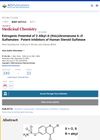
September 2003 in “Journal of Medicinal Chemistry”
37 citations
,
September 2003 in “Journal of Medicinal Chemistry” A substance called Compound 2g can strongly block STS (a hormone-related enzyme) without affecting estrogen levels, making it potentially good for treating breast cancer.
4 citations
,
November 2024 in “International Journal of Biological Macromolecules” Zinc sulfide cellulose scaffolds can reduce scarring and promote hair growth.
1 citations
,
October 2023 in “PROTOPLASMA” 3 citations
,
November 2022 in “International journal of molecular sciences” Bio-pulsed stimulation increases production of beneficial vesicles from bird stem cells that improve skin and hair cell functions.
8 citations
,
January 1968 DMSO causes reversible swelling in hair but has a complex, less reversible effect on skin.
 August 1994 in “Journal of dermatological science”
 Different substances affect hair and skin cell growth in various ways, with some promoting and others inhibiting cell proliferation.
10 citations
,
December 2021 in “Frontiers in Cell and Developmental Biology” BBS7 is essential for healthy gums by supporting cell function and blood flow.
 September 2017 in “Journal of Investigative Dermatology”
 The Siah1 and Siah2 genes are active in mouse skin development and hair growth, especially right after birth.
 April 2018 in “Journal of Investigative Dermatology”
 Dsg1 is essential for maintaining a healthy skin barrier in mice.
January 2011 in “Zhongguo nongye Kexue” Transgenic sheep cells with spider silk gene were successfully created for future sheep hair expression.
 8 citations
,
January 2017 in “Stem Cells International”
8 citations
,
January 2017 in “Stem Cells International” A protein called sFRP4 from skin cells stops the development of pigment-producing cells in hair.
May 2000 in “Journal of Investigative Dermatology” Hedgehog signaling is crucial for hair development, cadherins affect cell adhesion, neutrophils play a role in skin lesions, and BP230 autoantibodies impact skin stability.
35 citations
,
August 2009 in “Differentiation” Desmoglein 4 is controlled by specific proteins that affect hair growth.
26 citations
,
March 2018 in “Experimental Dermatology” Prolactin may influence skin glands and could be a target for treating acne and skin aging.
 December 2023 in “Biological & pharmaceutical bulletin”
 IPM enhances skin penetration of hydrophilic drugs.
 May 2012 in “F1000Research”
 Proteins released by cells can promote hair growth in people.
8 citations
,
January 2024 in “Medical Principles and Practice” IGFBP5 may be a potential target for Parkinson's treatment by reducing neuron death.
December 1981 in “ビジネスコミュニケ-ション” TRPV1 affects sebaceous gland function and could help treat acne.
 October 2025 in “Advanced Materials”
 New lipid/fiber microplexes improve mRNA therapy for degenerative diseases by enhancing cell function and treatment effectiveness.
 29 citations
,
January 2010 in “Journal of oleo science”
29 citations
,
January 2010 in “Journal of oleo science” MEL-A from soybean oil can boost fibroblast and papilla cells, potentially aiding hair growth.
 March 1998 in “Journal of dermatological science”
 Protease Nexin-1 is found in human hair growth cells and is affected by male hormones.
 March 2025 in “Anatomy & Cell Biology”
 Hair follicle stem cell secretions may help protect brain cells and improve stroke recovery.
Hair follicles supply a crucial brain development protein to the brain via platelets.
26 citations
,
June 2003 in “PubMed” Alpha-difluoromethylornithine prevents cancer in mice but causes hair loss.
14 citations
,
August 2021 in “Journal of Pharmaceutical Sciences” Cholesterol- and phospholipid-free niosomes improve deep skin drug delivery.
 25 citations
,
June 2004 in “Journal of Investigative Dermatology”
25 citations
,
June 2004 in “Journal of Investigative Dermatology” Macrophage-stimulating protein helps hair grow and can start hair growth phase in mice and human hair samples.
 April 2019 in “Journal of Investigative Dermatology”
 Lichen planopilaris involves disrupted fat metabolism, increased scarring, and mast cell activity.
6 citations
,
August 2022 in “International journal of molecular sciences” α-Phellandrene may help prevent hair loss by increasing growth factors and cell growth in hair cells through a specific signaling pathway.
91 citations
,
May 2003 in “PubMed” Neuroactive steroids affect cocaine's rewarding effects through the sigma1 receptor.
 April 2024 in “Cellular signalling”
 Activating TRPMLs helps human cells important for hair growth and increases hair growth in mice.