 7 citations
,
December 2016 in “British Journal of Dermatology”
7 citations
,
December 2016 in “British Journal of Dermatology” The report suggests that hair loss in Cronkhite-Canada syndrome may be caused by alopecia areata incognita, as shown by a patient's improvement with treatment.
 June 2016 in “Experimental Dermatology”
 Changing hair follicle identity could potentially reverse balding.
February 2020 in “Spiral (Imperial College London)” Duodenal mucosal resurfacing did not improve insulin sensitivity or reproductive function in women with PCOS.
56 citations
,
October 2007 in “Journal of Biological Chemistry” Cathepsin L is essential for heart health and its absence causes heart problems and hair loss.
 January 2024 in “International Research Journal of Modernization in Engineering Technology and Science”
 Fasting may reduce chemotherapy side effects.
 1 citations
,
March 2023 in “Scientific Reports”
1 citations
,
March 2023 in “Scientific Reports” Finasteride may increase the risk of suicide or severe self-harm in men with mood disorders but not in the general population.
 10 citations
,
December 2021 in “Frontiers in cell and developmental biology”
10 citations
,
December 2021 in “Frontiers in cell and developmental biology” The research identified genes that explain why some sheep have curly wool and others have straight wool.
 7 citations
,
January 2012 in “International Journal of Trichology”
7 citations
,
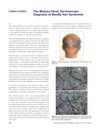
January 2012 in “International Journal of Trichology” A man with Woolly Hair Syndrome had very curly, fragile hair, and doctors used a special scalp examination to diagnose him without invasive tests.

Curly wool has more orthocortex than straight wool.
10 citations
,
June 1999 in “Veterinary Dermatology” Two cows had a rare hair disorder causing hair loss but were otherwise healthy.
December 2021 in “INDIGO (University of Illinois at Chicago)” Sheep hair follicle development and wool curvature are influenced by specific cell types and gene expressions.
28 citations
,
March 2014 in “Biological reviews/Biological reviews of the Cambridge Philosophical Society” The document concludes that hair curvature can be explained by the growth patterns caused by the shape and separation of cells in the hair follicle and is affected by specific molecular pathways.
 January 2026 in “Indian Journal of Dermatopathology and Diagnostic Dermatology”
 Corkscrew hairs can help diagnose trichotillomania.
 February 2024 in “Journal of Dermatological Science”
 Curved hair can develop when hair cells merge abnormally during growth.
July 2009 in “International Journal of Cosmetic Science” Japanese women's curved hair has an uneven internal structure and varied amino acid composition.
85 citations
,
October 2007 in “International Journal of Dermatology” Curly hair shape is due to uneven growth patterns in the hair follicle.
35 citations
,
September 2003 in “Archives of dermatology” Tiger tail bands in hair are caused by wavy hair fibers with melanin, unlike straight fibers in normal hair.
 August 2003 in “Dermatologic Surgery”
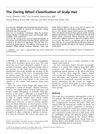
 Craig Ziering created a system to classify scalp hair patterns, important for improving hair restoration surgery results.
December 2025 in “International Journal of Advanced Biochemistry Research” Malvi cattle hair varies in color and pattern across different body regions.
 December 2023 in “Animal research and one health”
 Certain circular RNAs are crucial for wool growth and curvature in goats.
March 2018 in “Journal of Experimental Biology” Hair curliness is caused by the arrangement and length of two different cell types.
13 citations
,
October 2008 in “PubMed” Japanese women's curved hair has an uneven internal structure and varying amino acid composition.
 January 2012 in “International Journal of Trichology”
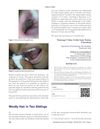
 Two siblings have a rare genetic condition causing curly, coarse hair.
13 citations
,
January 2001 in “Pediatric dermatology” A dark-haired Chinese girl had hair that looked banded under certain light but was normal under a microscope.
 18 citations
,
July 2003 in “Dermatologic Surgery”
18 citations
,
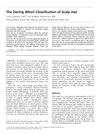
July 2003 in “Dermatologic Surgery” The conclusion is that creating natural-looking hair restoration requires replicating natural scalp whorl patterns and inserting grafts at specific angles.
2 citations
,
January 1987 in “PubMed” Woolly hair syndrome is a genetic condition causing frizzy, fragile hair.
 January 2006 in “Seibutsu Butsuri”
 Curly and straight hair differ in how their internal fibers are arranged.
1 citations
,
July 1935 in “Nature” Animal hair can curl tightly on its own, especially in foxes, due to changes in keratin.
1 citations
,
June 2018 in “Archives of Disease in Childhood Education & Practice” The girl's hair started regrowing after 6 weeks of treatment.
 September 2016 in “Journal of dermatological science”
 Epidermal stem cells use integrin β1 and α6 as markers and CD271+ cells help maintain skin health and heal wounds.