 May 2026 in “International Journal of Drug Delivery Technology”
 Using a 45-degree angle for hair transplants improves efficiency and results.
 September 2025 in “International Journal of Environmental Sciences”
 Moullava spicata stem is a good natural antioxidant.
 June 2025 in “Journal of Endocrinological Investigation”
 Adrenal disorders often cause high blood pressure in young people.
 January 2025 in “Directory of Open access Books (OAPEN Foundation)”
 PCOS affects women's hormones and metabolism, but can be managed with lifestyle changes and treatments.

Stiffness gradients in alginate gels can guide cancer cell invasion and study cellular behaviors.
 April 2024 in “Journal of cancer research and clinical oncology”
 Tissue-derived extracellular vesicles are crucial for cancer diagnosis, prognosis, and treatment.
Recombinant human growth hormone helps burn wounds heal faster by increasing blood vessel growth.
 October 2023 in “International journal of biology, pharmacy and allied sciences”
 Henna helps wounds heal faster and better.
 March 2022 in “Marmara University Open Access System”
 Digital games are part of new media but need a deeper look at their complex nature and cultural roots.
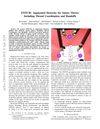 April 2024 in “arXiv (Cornell University)”
 STITCH improves suture accuracy and efficiency, especially with human help.
 July 1999 in “Hair transplant forum international”
 Slot grafting can improve hair transplantation results.
January 2009 in “Xumu shouyi xuebao” Sheep cells were successfully modified to include a spider silk protein gene.
January 2011 in “Zhongguo nongye Kexue” Transgenic sheep cells with spider silk gene were successfully created for future sheep hair expression.
16 citations
,
March 2020 in “Animal Biotechnology” Transgenic sheep embryos with a specific promoter were successfully created, but more research is needed for gene expression in hair follicles.
28 citations
,
December 1997 in “Journal of Biological Chemistry” A genetic mutation in the hHa1 gene creates a smaller, but still functional, hair protein without causing hair problems.
FGF5 spliceosomes inhibit rabbit hair growth by affecting gene expression.
1 citations
,
January 2017 in “Science” A new method was developed to create complex molecular knots using iron ions.
October 2022 in “Hair Transplantation” Combination grafting offers efficient, natural hair restoration in one session.
 29 citations
,
January 2010 in “Methods in Enzymology”
29 citations
,
January 2010 in “Methods in Enzymology” The document concludes that careful design of genetic fate mapping experiments is crucial for accurate cell lineage tracing in mice.
54 citations
,
January 1984 in “Molecular and Cellular Biochemistry” 13 citations
,
January 2018 in “Advances in experimental medicine and biology” January 2026 in “SSRN Electronic Journal” April 2026 in “Human Genome Variation” Long-read RNA sequencing can identify complex gene changes in IFAP syndrome.
 2 citations
,
September 2020 in “Hair transplant forum international”
2 citations
,
September 2020 in “Hair transplant forum international” A new tool makes hair transplant surgeries faster by creating multiple cuts in one go.
75 citations
,
January 2004 in “Molecular and Cellular Biology” XEDAR deficiency prevents muscle degeneration in EDA-A2 transgenic mice.
13 citations
,
February 2012 in “International Journal of Dermatology” A new genetic mutation in the CDH3 gene causes hair loss and eye problems in young people.
 3 citations
,
April 2023 in “Frontiers in Pharmacology”
3 citations
,
April 2023 in “Frontiers in Pharmacology” ATP-sensitive K+ channel subunits, particularly Sur2A, play a significant role in various cancers.
 8 citations
,
July 1984 in “The Journal of Dermatologic Surgery and Oncology”
8 citations
,
July 1984 in “The Journal of Dermatologic Surgery and Oncology” A new suturing technique for hair transplant donor sites leads to better scarring and allows more grafts to be taken.
 1 citations
,
August 2023 in “Genome research”
1 citations
,
August 2023 in “Genome research” The spiny mouse regenerates ear tissue asymmetrically, with gene expression differences possibly explaining its unique healing abilities.
6 citations
,
March 1996 in “Journal of Investigative Dermatology”