26 citations
,
August 2009 in “Journal of Pediatric Gastroenterology and Nutrition” Hoyeraal-Hreidarsson syndrome in infants causes severe gastrointestinal issues.
July 2021 in “British Journal of Dermatology” The boy's genetic diagnosis of ectodermal dysplasia helped improve management and counseling for him and his sister.
5 citations
,
February 2003 in “American Journal of Medical Genetics Part A” A chromosomal change may cause ectodermal dysplasia and developmental issues in a child.
February 2025 in “Journal of Paediatrics and Child Health” Genetic analysis is crucial for diagnosing ectodermal dysplasia syndromes, and new therapies may help improve skin issues.
 January 2026 in “Frontiers in Medicine”
 A child has a rare hair and skin disorder due to specific gene variants, suggesting broader genetic testing is needed.
 35 citations
,
April 2014 in “American Journal of Medical Genetics”
35 citations
,
April 2014 in “American Journal of Medical Genetics” Boys with less severe EDA mutations in XLHED have milder symptoms and better sweat and hair production.
 37 citations
,
June 2002 in “The Laryngoscope”
37 citations
,
June 2002 in “The Laryngoscope” Ectodermal dysplasia causes various symptoms and early treatment is important for eye, dental, and skin issues.
8 citations
,
January 2019 in “JAAD Case Reports” EPDS can cause recurring scalp sores and hair loss if not treated.
 February 2009 in “Journal of The American Academy of Dermatology”
 The document concludes that detailed clinical descriptions of seven family cases help understand dominant dystrophic epidermolysis bullosa's symptoms and inheritance.
 28 citations
,
February 2012 in “PLoS ONE”
28 citations
,
February 2012 in “PLoS ONE” A PKP1 gene mutation causes skin fragility and hair loss in Chesapeake Bay retriever puppies.
Recognizing mild or atypical cases of ectodermal dysplasia is crucial for better treatment and future planning.
 6 citations
,
August 2022 in “International Journal of Molecular Sciences”
6 citations
,
August 2022 in “International Journal of Molecular Sciences” EDA signaling is linked to skin disorders, various cancers, and liver disease.
18 citations
,
January 2018 in “BMC dermatology” A new mutation in the PLEC gene causes a rare condition with skin blistering, muscle weakness, and hair loss.
 12 citations
,
January 2016 in “Journal of Orofacial Orthopedics / Fortschritte der Kieferorthopädie”
12 citations
,
January 2016 in “Journal of Orofacial Orthopedics / Fortschritte der Kieferorthopädie” Researchers found a new mutation in the EDA gene that likely causes missing teeth and mild skin symptoms in one family.
Genetic mutations linked to ectodermal dysplasias and hair loss were identified in Pakistani families.
3 citations
,
July 2024 in “Frontiers in Medicine” Mutations in the KLHL24 gene cause a skin disorder in some Russian families.
8 citations
,
November 2009 in “The Neurologist/The neurologist” If someone has scaly skin, muscle stiffness, and intellectual disability, doctors should consider Sjogren-Larsson Syndrome, but other conditions if more symptoms are present.
 February 2026 in “Orphanet Journal of Rare Diseases”
 Most genetic mutations causing hypohidrotic ectodermal dysplasia in Russian patients are found in the EDA gene.
 1 citations
,
March 2023 in “Frontiers in Cardiovascular Medicine”
1 citations
,
March 2023 in “Frontiers in Cardiovascular Medicine” A specific gene variant is linked to heart disease, increased heart muscle, curly hair, and thick skin on palms and soles.
 April 2025 in “Dermatology Practical & Conceptual”
 Biopsy is crucial for accurately diagnosing EPDS to avoid mistaking it for SCC.
4 citations
,
October 2023 in “Children” Early diagnosis and comprehensive care are crucial for managing Focal Dermal Hypoplasia's complex symptoms.
14 citations
,
May 2017 in “Journal of Investigative Dermatology” A rare gene mutation causes skin fragility and itching without affecting hair or nails.
February 2026 in “Pediatric Dermatology” 25 citations
,
September 2005 in “Journal of the American Academy of Dermatology” Rapp-Hodgkin syndrome, AEC, and EEC are different expressions of the same genetic disorder caused by TP63 gene mutations.
 1 citations
,
November 2017 in “Expert opinion on orphan drugs”
1 citations
,
November 2017 in “Expert opinion on orphan drugs” Scientists now better understand the genetics of hypohidrotic ectodermal dysplasia, leading to more accurate diagnoses and potential new treatments.
 3 citations
,
January 2019 in “Journal of Dermatology”
3 citations
,
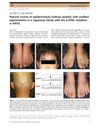
January 2019 in “Journal of Dermatology” The p.P25L mutation in the KRT5 gene causes a rare skin condition that worsens over time and may lead to hair loss starting in young adulthood.
10 citations
,
April 2013 in “Journal of Investigative Dermatology” Epidermolytic ichthyosis can be inherited in a semidominant way with mild symptoms in carriers.
 11 citations
,
March 2020 in “American Journal of Medical Genetics Part A”
11 citations
,
March 2020 in “American Journal of Medical Genetics Part A” A mutation in the EDNRA gene causes Oro-Oto-Cardiac syndrome, affecting face and heart development.
11 citations
,
July 2010 in “European Journal of Dermatology” The condition is linked to chromosome 12, but no mutations were found in the known genes.
 30 citations
,
June 2014 in “Seminars in Immunology”
30 citations
,
June 2014 in “Seminars in Immunology” Future research on ectodysplasin should explore its role in diseases, stem cells, and evolution, and continue developing treatments for genetic disorders like hypohidrotic ectodermal dysplasia.