 November 2023 in “Regenerative Biomaterials”
 The new adhesive seals wounds quickly, works well in wet conditions, and helps with healing.
 April 2023 in “Journal of Investigative Dermatology”
 Baricitinib at 2mg and 4mg doses improved work productivity and reduced costs for adults with atopic dermatitis.
 December 2025 in “Cosmetics”
 The bio-based complex effectively repairs and protects chemically damaged hair.
15 citations
,
July 2009 in “Biomedical Chromatography” A reliable method was developed to measure aristolochic acid-I in rat blood.
 1 citations
,
October 2020 in “Current Drug Discovery Technologies”
1 citations
,
October 2020 in “Current Drug Discovery Technologies” The research found that compound 6, a newly created steroid, is more effective at inhibiting 5α-reductase (an enzyme) than current treatments, suggesting it could be a better option for treating urinary tract symptoms in men.
June 2021 in “Journal of Pharmaceutical Care Anwar Medika” The hair tonic made from cayenne pepper leaf extract is physically stable and suitable for use.
 May 2022 in “International Journal of Biochemistry Research and Review”
 Plant-based biotin from SesZenBioTM could be twice as effective as synthetic biotin for hair care.
 4 citations
,
November 2023 in “Biological and Pharmaceutical Bulletin”
4 citations
,
November 2023 in “Biological and Pharmaceutical Bulletin” The serum reduced thigh fat and improved skin firmness.
 June 2026 in “HAL (Le Centre pour la Communication Scientifique Directe)”
 SH‑1 is safer for cosmetic use than PP405.
January 2026 in “Colloids and Surfaces B Biointerfaces” A silicone treatment makes damaged hair more water-resistant and stronger.
 March 2025 in “International Journal of Molecular Sciences”
 Veratric Acid may help promote hair growth and reduce hair loss.
15 citations
,
July 2010 in “Journal of Allergy and Clinical Immunology” A new cream, DHMEQ, reduces allergic skin inflammation effectively.
 June 2010 in “Journal of Chemical Crystallography”
 The compound was successfully made and shows potential for treating prostate cancer.
 January 2024 in “International Journal of Cosmetic Science”
 A new method using 1,4-n-butylene dimaleate effectively repairs and strengthens damaged hair.
1 citations
,
June 2007 in “Journal of Clinical Oncology” Weekly bicalutamide is safe and effective, with 50 mg/week recommended.
211 citations
,
March 2011 in “Journal of Lipid Research” A new, quick method was developed to analyze skin lipids, discovering a new ceramide subclass.
October 2025 in “Chinese Chemical Letters” Using a special solvent can make Cacumen Platycladi essential oil more effective for treating hair loss.
 1 citations
,
July 2018 in “Journal of dermatology & cosmetology”
1 citations
,
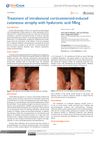
July 2018 in “Journal of dermatology & cosmetology” Hyaluronic acid successfully treated skin atrophy caused by corticosteroid injections.
1 citations
,
December 2020 in “Journal of Cosmetic Dermatology” The cosmetic product effectively reduced hair growth and thickness on forearms.
4 citations
,
December 2022 in “Evidence-based Complementary and Alternative Medicine” Phenolic compounds from Quercus acutissima leaves, especially casuarinin, may help treat acne.
7 citations
,
September 1988 in “Baillière's clinical obstetrics and gynaecology” Cyproterone acetate is effective for treating hirsutism and acne in women by blocking androgens in the skin and also works as a contraceptive.
Delonix polymeric nanoparticles with isotretinoin effectively treat acne by targeting hair follicles and reducing skin irritation.
7 citations
,
May 2022 in “Indonesian Journal of Science and Technology” Compounds from Etlingera alba may help treat Triple Negative Breast Cancer.
 June 2024 in “Frontiers in immunology”
 Sequential therapy with dupilumab and baricitinib improved hair regrowth and atopic dermatitis in a child without adverse reactions.
 30 citations
,
October 2015 in “Journal of Ethnopharmacology”
30 citations
,
October 2015 in “Journal of Ethnopharmacology” Herbal compounds like ricinoleic acid, quercetin-3-O-rutinoside, and hinokiflavone may be safe and effective for treating hair loss.
February 2022 in “Fibers” Scientists created a non-toxic, sugar-based hair product that can style hair without damage.
 April 2017 in “Journal of Investigative Dermatology”
 The document concludes that various topical treatments show promise for skin conditions like atopic dermatitis, psoriasis, and hair loss.
 2 citations
,
March 2015 in “Toxicology and Environmental Health Sciences”
2 citations
,
March 2015 in “Toxicology and Environmental Health Sciences” Rice bran extract caused moderate skin irritation but no eye irritation, while a diluted essence was not irritating to skin and only slightly to guinea pigs.
1 citations
,
January 2013  March 2026 in “Journal of Veterinary and Animal Sciences”
 Supplements improved calves' haircoat condition.