5 citations
,
December 2022 in “Viruses” Antiandrogens may help prevent or treat COVID-19 by blocking virus entry into cells.
18 citations
,
December 2005 in “Journal of Medicinal Chemistry” A brominated phenoxy compound effectively inhibits a human enzyme and shows potential for clinical use.
January 1987 in “Toxicological sciences” SMR-2 and SMR-6 are much more toxic than retinoic acid, causing severe symptoms and organ damage in mice.
 September 2014 in “International Journal of Dermatology and Venereology”
 Certain histamine receptors (H2R, H3R, H4R) have unique roles in treating skin diseases, with H2R helping with chronic urticaria and other conditions, H3R providing pain relief and allergy benefits, and H4R reducing inflammation and itchiness.
 16 citations
,
October 1994 in “The Journal of Steroid Biochemistry and Molecular Biology”
16 citations
,
October 1994 in “The Journal of Steroid Biochemistry and Molecular Biology” Two non-steroidal antiandrogens, RU 58841 and RU 56187, form a common metabolite at different rates, which may influence their effects; RU 56187 could be used for prostate cancer treatment and RU 58841 for acne treatment.
 November 2021 in “Pharmaceutical Sciences”
 New compounds were made and tested, with compound 6 showing potential for treating prostate-related diseases.
November 2024 in “Journal of Investigative Dermatology” Serotonin helps wounds heal faster.
 May 2024 in “Aktualʹnì problemi sučasnoï medicini: Vìsnik Ukraïnsʹkoï medičnoï stomatologìčnoï akademì”
 Spironolactone and clascoterone are promising acne treatments with fewer side effects.
 March 2010 in “Anti-inflammatory & anti-allergy agents in medicinal chemistry”
 Biologic agents can be effective for rheumatic diseases but have risks like infections and require careful monitoring and patient information.
9 citations
,
October 2025 in “MedComm” PROTACs offer new ways to treat hard-to-target diseases, with promising drugs for cancer in advanced trials.
 December 2022 in “Small methods”
 A new hair loss treatment using dissolving microneedles was found to speed up hair growth and was more effective than daily use of common hair growth drugs.
 15 citations
,
January 2020 in “BioMed Research International”
15 citations
,
January 2020 in “BioMed Research International” BTA safely and effectively treats hair loss, and works better with FNS.
33 citations
,
May 2017 in “Journal of Clinical Oncology” ETC-159 was safe up to 30 mg, but no tumor shrinkage was seen.
17 citations
,
January 1993 in “PubMed” Antiandrogens should be used effectively to treat skin conditions like hair loss, acne, and excess hair growth.
 8 citations
,
December 2020 in “The FASEB Journal”
8 citations
,
December 2020 in “The FASEB Journal” Blocking adenosine A2B receptor may prevent or treat hearing loss.
34 citations
,
June 2015 in “Journal of cardiovascular pharmacology and therapeutics” Direct vasodilators and sympatholytic agents are still useful for certain conditions despite being less common due to side effects and newer drugs.
 May 2023 in “Research Square (Research Square)”
 Botulinum toxin type A helps treat hair loss by stopping cell death in hair follicles through a process involving certain non-coding RNAs and a protein called Bax.
73 citations
,
October 2009 in “Anti-Cancer Agents in Medicinal Chemistry” New curcumin analogues help fight prostate cancer by breaking down androgen receptors.
7 citations
,
January 2025 in “Journal of Experimental & Clinical Cancer Research” PRMT5 inhibitors effectively fight adenoid cystic carcinoma in salivary glands.
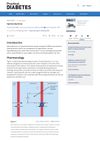 February 2024 in “Practical Diabetes”
 Spironolactone helps reduce hospital visits and death from heart issues, lowers blood pressure, but has unclear effects on heart failure with normal heart pump function and can cause high potassium and breast enlargement in men.
April 2026 in “Future Medicinal Chemistry” PROTACs have become a breakthrough in medicine by effectively targeting and degrading specific proteins to treat diseases.
8 citations
,
June 2017 in “Steroids” New chemical compounds were made that effectively block an enzyme linked to prostate growth.
 April 2017 in “Journal of Investigative Dermatology”
 SB414 may be an effective treatment for atopic dermatitis by reducing swelling and bacterial infection.
 February 2025 in “International Journal of Cosmetic Science”
 A new amino acid derivative, ATS, improves hair texture and moisture, making it easier to straighten curly hair.
July 2024 in “Journal of Investigative Dermatology” ATR12-351 ointment safely delivers LEKTI protein to the skin, reducing enzyme activity in Netherton syndrome.
 January 2026 in “American Journal of Translational Research”
 The metoprolol-spironolactone combination improves heart function in patients with coronary heart disease and heart failure.
 February 2024 in “Research Square (Research Square)”
 Proteins from Tianshan red deer abomasum have strong anti-inflammatory, anti-tumor, and antioxidant effects.
 18 citations
,
May 2020 in “Biomolecules”
18 citations
,
May 2020 in “Biomolecules” Spironolactone, a heart and liver drug, has new uses including cancer treatment, viral infection prevention, and skin condition improvement.
 3 citations
,
June 1983 in “Archives of Dermatology”
3 citations
,
June 1983 in “Archives of Dermatology” Aminopterin effectively improves skin conditions but has toxic side effects that need careful monitoring.