 11 citations
,
October 2019 in “Cancers”
11 citations
,
October 2019 in “Cancers” Spironolactone may make some cancer treatments more effective by blocking a protein that helps cancer cells survive.
 114 citations
,
December 1951 in “Archives of Dermatology”
114 citations
,
December 1951 in “Archives of Dermatology” Aminopterin strongly suppresses epithelial tissues and can treat certain skin conditions but has significant side effects.
 1 citations
,
September 2024 in “Frontiers in Pharmacology”
1 citations
,
September 2024 in “Frontiers in Pharmacology” Aumolertinib effectively controls lung cancer and improves quality of life.
 51 citations
,
January 2024 in “Nanoscale”
51 citations
,
January 2024 in “Nanoscale” Nano-PROTACs could improve drug targeting and delivery by using nanotechnology.
July 2024 in “Reactions Weekly”  April 2016 in “Journal of Investigative Dermatology”
 Phenylephrine may help prevent hair loss from pulling on the hair roots.
 July 2023 in “JAAD International”
 Two drugs, finasteride and minoxidil, are approved for hair loss treatment, but new therapies are being developed.
 13 citations
,
May 2011 in “Bioorganic & Medicinal Chemistry”
13 citations
,
May 2011 in “Bioorganic & Medicinal Chemistry” Changing the 6-position on benzopyran molecules affects insulin release, with some compounds showing strong inhibitory effects.
September 2003 in “Reactions Weekly”  11 citations
,
May 2010 in “Journal of Medicinal Chemistry”
11 citations
,
May 2010 in “Journal of Medicinal Chemistry” A new compound was created in 2010 that can control oil production when applied to the skin, and its effects are completely reversible after two weeks.
 65 citations
,
February 2015 in “Neuro-Oncology”
65 citations
,
February 2015 in “Neuro-Oncology” Alisertib was found to be an effective and tolerable treatment for children with recurrent brain tumors.
 1 citations
,
March 2020 in “Journal of Pharmacological Sciences”
1 citations
,
March 2020 in “Journal of Pharmacological Sciences” Benzothiazepines like diltiazem reduce anxiety in mice by making neurosteroids.
 9 citations
,
May 2021 in “Molecules”
9 citations
,
May 2021 in “Molecules” New indole-based compounds, particularly cemtirestat, show promise as dual-function drugs for diabetic complications.
45 citations
,
July 2025 in “Journal of Medicinal Chemistry” Vepdegestrant may become the first FDA-approved PROTAC degrader, marking a new era in drug development.
23 citations
,
October 2008 in “Journal of medicinal chemistry” PF-998425 is a new, effective, and non-phototoxic treatment for skin conditions related to androgens.
5-ARI therapy may help prevent prostate cancer progression.
 52 citations
,
February 2006 in “Current pharmaceutical design”
52 citations
,
February 2006 in “Current pharmaceutical design” 5α-reductase inhibitors and alpha-1 adrenergic antagonists together effectively treat benign prostatic hyperplasia, with long-term benefits.
8 citations
,
August 2015 in “Endocrine”  August 2024 in “Frontiers in Pharmacology”
 Antibody treatments show promise for hair loss but need more research.
1 citations
,
November 2024 in “Expert Opinion on Drug Safety” Aromatase inhibitors can cause various adverse reactions, so monitoring is crucial.
Thymosin β4 helps with healing, inflammation, and organ protection.
36 citations
,
July 2017 in “Journal of controlled release” A new method allows for controlled, long-lasting delivery of retinoic acid through the skin with fewer side effects.
 6 citations
,
November 2004 in “Bioorganic & Medicinal Chemistry Letters”
6 citations
,
November 2004 in “Bioorganic & Medicinal Chemistry Letters” Scientists created iodinated arylhydantoins and arylthiohydantoins that could potentially be used for imaging prostate cancer. Some versions with specific side-chains showed high potential for this use.
January 2025 in “Buleria (Universidad de León)” June 2026 in “Journal of Investigative Dermatology” Retinoic acids temporarily change skin stem cells to a slower cycle and more differentiated state.
 37 citations
,
September 2003 in “Journal of Medicinal Chemistry”
37 citations
,
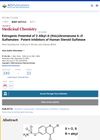
September 2003 in “Journal of Medicinal Chemistry” A substance called Compound 2g can strongly block STS (a hormone-related enzyme) without affecting estrogen levels, making it potentially good for treating breast cancer.
4 citations
,
January 2023 in “Marine Drugs” Marine compounds from gorgonians and soft corals show promise for drug development, especially for chronic disorders.
Neuropeptides affect hair growth and could be used to control it.
 119 citations
,
October 1992 in “Fundamental & Clinical Pharmacology”
119 citations
,
October 1992 in “Fundamental & Clinical Pharmacology” Potassium channel openers could help treat cardiovascular diseases and asthma but require better targeting to specific tissues for effective use.
1 citations
,
June 2006 in “Experimental dermatology” Acetylcholine receptors might be involved in the development of acne inversa and smoking could worsen the condition.