CCC1 is essential for ion balance and proper plant cell function.
November 1997 in “Open Archive (Karolinska Institutet)” PTCH gene mutations contribute to basal cell carcinoma development.
46 citations
,
August 2006 in “PubMed” A genetic defect causes males in some Mediterranean populations to be born with ambiguous genitalia and develop male traits at puberty.
124 citations
,
November 2000 in “The journal of investigative dermatology/Journal of investigative dermatology” PAD3 plays a key role in hair and skin protein structure and may be linked to skin diseases.
477 citations
,
March 2004 in “Proceedings of the National Academy of Sciences” The DMI3 gene is essential for nodule development and symbiosis in certain plants.
 February 2016 in “The journal of allergy and clinical immunology/Journal of allergy and clinical immunology/The journal of allergy and clinical immunology”
 A new TP63 mutation was found in a baby with EEC syndrome, showing the need for TREC testing to check for immune issues.
 November 2023 in “Scientific Reports”
 A gene mutation in Lama3 is linked to a common type of hair loss.
September 2019 in “The journal of investigative dermatology/Journal of investigative dermatology” A new mutation in the STING protein causes a disease with lupus-like symptoms and responds well to a specific inhibitor treatment.
 5 citations
,
May 2020 in “Life science alliance”
5 citations
,
May 2020 in “Life science alliance” Removing integrin α3β1 from hair stem cells lowers skin tumor growth by affecting CCN2 protein levels.
288 citations
,
January 2001 in “Journal of Biological Chemistry” Tgm2 helps stabilize dying cells and aids fibroblast attachment to the extracellular matrix.
69 citations
,
December 2015 in “BMC plant biology” Three genes in Arabidopsis are important for plant growth and development by affecting sugar attachment to proteins.
17 citations
,
November 2001 in “Journal of Investigative Dermatology Symposium Proceedings” Stat3 is essential for hair growth and wound healing.
 1 citations
,
August 2018 in “bioRxiv (Cold Spring Harbor Laboratory)”
1 citations
,
August 2018 in “bioRxiv (Cold Spring Harbor Laboratory)” A new mutation in the TMEM173 gene and a risk allele in IFIH1 cause a unique set of immune-related symptoms.
April 2019 in “Journal of the Endocrine Society” Androgens and estrogens are crucial for insulin secretion in males.
28 citations
,
June 2023 in “Tissue Engineering and Regenerative Medicine” 8 citations
,
January 2023 in “International journal of molecular sciences” Transglutaminase activity is important for skin and is found in both mammals and birds.
4 citations
,
September 2024 in “Development” Researchers converted human embryonic stem cells into trophoblast stem cells using specific transcription factors.
September 2021 in “The journal of investigative dermatology/Journal of investigative dermatology” Three genes linked to the development of trichilemmal cysts were found.
The trichohyalin gene is located at chromosomal region 1q21 with other skin-related protein genes.
June 2020 in “Zenodo (CERN European Organization for Nuclear Research)” The DNMT3B -579G>T polymorphism may increase the risk of colorectal cancer.
12 citations
,
July 2015 in “Experimental Dermatology” Gasdermin A3 overexpression in skin causes inflammation and hair loss.
 451 citations
,
March 2005 in “Endocrine Reviews”
451 citations
,
March 2005 in “Endocrine Reviews” The enzyme steroid sulfatase is linked to breast cancer and other conditions, and inhibitors are being developed for treatment.
 11 citations
,
June 2012 in “Acta histochemica”
11 citations
,
June 2012 in “Acta histochemica” Mice with a Gsdma3 gene mutation have thicker skin and longer hair follicle openings due to increased β-catenin levels.
 49 citations
,
October 2009 in “Cancer research”
49 citations
,
October 2009 in “Cancer research” Disrupting Stat3 in hair follicle stem cells greatly reduces skin tumor formation.
November 2025 in “Figshare” SQSTM1 is linked to increased risk of alopecia areata.
6 citations
,
March 1996 in “Journal of Investigative Dermatology” January 2026 in “PLoS Biology” ARHGEF3 is essential for proper hair follicle development in mice.
28 citations
,
August 2005 in “Journal of Investigative Dermatology” TG5 helps maintain hair follicle health, while TG3 aids in hair shaft development.
 26 citations
,
July 2016 in “The journal of investigative dermatology/Journal of investigative dermatology”
26 citations
,
July 2016 in “The journal of investigative dermatology/Journal of investigative dermatology” The protein Par3 is crucial for healthy skin, affecting the skin barrier, cell differentiation, and stem cell maintenance.
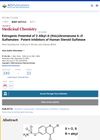 37 citations
,
September 2003 in “Journal of Medicinal Chemistry”
37 citations
,
September 2003 in “Journal of Medicinal Chemistry” A substance called Compound 2g can strongly block STS (a hormone-related enzyme) without affecting estrogen levels, making it potentially good for treating breast cancer.