 January 2014 in “Journal of Investigative Dermatology”
 Proteins like aPKC and PDGF-AA, substances like adenosine and ATP, and adipose-derived stem cells all play important roles in hair growth and health, and could potentially be used to treat hair loss and skin conditions.

Stem cell therapy can help regrow hair.
January 2014 in “Elsevier eBooks” People travel abroad and pay a lot for unproven stem cell treatments, hoping for cures.
May 2013 in “Faculty Opinions – Post-Publication Peer Review of the Biomedical Literature” A balance between BMP and Wnt signals is crucial for hair follicle stem cell function and hair growth.
October 2012 in “Institutional Repositories DataBase (IRDB)” Stem cell treatment can effectively regrow hair.
 April 2012 in “Annals of Neurosciences”
 The document concludes that stem cell therapies lack solid proof of effectiveness, except for blood system treatments, and criticizes the ethical issues and commercial exploitation in the field.
December 2009 in “Cancer Research” Over-expression of Sp2 can lead to cancer by preventing proper stem cell differentiation.
 August 2009 in “Mechanisms of Development”
 Adult hair follicle cells can create new hair follicles from corneal cells with the right support.
June 2009 in “Faculty Opinions – Post-Publication Peer Review of the Biomedical Literature” Lrig1 marks a unique group of stem cells in mouse skin that can become different skin cell types.
 January 2006 in “Yearbook of Dermatology and Dermatologic Surgery”
 Hair graying is caused by the loss of pigment cells due to poor maintenance of stem cells in the hair follicle.
January 2006 in “Linchuang pifuke zazhi” Stem cell factor and certain proteins help melanocytes from hair follicles move and attach better, aiding vitiligo repigmentation.
January 2003 in “Zhonghua shaoshang zazhi” Murine fetal epidermal stem cells can help regenerate hair follicles.
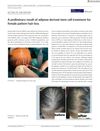 April 2021 in “Journal of Cosmetic Dermatology”
 Stem cell treatment improved hair density in female hair loss patient.
 April 2013 in “Dermatology and therapy”
 Crescina treatment improves hair resistance and reduces hair loss.
Stem cell treatments show promise for hair loss but need more research.
October 2021 in “Plastic and reconstructive surgery. Global open” Adipose-derived stem cells may help treat hair loss.
October 2021 in “QJM: An International Journal of Medicine” ADSC injections improve hair density, thickness, and reduce inflammation in female pattern hair loss.
 June 2019 in “Stem Cell Research”
 Scientists created MUSIi010-A, a stem cell line from a balding man's scalp, to study hair loss and develop potential treatments.
January 2019 in “Journal of Clinical Dermatology” The hair tonic improved hair growth and thickness without severe side effects.
 265 citations
,
July 2012 in “Cell”
265 citations
,
July 2012 in “Cell” The study found that sweat glands contain different types of stem cells that help with healing and maintaining healthy skin.
236 citations
,
April 2015 in “Cell” Plucking some hairs can trigger nearby unplucked hairs to grow back more due to a collective response.
220 citations
,
June 2013 in “The Journal of Pathology” Lichen planopilaris may be an autoimmune disease causing hair loss due to immune system issues in hair follicles.
209 citations
,
October 2018 in “Cell Reports” Lgr5 and Lgr6 stem cells quickly adapt to help heal wounds.
178 citations
,
April 2011 in “Journal of Clinical Investigation” Basal cell carcinomas in mice can start from hair follicle stem cells and other skin cell types, depending on signaling levels.
170 citations
,
November 2007 in “The journal of investigative dermatology/Journal of investigative dermatology” Skin can heal wounds without hair follicle stem cells, but it takes a bit longer.
105 citations
,
April 2005 in “Cell” Hair graying happens because certain cells aren't maintained properly.
 72 citations
,
July 2012 in “Journal of Investigative Dermatology”
72 citations
,
July 2012 in “Journal of Investigative Dermatology” Mice lacking a key DNA methylation enzyme in skin cells have a lower chance of activating stem cells necessary for hair growth, leading to progressive hair loss.
 62 citations
,
November 2009 in “Aging Cell”
62 citations
,
November 2009 in “Aging Cell” Hedgehog signaling helps keep hair follicle stem cells the same in both young and old human skin.
 61 citations
,
July 2011 in “PLOS ONE”
61 citations
,
July 2011 in “PLOS ONE” Spermidine may help reduce hair loss and deserves further testing as a treatment.
26 citations
,
September 2012 in “Cell Reports” B-Raf and C-Raf are essential for maintaining melanocyte stem cells to prevent hair graying.