 May 2019 in “Cytotherapy”
 Patients in Australia underwent costly, unproven stem cell treatments due to weak regulations and aggressive marketing.
January 2019 in “Advances in stem cells and their niches” Krox20 is important for cell differentiation in the brain and hair follicles.
January 2019 in “Cell & developmental biology” 3D cultivation and prenatal stem cell exosomes improve stem cell treatment results, especially for hair loss and age-related issues.
 August 2018 in “Journal of the American Academy of Dermatology”
 Patients often experience long-lasting changes to their hair after stem cell transplants.
 May 2018 in “Cell stem cell”
 Myoepithelial cells can repair airways after severe injury.
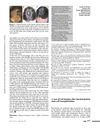 May 2018 in “European Journal of Dermatology”
 Adjusting the medication tacrolimus resolved a boy's red nail beds after a stem cell transplant.
 April 2018 in “Journal of Investigative Dermatology”
 Older hair follicle stem cells have a reduced ability to renew themselves, leading to more hair loss.
 April 2018 in “Journal of Investigative Dermatology”
 The conclusion is that the cornea has two types of stem cells, with Lrig1+ cells being key for renewal in aging corneas, independent of CD44.
 April 2018 in “Journal of Investigative Dermatology”
 Light can activate hair growth through a pathway from the eyes to hair follicles.
April 2018 in “Journal of Investigative Dermatology” Id2 gene helps keep hair follicle stem cells inactive.
 January 2018 in “Stem cell biology and regenerative medicine”
 ATP-dependent chromatin remodeling is crucial for skin development and stem cell function.
 January 2018 in “Turkiye Klinikleri Journal of Dermatology”
 Stem cell treatments show promise for treating hair loss.
 August 2017 in “DOAJ (DOAJ: Directory of Open Access Journals)”
 Stem cell therapies show potential for treating hair loss with fewer side effects.
IL-1 signaling is crucial for hair follicle stem cell growth and wound healing.
June 2017 in “Mechanisms of development” Hox genes control hair follicle stem cell regeneration in different body regions.
 April 2017 in “Journal of Investigative Dermatology”
 Deleting the CRIF1 gene in mice disrupts skin and hair formation, certain proteins affect hair growth, a new compound may improve skin and hair health, blood cell-derived stem cells can create skin-like structures, and hair follicle stem cells come from embryonic cells needing specific signals for development.
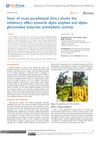 April 2017 in “Advances in Tissue Engineering & Regenerative Medicine Open Access”
 Banana stem extract may help manage diabetes by inhibiting certain enzymes.
April 2017 in “Journal of dermatological science” Young mice's hair follicle stem cells are best for turning into heart muscle cells.
January 2017 in “PRISM (University of Calgary)” Unique genes in hair follicle cells help tissue regeneration.
December 2016 in “Clinics in surgery” Understanding hair follicle biology and stem cell control can help develop treatments to stimulate hair growth for cosmetic procedures.
Human hair follicle cells can be turned into stem cells that may help clone hair for treating hair loss or burns.

Skin stem cells are crucial for maintaining and repairing skin, with potential for treating skin disorders and improving wound healing.
September 2016 in “Journal of dermatological science” Human induced pluripotent stem cells can be used to create cells that help grow hair.
 September 2016 in “Springer eBooks”
 Fat-derived stem cells may help treat skin aging and hair loss.
Low-level laser therapy may help stem cells grow and function better, aiding in healing and tissue repair.
 April 2016 in “Journal of Investigative Dermatology”
 The symposium showed that stem cells are key for understanding and treating skin diseases and for developing new skin models and therapies.

Tissue from dog stem cells helped grow hair in mice.
 December 2015 in “Journal of Neurology and Stroke”
 A man had a stroke after getting a scalp injection for hair loss.
September 2015 in “International Society of Hair Restoration Surgery” Hair follicle stem cells could lead to new hair loss treatments.
January 2015 in “Elsevier eBooks” Stem cells show promise for nerve injury treatment, but more research is needed before human use.