The models can help find better inhibitors for conditions like baldness and prostate disorders.
 4 citations
,
November 2023 in “ArXiv.org”
4 citations
,
November 2023 in “ArXiv.org” A new method improves the accuracy and reliability of language models by up to 42%.
1 citations
,
April 2024 in “Lasers in Surgery and Medicine” The model helps improve medical devices by showing how skin deforms under pressure.
 92 citations
,
December 2012 in “Current opinion in genetics & development”
92 citations
,
December 2012 in “Current opinion in genetics & development” Turing patterns are now recognized as important in developmental biology.
Machine learning can accurately predict Polycystic Ovary Syndrome in women using clinical features.
3 citations
,
June 2023 in “Frontiers in Medicine” A new model uses specific blood markers to predict if children's hair loss will return.
Moles may stop growing because of cell cooperation, not just because of aging cells.
 September 2023 in “JP Journal of Biostatistics”
 The random forest model effectively helps diagnose COVID-19 using key factors like age and symptoms.
Understanding hair follicle interactions can help treat male pattern baldness.
August 2025 in “International Journal of Research Publication and Reviews” Machine learning can predict stress-related hair loss and suggest prevention tips.
October 2025 in “Preprints.org” Male and female mice handle stress differently.
 2 citations
,
March 2023 in “Research Square (Research Square)”
2 citations
,
March 2023 in “Research Square (Research Square)” Forensic DNA phenotyping faces challenges due to inconsistent terminology, limited genetic understanding, and debates over technology and models.
June 2018 in “SPIRE - Sciences Po Institutional REpository” Biomedical innovations could extend human lifespan, but may impact pension systems.
April 2019 in “Journal of Investigative Dermatology” The humanized AA mouse model is better for testing new alopecia areata treatments.
 34 citations
,
April 2014 in “Psychopharmacology”
34 citations
,
April 2014 in “Psychopharmacology” Stress and alcohol affect brain chemicals differently in rats, mice, and humans, influenced by genetic differences.
 52 citations
,
October 2012 in “Journal of Dermatological Science”
52 citations
,
October 2012 in “Journal of Dermatological Science” The document concludes that mouse models are crucial for studying hair biology and that all mutant mice may have hair growth abnormalities that require detailed analysis to identify.
 1 citations
,
December 2016
1 citations
,
December 2016 Researchers created a model to understand heart aging, highlighting key genes and pathways, and suggesting miR-208a as a potential heart attack biomarker.
 2 citations
,
September 1974 in “Academy of Management Journal”
2 citations
,
September 1974 in “Academy of Management Journal” Karl E. Weick recommended focusing on everyday events and smaller organizations to improve organizational theory.
 June 2026 in “arXiv (Cornell University)”
 Hair beds in fluid show nonlinear response due to viscosity, inertia, and elasticity.
June 2026 in “Disease Models & Mechanisms” In vitro models help us understand diseases and speed up drug development.
 4 citations
,
January 2018 in “General Physiology and Biophysics”
4 citations
,
January 2018 in “General Physiology and Biophysics” The steroids allopregnanolone and allotetrahydrodeoxycorticosteron worsened absence seizures in rats.
 August 2020 in “Textile research journal”
 The model helps understand how wool fiber structure affects its strength and flexibility.
 September 2013 in “Science”
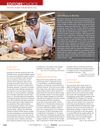
 Human stem cells can aid stroke recovery, research experiences boost students' career aspirations, minoxidil may reduce cancer spread, a molecule can slow tumor growth, a protein affects water flow in cells, magnesium behaves differently at tiny scales, and a new method detects slow-moving objects.
 15 citations
,
June 2019 in “Journal of Neuroendocrinology”
15 citations
,
June 2019 in “Journal of Neuroendocrinology” Isoallopregnanolone may be a safe and effective treatment for reducing tics in a mouse model of Tourette syndrome.
1 citations
,
January 2024 in “Animal Research and One Health” Mouse models are essential for studying and improving genetic traits in agriculture.
 2 citations
,
December 2018 in “Novos Estudos Jurídicos”
2 citations
,
December 2018 in “Novos Estudos Jurídicos” Predictive computational analyses have evolved biopower by using technology to track and predict individual and group behaviors.
 December 2025 in “Brazilian Journal of Hair Health”
 The Spiral Model helps understand hair growth changes with age and identify hair problems early.
51 citations
,
February 2004 in “Environmental Health Perspectives” Control variability makes it hard to confirm low-dose endocrine effects.
81 citations
,
February 2016 in “Veterinary pathology” Progeroid mouse models show signs of early aging similar to humans, helping us understand aging better.
 September 2023 in “Research Square (Research Square)”
 The document concludes that the new expert system can assess the risk of PCOS effectively despite uncertainties in diagnosis.