3 citations
,
August 2008 in “PubMed” Repeated digital perming with sodium thioglycolate lotion significantly damages hair protein and structure.
1 citations
,
June 1998 in “Journal of Forestry Research” Mammalian hair scales change from smooth to wavy due to friction.
 May 2026 in “Zenodo (CERN European Organization for Nuclear Research)”
 The herbal cream effectively smooths and straightens hair safely.
November 2024 in “Biophysical Chemistry” Hair structure changes immediately during perm treatment, with initial damage partially restored later.
 May 2026 in “Zenodo (CERN European Organization for Nuclear Research)”
 The herbal cream effectively smooths and straightens hair safely.
 7 citations
,
January 2012 in “International Journal of Trichology”
7 citations
,
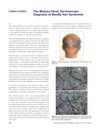
January 2012 in “International Journal of Trichology” A man with Woolly Hair Syndrome had very curly, fragile hair, and doctors used a special scalp examination to diagnose him without invasive tests.
11 citations
,
June 2013 in “PubMed” The automated flat iron can permanently straighten hair without chemicals, especially at 154°C, and silicone improves the results.
4 citations
,
July 2010 in “International Journal of Cosmetic Science” Curved human hair has different structures on its convex and concave sides.
March 2018 in “Journal of Experimental Biology” Hair curliness is caused by the arrangement and length of two different cell types.
February 2013 in “Journal of the American Academy of Dermatology” Uncombable hair syndrome causes dry, frizzy hair that can't be combed flat, seen in a young child.
 May 2026 in “Zenodo (CERN European Organization for Nuclear Research)”
 Natural hair reflects identity and history, while modifications signal social pressures.
 May 2026 in “Zenodo (CERN European Organization for Nuclear Research)”
 Natural hair is a return to its original state, while modifications signal social pressures.
18 citations
,
January 2015 in “Journal of medical genetics” New genes linked to woolly hair have been found, which could help treat it and change hair texture.
 July 2024 in “Journal Archives of Health”
 Woolly hair is a rare genetic condition with no effective treatments.
February 2022 in “Fibers” Scientists created a non-toxic, sugar-based hair product that can style hair without damage.
65 citations
,
May 2006 in “Journal of Structural Biology” Hair curliness is due to uneven distribution of different cortices within the hair fiber.
18 citations
,
April 2010 in “Langmuir” Human hair surface varies in wettability, showing daily and monthly patterns.
 January 2013 in “Sen'i Gakkaishi”
 Microfibrils are key for permanent waves, and hydrolyzed keratin improves wave formation and hair condition.
13 citations
,
March 2017 in “Skin Research and Technology” Formaldehyde damages curly hair more than glyoxylic acid.
October 2012 in “한국미용학회지” For best curls and hair health, use keratin and ceramide after rinsing, or skip rinsing for stable curls.
January 2012 in “Jounal of The Korean Society of cosmetology” Applying conditioner mid-treatment reduces hair damage during perms.
September 2015 in “Research Portal (King's College London)” Human hair movement is affected by its inner structure and chemical treatments.
7 citations
,
September 2006 in “Molecular Carcinogenesis” Homozygous K5Cre transgenic mice have wavy hair and faster cancer progression.
May 2026 in “Applied Spectroscopy” Humidity affects hair structure changes during stretching.
 3 citations
,
January 2019 in “Skin Research and Technology”
3 citations
,
January 2019 in “Skin Research and Technology” Frequent use of hair straighteners can cause hair loss similar to scarring alopecia in young Turkish women.
January 2012 in “한국미용학회지” Applying conditioner in the middle of a perm process reduces hair damage the most.
 12 citations
,
February 2019 in “Skin research and technology”
12 citations
,
February 2019 in “Skin research and technology” White hair has less lipid content and absorbs water differently than brown hair.
22 citations
,
January 1985 Water makes hair more flexible, especially the outer layer.

The new method can tell how hair fibers react to moisture after treatments.
 52 citations
,
August 1978 in “Journal of Applied Polymer Science”
52 citations
,
August 1978 in “Journal of Applied Polymer Science” Human hair's ability to get wet is complex and can change with treatments, damage, and environment.