5 citations
,
September 2019 in “bioRxiv (Cold Spring Harbor Laboratory)” Basal stem cells in the skin have distinct types that are crucial for skin structure and health.
25 citations
,
October 1962 in “Journal of Ultrastructure Research” The hair follicle structure is more complex than thought, with new findings on protein formation.
11 citations
,
January 1981 in “Cells Tissues Organs” Human hair cuticle has five cell layers with specific junctions and granules.
30 citations
,
November 1992 in “The Journal of Dermatology” Keratohyalin and trichohyalin proteins help form and organize skin and hair structures.
14 citations
,
January 2021 in “Stem cell research & therapy” Human skin cells with stem-like features can help create new hair follicles and sebaceous glands when combined with other cells.
 March 2026 in “Dermatopathology”
 A rare skin tumor with extra hair growth was found and safely removed from a 27-year-old woman.
 38 citations
,
April 2017 in “PLOS Genetics”
38 citations
,
April 2017 in “PLOS Genetics” GRHL3 is important for controlling gene activity in skin cells during different stages of their development.
 January 1995 in “Skin Cancer”
 The outer root sheath in hair follicles changes during growth, with different keratinization processes in its layers.
4 citations
,
April 1989 in “The Journal of Dermatology” Trichohyalin granules help inner root sheath cells in hair follicles harden by integrating with keratin filaments.
26 citations
,
September 2013 in “Journal of Dermatological Science” Serum granulysin levels can indicate the activity and prognosis of alopecia areata.
July 2023 in “Clinical Cosmetic and Investigational Dermatology” Accurate diagnosis of granular parakeratosis is crucial for effective treatment and improvement.
59 citations
,
August 1981 in “PubMed” Trichilemmal keratinization is a unique process in hair follicles where the outer root sheath turns into keratin without a specific layer.
 April 2017 in “Journal of Investigative Dermatology”
 Early and late matrix progenitors in hair follicles create different cell layers, with early ones forming the companion layer and later ones forming the inner root sheath and hair shaft.
11 citations
,
January 1977 in “Archives of dermatological research” Mouse tail skin has different keratinization near hair follicles and scales.
November 2023 in “Journal of Investigative Dermatology” Removing GRK2 in skin cells causes hair loss similar to immune-related alopecia.
April 2013 in “Cancer Research” SKH1 hairless mice have identifiable epidermal stem cells with specific markers.
21 citations
,
April 2000 in “Journal of Cutaneous Pathology” The hamartoma is an abnormal hair growth with limited development in the upper hair follicle.
 November 2025 in “SKIN The Journal of Cutaneous Medicine”
 Granuloma faciale can occur on the scalp, especially in people with advanced hair loss, and may improve with treatment.
26 citations
,
December 1979 in “Journal of Cutaneous Pathology” Seborrheic keratoses may partly come from hair follicle cells.
October 2021 in “The journal of investigative dermatology/Journal of investigative dermatology” Desmoglein 3 is important for keeping hair follicle stem cells inactive and maintaining their special properties.
53 citations
,
September 1999 in “Journal of Synchrotron Radiation” Keratinous tissues have multiple structural layers, including ordered keratin and lipid granules.
 November 2022 in “Journal of Investigative Dermatology”
 Scientists found a new type of skin cell that could help with skin repair and these cells work better with a certain protein.
January 2007 in “Zhonghua shiyan waike zazhi” Basal layer skin cells help form the epidermis and hair follicles.
 73 citations
,
July 1956 in “Journal of Investigative Dermatology”
73 citations
,
July 1956 in “Journal of Investigative Dermatology” Adult human skin can grow new fine hair follicles after a deep exfoliation treatment.
 7 citations
,
December 2008 in “Journal of Dermatological Science”
7 citations
,
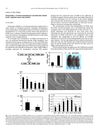
December 2008 in “Journal of Dermatological Science” Progranulin overexpression leads to shorter, thinner hair and increased cell death in mouse hair follicles.
August 1993 in “Journal of Dermatological Science” 87 citations
,
November 2002 in “Journal of Investigative Dermatology” 8 citations
,
July 2004 in “Journal of morphology” Marsupial hair structure and keratin distribution are similar to placental mammals.
89 citations
,
May 2005 in “Stem Cells” Mouse skin has special cells in the epidermis that decrease with age and are linked to keratinocyte stem cells.
29 citations
,
July 2003 in “Experimental Dermatology” The upper hair follicle is stable, while the lower part allows movement during hair growth.