 January 2020 in “Hair transplant forum international”
 The type of previous hair restoration surgery might affect the success of a later one, with strip harvesting possibly leading to fewer damaged hair follicles.
 November 2019 in “Harper's Textbook of Pediatric Dermatology”
 Children with metabolic syndrome often have skin problems like dark patches, skin tags, stretch marks, infections, acne, and psoriasis, which are linked to obesity and insulin resistance.
 September 2019 in “Journal of evolution of medical and dental sciences”
 Obesity significantly affects skin health, causing conditions like acanthosis nigricans and skin tags, and should be considered during skin exams.
 April 2019 in “International Journal of Research in Dermatology”
 Most women with hirsutism have mild symptoms and often experience acne, menstrual irregularities, and obesity.
 November 2018 in “Springer eBooks”
 The document concludes that hair transplant methods are often selected for provider convenience over patient benefit, highlighting the need for less invasive techniques and careful physician involvement for better results.
September 2018 in “Obsgyne Review Journal of Obstetric and Gynecology of Siddharth Health Research and Social Welfare Society” Pregnant women often experience a variety of skin problems, including pigmentation changes and stretch marks.
 April 2018 in “Deleted Journal”
 Skin grafts are a common, minimally invasive way to close wounds in dogs, but better methods are still being sought.
 January 2018 in “Karger Kompass”
 Skin symptoms like fragile skin and easy bruising can indicate Cushing's syndrome, which requires early diagnosis and treatment to prevent serious health issues.
 October 2017 in “Journal of medical science and clinical research”
 Obese people are more likely to have certain skin conditions like dark patches, stretch marks, skin tags, and bumpy skin.

The document provides a step-by-step training guide for beginner surgeons and assistants to learn hair restoration surgery, emphasizing careful practice to avoid irreversible loss of hair follicles.
 January 2016 in “Georg Thieme Verlag eBooks”
 Hair transplantation in East Asians needs special techniques to ensure natural results and prevent complications due to their unique hair and scalp characteristics.
 January 2016 in “Kafkas Journal of Medical Sciences”
 Turkish pregnant women commonly experienced skin issues like itching and acne, and doctors mainly used topical treatments due to safety concerns during pregnancy.
 January 2016 in “Dermatology Review”
 Endocrine disorders can cause various skin and hair issues.
 January 2015 in “Plastic and Reconstructive Surgery”
 The book is a valuable guide for hair restoration surgeons.
Skin changes throughout life, from development before birth to aging effects like wrinkles, influenced by both genetics and environment.
 November 2014 in “PubMed”
 A robotic device could improve surgical hair restoration, but it needs more testing to confirm its effectiveness compared to current methods.
 August 2014 in “Plastic Surgery”
 Dr. WP Unger suggested that traditional strip harvesting might be better for hair transplants than Follicular Unit Extraction due to higher hair survival rates and less risk of a patchy look at the donor site.
 March 2014 in “Dermatologic Clinics”
 More research, better treatments, and public education are needed for dermatological conditions in people of African descent.

Robotic-assisted hair transplant is effective and less painful, but needs more evaluation for long-term results.
 July 2013 in “Hair transplant forum international”
 Dr. James Harris successfully incorporated Follicular Unit Extraction into his hair restoration practice, offering more surgical options and achieving natural results with the help of a team approach.
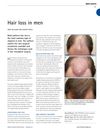 May 2013 in “Trends in Urology & Men's Health”
 Male-pattern hair loss is normal, often involves hormone effects on hair follicles, and can be treated with medication or surgery, but new treatments are being researched.
 January 2013 in “프로그램북(구 초록집)”
 Hair restoration surgery is improving, with less painful techniques like FUE and robotic systems, but they can be costly and require training.
Hair transplantation can effectively restore hair in stabilized hair loss cases.
 January 2009 in “Indian Journal of Plastic Surgery”
 Surgical methods for hair loss due to scarring should be chosen based on the size, location, and shape of the area, with most patients seeing good results.
 November 2006 in “Dermatologic Surgery”
 Cutting hair follicles into pieces for transplantation results in poor growth and thinner hair, and the technique is more invasive than previously thought.
January 2006 in “FarFar (University of Belgrade, Faculty of Chemistry (Belgrade, Serbia))” Some skincare products can safely help with pregnancy-related skin changes.
January 2006 in “FarFar - Pharmacy Repository” Dermocosmetic products can be effective and safe for treating pregnancy-related skin changes.
 June 1997 in “The American Journal of Cosmetic Surgery”
 Reharvesting hair from donor sites using punch and strip methods can provide more hair for transplants and improve scar appearance.
Use mild topical steroids to avoid side effects, especially in children.
June 2021 in “Cosmoderma” Hair transplantation techniques have improved, making the process safer and more effective with less visible scarring.