73 citations
,
April 2017 in “Scientific Reports” Nitrogen starvation in microalgae increases lipid production, making it a potential biofuel source.
57 citations
,
November 2024 in “Aggregate” Smart hydrogels can improve diabetic wound healing by adapting to wound conditions and providing controlled treatment.
14 citations
,
December 2018 in “The American journal of pathology” Activating Nrf2 in skin cells speeds up wound healing by increasing the growth of certain stem cells.
10 citations
,
May 2020 in “Frontiers in cell and developmental biology” MicroRNAs are important for hair growth regulation, with Dicer being crucial and Tarbp2 less significant.
9 citations
,
January 2016 in “Journal of Controlled Release” Local hypobaric pressure can significantly improve drug delivery through the skin.
9 citations
,
April 2019 in “Bioscience, biotechnology, and biochemistry” Ten miRNAs may play key roles in starting secondary hair follicle development in sheep foetuses.
7 citations
,
June 2020 in “npj regenerative medicine” GDNF helps grow hair and heal skin wounds by acting on hair stem cells.
 2 citations
,
May 2022 in “Diagnostics”
2 citations
,
May 2022 in “Diagnostics” Vitamin D levels in hair don't match those in blood, so hair isn't a reliable indicator of Vitamin D status.
2 citations
,
February 2025 in “Advanced Healthcare Materials” Perhexiline can effectively target ovarian cancer cells left after treatment.
 1 citations
,
July 2023 in “Journal of visualized experiments”
1 citations
,
July 2023 in “Journal of visualized experiments” The new method makes it easier to study the whole cochlea from newborn mice and rats in the lab.
1 citations
,
April 2023 in “Scientific Reports” Self-assembling RADA16-I hydrogels with bioactive peptides significantly improve wound healing.
1 citations
,
June 2025 in “International Journal of Molecular Sciences” Hirsutism in GCC countries is influenced by genetics, obesity, and lifestyle, with cultural stigma delaying treatment, highlighting the need for tailored health strategies.
Poly-D,L-lactic acid boosts hair growth in aged skin by activating hair follicle stem cells.
August 2025 in “Applied Sciences” Peroxide-rich plasma-activated water is gentler on hair than nitrate-rich formulations.
 May 2025 in “International Journal of Molecular Sciences”
 DHHB from Platycladus orientalis L. promotes hair growth and could be a natural alternative to current treatments.
April 2025 in “European Journal of Pharmaceutics and Biopharmaceutics” The new drug delivery system improves bicalutamide skin retention for better treatment of hair loss.
May 2024 in “International journal of molecular sciences” Platelet-derived products help regenerate tissue and are used in various skin and hair treatments.
 December 2023 in “The journal of cell biology/The Journal of cell biology”
 The mTurq2-Col4a1 mouse model shows how the basement membrane develops in live mammals.
Neurosteroids help regulate oxytocin levels, especially during stress and pregnancy, to protect against premature labor.

MITF and WNT3A are key in Dun Mongolian horse pigmentation.
December 2025 in “International Journal of Molecular Sciences” Opophytum forskahlii seed oil may help with anti-aging and hair growth.
3D culture better preserves sweat gland cell identity than 2D culture.
March 2024 in “Veterinary sciences” Geriatric Julia Creek dunnarts often suffer from reproductive and skin diseases, impacting conservation efforts.
December 2023 in “Pharmaceutics” The new adhesive nanoparticles are effective for delivering Minoxidil to the scalp without skin irritation.
Non-immune dermal cells dominate, epidermal cells increase after day 9, and certain immune cells persist beyond inflammation in wound-induced hair follicle regeneration.
 November 2023 in “Facial Plastic Surgery”
 Choosing between follicular unit extraction and strip harvesting for hair restoration depends on the patient's individual goals and the pros and cons of each method.
 March 2021 in “International Journal of Research in Dermatology”
 Trapezoid donor strips give more hair follicles than elliptical ones in hair transplants.
 January 2014 in “Journal of Cutaneous and Aesthetic Surgery”
 The document suggests that for better patient satisfaction in hair transplants, high-quality photos are needed, and using a narrow donor strip might lead to fewer grafts and dissatisfaction, but filling the scar with FUE grafts and using tranexamic acid can improve results.
 11 citations
,
June 2008 in “Dermatologic Surgery”
11 citations
,
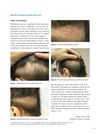
June 2008 in “Dermatologic Surgery” Transplanting chest hair into scalp scars may effectively treat wide donor scars in hair restoration.
 16 citations
,
June 2009 in “Dermatologic Surgery”
16 citations
,
June 2009 in “Dermatologic Surgery” A 17-year-old boy with Temporal Triangular Alopecia successfully grew new hair after a hair restoration surgery using follicular unit transplantation.