 3 citations
,
June 2020 in “Cutis”
3 citations
,
June 2020 in “Cutis” Poor nutrition can lead to skin diseases in hospitalized patients and should be quickly identified and treated.
 2 citations
,
July 2013 in “InTech eBooks”
2 citations
,
July 2013 in “InTech eBooks” Scalp biopsy helps tell apart permanent and temporary hair loss types and guides treatment.
 2 citations
,
January 2011 in “Dermatologica Sinica”
2 citations
,
January 2011 in “Dermatologica Sinica” Taiwan reported its first case of a rare scalp condition with no clear cause or treatment.
1 citations
,
February 2025 in “Journal of Anatomy” Gray short-tailed opossums' skin shifts from helping with breathing to regulating body temperature as they grow.
 1 citations
,
April 2024 in “Food Frontiers”
1 citations
,
April 2024 in “Food Frontiers” Pu-erh tea reduces hair loss risk in offspring.
1 citations
,
December 2006 in “Experimental Dermatology” Adipocytes have diverse roles in energy storage, protection, tissue repair, and influence health and disease.
 1 citations
,
June 2001 in “Annals of Internal Medicine”
1 citations
,
June 2001 in “Annals of Internal Medicine” Troglitazone increases subcutaneous fat in lipodystrophy patients.
 April 2026 in “Journal of Clinical Medicine”
 GLP-1 RAs may help wound healing but can also cause faster facial aging and skin issues.
 December 2025 in “Russian Journal of Skin and Venereal Diseases”
 Thinner hair follicle structures are linked to non-scar alopecia.
August 2025 in “Journal of the American Academy of Dermatology” Combining PRP with microneedling and minoxidil may help treat severe hair loss.
 April 2024 in “Applied biological chemistry”
 Piperine from black pepper can make hair less oily by blocking fat cell development in hair roots.
 November 2022 in “Journal of Investigative Dermatology”
 Aging in one type of stem cell can cause aging-like changes in various organs.
 March 2019 in “Journal der Deutschen Dermatologischen Gesellschaft”
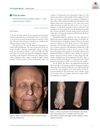
 Rothmund-Thomson syndrome type 2 can cause chronic, poorly healing wounds.
 January 2018 in “Springer eBooks”
 Men and women need different facial rejuvenation treatments due to distinct aging processes and anatomical differences.
March 2011 in “Open Archive (Karolinska Institutet)” The mouse model showed defects in adult stem cell maintenance related to Hutchinson-Gilford progeria syndrome.
 December 2025 in “Russian Journal of Skin and Venereal Diseases”
 Hair follicles are thinner in alopecia patients, especially in alopecia areata.
Lactobacillus and fermented Korean berry can help hair grow faster.
 September 2022 in “The American journal of dermatopathology/American journal of dermatopathology”
 A patient with a thick scalp and hair loss was correctly diagnosed with alopecia areata and a thick scalp fat layer, not lipedematous alopecia, and regrew hair after treatment.
 May 2021 in “Our Dermatology Online”
 A woman with a rare scalp condition causing a thick scalp and hair loss didn't improve with steroid treatment.
September 2016 in “Ege tıp dergisi/Ege tıp dergisi :” An 11-year-old obese girl was diagnosed with lipedematous scalp, a condition with swollen scalp tissue usually found in adult women.
 January 1994 in “Nihon Chikusan Gakkaiho”
 Collagen fibrils in mink skin change structure during hair growth, becoming looser and thicker in the active phase.
 41 citations
,
May 2018 in “Nutrition and healthy aging”
41 citations
,
May 2018 in “Nutrition and healthy aging” Skin aging is largely due to differences in stiffness and elasticity between skin layers, leading to wrinkles.
 18 citations
,
August 2017 in “PLOS ONE”
18 citations
,
August 2017 in “PLOS ONE” Skin and its underlying fat layer act together to resist mechanical stress, and reinforcing this composite structure may help more with anti-aging than just strengthening the skin alone.
 17 citations
,
August 2019 in “JAMA Facial Plastic Surgery”
17 citations
,
August 2019 in “JAMA Facial Plastic Surgery” Some men lost hair after deoxycholic acid treatment for neck fat, but most saw improvement or resolution.
6 citations
,
October 2020 in “Frontiers in cell and developmental biology” WWOX deficiency in mice causes skin and fat tissue problems due to disrupted cell survival signals.
 128 citations
,
October 2011 in “Development”
128 citations
,
October 2011 in “Development” Activating a protein called β-catenin in adult skin can make it behave like young skin, potentially helping with skin aging and hair loss.

Testosterone therapy can safely and effectively treat symptoms like low libido and fatigue in women, especially after menopause.
 January 2024 in “International Journal of Dermatology Venereology and Leprosy Sciences”
 Patients with acne vulgaris have lower serum irisin levels.

Thicker scalp fat may link hair loss with metabolic syndrome.
December 2022 in “Biochemical and Biophysical Research Communications” HtrA2 activity is crucial for normal hair growth by regulating fat cell development.