 49 citations
,
January 2003 in “Clinical and Experimental Dermatology”
49 citations
,
January 2003 in “Clinical and Experimental Dermatology” The document concludes that post-menopausal frontal fibrosing alopecia is a poorly understood condition that does not respond well to common treatments.
May 2025 in “Journal of the ASEAN Federation of Endocrine Societies” Postmenopausal women with unusual hair growth should be checked for ovarian tumors.
July 2011 in “F1000Research” 24 citations
,
May 1985 in “The Journal of Clinical Endocrinology & Metabolism” A circulating inhibitor caused insulin resistance, but clomiphene improved symptoms.
 20 citations
,
January 2016 in “Open Journal of Endocrine and Metabolic Diseases”
20 citations
,
January 2016 in “Open Journal of Endocrine and Metabolic Diseases” PCOS affects fertility and is linked to obesity and menstrual irregularities; lifestyle changes are recommended for treatment.
18 citations
,
July 2010 in “Journal of the American Academy of Dermatology” Folliculotropic mycosis fungoides can look like alopecia areata.
 14 citations
,
September 1986 in “Archives of Dermatology”
14 citations
,
September 1986 in “Archives of Dermatology” Women with low SHBG levels and a high 3a-diol G to SHBG ratio are likely to experience female pattern baldness, possibly due to a slight excess of androgens affecting sensitive hair bulbs.
 November 2022 in “Journal of the Endocrine Society”
 A woman's small ovarian tumor causing high androgen levels was missed by several scans but found during surgery.
51 citations
,
May 1984 in “Journal of the American Academy of Dermatology” Benign follicular mucinosis involves immune cells attacking hair follicles.
20 citations
,
December 1994 in “Fertility and sterility” Flutamide combined with a low-dose birth control pill effectively reduces excessive hair growth in women with polycystic ovarian disease.
 May 2024 in “Indian Journal of Dermatology”
 The woman has a rare skin condition called follicular Dowling-Degos disease, which has limited treatment options.
 2 citations
,
June 2022 in “Scientific reports”
2 citations
,
June 2022 in “Scientific reports” Women with PCOS have higher hair cortisol levels, which are linked to worse metabolic and inflammatory conditions.
 February 2026 in “South Asian Research Journal of Biology and Applied Biosciences”
 Alopecia areata patients have higher hormone levels, suggesting hormonal screening could help in treatment.
 April 2019 in “Journal of emerging technologies and innovative research”
 Early treatment of Female Pattern Hair Loss is important to stop it from getting worse, and various treatments can help, especially in mild to moderate cases.
 October 2024 in “Journal of the Endocrine Society”
 Surgical removal of a rare ovarian tumor improved symptoms and hormone levels in a postmenopausal woman.
 2 citations
,
January 2022 in “Skin research and technology”
2 citations
,
January 2022 in “Skin research and technology” OCT can detect hidden hair follicles in alopecia areata, indicating potential hair regrowth.
2 citations
,
March 2011 in “Hair transplant forum international” Female pattern hair loss involves hair follicles shrinking, influenced by hormones like melatonin and prolactin.
 9 citations
,
October 2018 in “Journal of international medical research”
9 citations
,
October 2018 in “Journal of international medical research” Frontal fibrosing alopecia is linked to hypothyroidism but doesn't affect quality of life.
 84 citations
,
November 2003 in “European journal of endocrinology”
84 citations
,
November 2003 in “European journal of endocrinology” Women with androgenic alopecia are more likely to have polycystic ovaries and higher androgen levels, which may indicate PCOS.
1 citations
,
August 2012 in “Archives of Gynecology and Obstetrics” Finasteride can help induce ovulation and lead to a healthy birth in some women.
 1 citations
,
May 2021 in “International Journal of Dermatology”
1 citations
,
May 2021 in “International Journal of Dermatology” Long hair follicular unit excision is effective for hair transplants, providing quick, natural-looking results with less pain but needs more time, staff, and skill.
July 2025 in “AACE Endocrinology and Diabetes” Ovarian hyperthecosis caused high testosterone and virilization symptoms in a 60-year-old woman, which improved after surgery.
 2 citations
,
September 2008 in “Fertility and Sterility”
2 citations
,
September 2008 in “Fertility and Sterility” Clinical signs of excess male hormones and actual hormone levels in the blood do not always match in women with polycystic ovary syndrome.
 40 citations
,
January 2013 in “International journal of trichology”
40 citations
,
January 2013 in “International journal of trichology” Perifollicular erythema can indicate active frontal fibrosing alopecia.
October 2025 in “F1000Research” Postmenopausal women with excess male hormones may have ovarian tumors, and surgery usually cures them.
 May 2026 in “Journal of Basic and Clinical Health Sciences”
 FAGA shows varied hair thickness, while TE has more empty follicles.
 45 citations
,
August 2013 in “Facial Plastic Surgery Clinics of North America”
45 citations
,
August 2013 in “Facial Plastic Surgery Clinics of North America” Using sharp tools and the right techniques in hair transplant surgery leads to less damage to hair follicles.
2 citations
,
December 2023 in “International Journal of Dermatology” A unique type of hair loss mimics another condition but has minimal inflammation and specific immune cells present.
April 2018 in “Journal of Investigative Dermatology” Mutations in Far2 mice cause hair loss due to sebaceous gland issues.
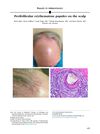 January 2016 in “Journal of The American Academy of Dermatology”
 The woman has a type of scarring hair loss with red bumps around hair follicles.