612 citations
,
February 2004 in “Nature” OXI1 kinase is essential for plant defense and root hair growth in Arabidopsis.
1 citations
,
February 1991 in “Journal of Biological Chemistry”  4 citations
,
May 2019 in “PubMed”
4 citations
,
May 2019 in “PubMed” Topical minoxidil does not change the activity of hair follicle enzymes that metabolize it.
 1 citations
,
January 2017 in “Chinese Journal of Organic Chemistry”
1 citations
,
January 2017 in “Chinese Journal of Organic Chemistry” Using K2S2O8 as an oxidizing agent in a specific condition, we can make Finasteride with 96.3% yield and 99.6% purity. This method is also good for other compounds and is environmentally friendly.
41 citations
,
March 2016 in “The Journal of Clinical Endocrinology & Metabolism” In STSD patients, the body compensates for low androgen levels by increasing another enzyme's activity.
26 citations
,
March 2006 in “Endocrine, metabolic & immune disorders. Drug targets” This enzyme helps metabolize fatty acids and isoleucine, and could be key in treating neurological diseases and certain cancers.
January 2011 in “대한피부과학회지” A 7-year-old girl was diagnosed with trichothiodystrophy due to low sulfur levels in her hair.
 1 citations
,
October 2021 in “Benha Journal of Applied Sciences”
1 citations
,
October 2021 in “Benha Journal of Applied Sciences” People with acne have a different balance of certain antioxidants in their blood compared to healthy individuals.
35 citations
,
December 2014 in “Clinical and experimental dermatology” Oxidative stress may play a role in causing alopecia areata.

Higher sulfotransferase enzyme levels predict better response to minoxidil for hair growth.
 20 citations
,
April 2014 in “Dermatologic Therapy”
20 citations
,
April 2014 in “Dermatologic Therapy” Sulfotransferase in hair follicles helps predict how well minoxidil works for female hair loss.
December 2021 in “Journal of Cosmetic Dermatology” Thiol/disulfide balance is normal in male AGA patients but shifts towards oxidative stress with emotional stress and low vitamin D.
108 citations
,
April 2004 in “Medicinal Research Reviews” Steroid sulfatase inhibitors could help treat hormone-related disorders and cancers.
March 1990 in “Journal of Dermatological Science” 10 citations
,
December 1991 in “Annals of the New York Academy of Sciences” Minoxidil boosts hair growth in genetically modified mice.
 1 citations
,
July 2024 in “Journal of Cosmetic Dermatology”
1 citations
,
July 2024 in “Journal of Cosmetic Dermatology” Low SULT activity in hair follicles leads to better response to oral minoxidil for hair loss.
 August 2022 in “International Journal of Health Sciences (IJHS) (En línea)”
 Oxidative stress is important in causing alopecia areata.
354 citations
,
August 1991 in “Molecular Endocrinology” Human adrenals and gonads have a unique enzyme for steroid hormone production.
 September 2017 in “The journal of investigative dermatology/Journal of investigative dermatology”
 The reconstructed skin model from hair follicles functions like human skin in processing chemicals and can be used to test ingredient safety.
11 citations
,
January 1989 Two patients had a unique form of trichothiodystrophy with reduced high-sulfur proteins in their hair.
9 citations
,
March 1993 in “Biochemical Pharmacology” Rat skin can convert minoxidil into its active form, aiding hair growth.
 17 citations
,
December 2004 in “Bioorganic & Medicinal Chemistry Letters”
17 citations
,
December 2004 in “Bioorganic & Medicinal Chemistry Letters” Scientists found new, better-working inhibitors for a hormone-related enzyme.
2 citations
,
January 1968 in “PubMed” Sulfur-containing radioprotectors can protect hair from X-ray damage if given before exposure but worsen damage if given after.
 37 citations
,
September 2003 in “Journal of Medicinal Chemistry”
37 citations
,
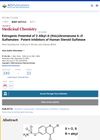
September 2003 in “Journal of Medicinal Chemistry” A substance called Compound 2g can strongly block STS (a hormone-related enzyme) without affecting estrogen levels, making it potentially good for treating breast cancer.
 October 2018 in “Exercise Biochemistry Review”
 Aerobic exercise helps protect the intestines by improving their barrier function.
 June 2022 in “Research Square (Research Square)”
 Lipid peroxidation may worsen social behavior issues in autism.
 26 citations
,
June 2016 in “Journal of Reproductive Immunology”
26 citations
,
June 2016 in “Journal of Reproductive Immunology” Women with PCOS have higher xanthine oxidase activity linked to inflammation and heart disease risks.
42 citations
,
January 2002 in “Skin Pharmacology and Physiology” Reconstructed skin models are useful for studying how skin processes certain chemicals.
7 citations
,
January 1971 in “Archives of Dermatological Research”