 June 2020 in “The journal of investigative dermatology/Journal of investigative dermatology”
 Pulsed red light boosts collagen and energy in cells faster than continuous red light.
September 2025 in “Lasers in Medical Science” 1 citations
,
July 2012 in “ACM transactions on graphics” The new algorithm accurately captures both facial hair and skin in 3D using a camera-based system.
January 2013 in “Wool textile journal” March 2026 in “Journal of the mechanical behavior of biomedical materials/Journal of mechanical behavior of biomedical materials” Hair cuticles remain stable and resilient under stress due to strong protein content and crosslinking.
1 citations
,
March 2024 in “International journal of molecular sciences” Radiation therapy damages skin structure and immune function, causing inflammation and potential hair loss.
 5 citations
,
May 2006 in “Dermatologic Surgery”
5 citations
,
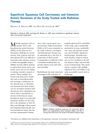
May 2006 in “Dermatologic Surgery” Radiation therapy successfully treated an elderly man's skin cancer and pre-cancerous scalp lesions.
 May 2006 in “Dermatologic Surgery”
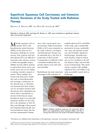
 Radiation therapy successfully treated an elderly man's skin cancer and pre-cancerous scalp lesions.
 4 citations
,
March 2013 in “InTech eBooks”
4 citations
,
March 2013 in “InTech eBooks” Confocal Laser Scanning Microscopy (CLSM) is a useful tool for studying how drugs interact with skin and diagnosing skin disorders, despite some limitations.
36 citations
,
February 1998 in “Journal of Anatomy” Fibre optic confocal imaging can visualize skin layers, blood vessels, and nerves in live mice.
 4 citations
,
January 2002 in “Journal of Cosmetic Dermatology”
4 citations
,
January 2002 in “Journal of Cosmetic Dermatology” Long-pulsed ruby laser effectively reduces hair in male-to-female transsexuals.
 April 2019 in “The journal of investigative dermatology/Journal of investigative dermatology”
 Scientists discovered a new way UVB light increases skin pigmentation through the ATP-P2X7 pathway.
15 citations
,
January 1991 in “Mammalian Genome” 39 citations
,
June 1999 in “Seminars in cutaneous medicine and surgery” Optical hair removal devices showed potential for long-term hair removal in 1999.
82 citations
,
May 2005 in “Dermatologic therapy” Laser hair removal has advanced to effectively reduce hair for various skin types and hair colors.
46 citations
,
December 2018 in “Biomedical Optics Express” Raman spectroscopy could effectively guide skin cancer surgery by identifying tumor margins.
25 citations
,
January 2013 in “Colloids and surfaces. B, Biointerfaces” Hair dye colors mainly target melanin granules in black hair.
34 citations
,
January 2016 in “Analytical Chemistry” A new method can quickly and accurately detect drugs in hair.
 1 citations
,
August 2018 in “International Journal of Research -GRANTHAALAYAH”
1 citations
,
August 2018 in “International Journal of Research -GRANTHAALAYAH” Hair follicles emit electromagnetic fields, useful for medical applications.
 January 2015 in “Dermatology Review”
 LED therapy may improve skin health and stimulate hair growth.
 May 2026 in “Physical review. D/Physical review. D.”
 Soft hair on black holes affects their images, but detecting this is difficult with current technology.
 5 citations
,
November 2015 in “International Journal of Radiation Biology”
5 citations
,
November 2015 in “International Journal of Radiation Biology” Gamma-ray exposure can cause long-lasting damage to hair follicles, affecting hair structure and color.
7 citations
,
March 2021 in “IntechOpen eBooks” RF energy is used in medical and beauty treatments to heat tissues, tighten skin, and reduce fat safely.
November 2025 in “Journal of Investigative Dermatology” Radiation-induced hair loss may be caused by hair growth stopping and inflammation in blood vessels.
10 citations
,
January 2011 in “Journal of biomedical optics” OCT is a reliable, noninvasive way to measure hair thickness.
5 citations
,
November 2003 in “PubMed” Chemical treatments and light exposure damage hair proteins.
May 2024 in “International Journal of Cosmetic Science” A new method using near-infrared light can effectively detect and analyze internal hair damage.
 6 citations
,
November 2013 in “International Journal of Radiation Biology”
6 citations
,
November 2013 in “International Journal of Radiation Biology” Gamma-rays exposure during the resting phase of hair growth can damage hair regeneration and color in mice.
78 citations
,
January 2013 in “Brachytherapy” HDR electronic brachytherapy effectively treats nonmelanoma skin cancer with good cosmetic results and minimal side effects.
Hair follicles emit electromagnetic fields due to S100 proteins.