 June 2023 in “Benha Journal of Applied Sciences”
 Targeting IL-17 could help treat pattern hair loss.
 9 citations
,
March 2017 in “JAAD Case Reports”
9 citations
,
March 2017 in “JAAD Case Reports” A woman's scalp condition improved with specific ointment after a hair piece caused skin issues.
 5 citations
,
June 1994 in “Journal of Cutaneous Pathology”
5 citations
,
June 1994 in “Journal of Cutaneous Pathology” No CD44 in alopecia areata, present in normal and androgenetic alopecia.
 2 citations
,
March 2018 in “The Journal of Dermatology”
2 citations
,
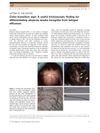
March 2018 in “The Journal of Dermatology” The "color-transition sign" helps tell apart alopecia areata incognita from telogen effluvium by looking at hair color changes.
 15 citations
,
May 2011 in “Veterinary Dermatology”
15 citations
,
May 2011 in “Veterinary Dermatology” Vitamin A might be a safe extra treatment for dogs with sebaceous adenitis, but more research is needed to prove its effectiveness.
 3 citations
,
September 1980 in “Experientia”
3 citations
,
September 1980 in “Experientia” Dobutamine does not mimic dopamine at therapeutic doses but may at very high concentrations; microfilaments, not microtubules, are important for wound healing in Xenopus embryos.
 1 citations
,
April 2017 in “Journal of Investigative Dermatology”
1 citations
,
April 2017 in “Journal of Investigative Dermatology” Tofacitinib may slow hair loss in scarring alopecias but is unlikely to regrow significant hair.
 1 citations
,
January 2009 in “Actas Dermo-Sifiliográficas”
1 citations
,
January 2009 in “Actas Dermo-Sifiliográficas” Docetaxel, a chemotherapy drug, was reported to cause psoriasis in a patient for the first time.
 1 citations
,
January 2005 in “Side effects of drugs annual”
1 citations
,
January 2005 in “Side effects of drugs annual” The document concluded that various dermatological treatments have different effectiveness and side effects, with some causing irritation, allergic reactions, or systemic effects.
 November 2020 in “Journal of The American Academy of Dermatology”
 Certain immune markers may predict chemotherapy response in mesothelioma, and nivolumab is a tolerable and effective treatment for advanced non-small cell lung cancer.
 1 citations
,
August 2016 in “Journal of Investigative Dermatology”
1 citations
,
August 2016 in “Journal of Investigative Dermatology” Activating STAT5 in the skin's dermal papilla is key for starting hair growth, regenerating hair follicles, and healing wounds.
 August 2016 in “Journal of Investigative Dermatology”
 The enzyme CD73 helps control human hair growth and could be targeted to treat hair growth disorders.
 August 2016 in “Journal of Investigative Dermatology”
 Human hair follicles have a scent receptor that can influence hair growth.
 102 citations
,
April 2014 in “International Journal of Dermatology”
102 citations
,
April 2014 in “International Journal of Dermatology” The treatment helped reduce symptoms and stabilize the hairline in most patients with Frontal Fibrosing Alopecia, but hair regrowth was limited.
 77 citations
,
July 2020 in “Journal of the European Academy of Dermatology and Venereology”
77 citations
,
July 2020 in “Journal of the European Academy of Dermatology and Venereology” Environmental factors, hormones, nutrition, and stress all significantly affect skin health and aging.
 13 citations
,
September 2017 in “Skin appendage disorders”
13 citations
,
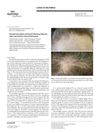
September 2017 in “Skin appendage disorders” Some women with Frontal Fibrosing Alopecia also have Lichen Planopilaris, which can lead to more symptoms and affect hair outside the scalp.
 June 2020 in “The journal of investigative dermatology/Journal of investigative dermatology”
 Topical treatments led to hair regrowth in a man with linear morphea.
 December 2013 in “Research Portal (King's College London)”
 Hair loss in Lichen Planopilaris is caused by immune system issues damaging hair follicles and stem cells.
 36 citations
,
May 2011 in “Dermatologic therapy”
36 citations
,
May 2011 in “Dermatologic therapy” No treatments fully cure or prevent alopecia areata; some help but have side effects or need more research.
 25 citations
,
July 1994 in “Archives of Dermatology”
25 citations
,
July 1994 in “Archives of Dermatology” A man's skin condition, pemphigus vulgaris, came back after he was treated with interleukin 2 for cancer.
 16 citations
,
May 2011 in “Dermatologic therapy”
16 citations
,
May 2011 in “Dermatologic therapy” Effective treatments for severe alopecia areata are still lacking.
 10 citations
,
July 2015 in “Journal of Cosmetic Dermatology”
10 citations
,
July 2015 in “Journal of Cosmetic Dermatology” Higher DKK-1 levels found in hair loss patients; L-ascorbic acid 2-phosphate, L-threonate, and ginsenoside F2 may help promote hair growth.
 10 citations
,
July 2012 in “International Journal of Dermatology”
10 citations
,
July 2012 in “International Journal of Dermatology” Syphilis can cause hair loss and should be considered in unexplained cases.
 3 citations
,
April 2015 in “Dermatology practical & conceptual”
3 citations
,
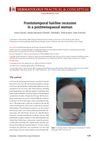
April 2015 in “Dermatology practical & conceptual” Postmenopausal women can experience hairline recession, affecting their quality of life, and more research is needed for treatments.
 June 2011 in “International Journal of Dermatology”
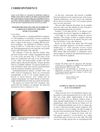
 A man's red tattoo caused a skin reaction and hair loss in his beard, which improved after treatment.
 100 citations
,
September 2016 in “Clinical transplantation/Clinical transplantation.”
100 citations
,
September 2016 in “Clinical transplantation/Clinical transplantation.” Voriconazole can cause serious side effects, especially in long-term use.
 25 citations
,
January 2005 in “Pediatric Dermatology”
25 citations
,
January 2005 in “Pediatric Dermatology” Methotrexate effectively treated a 2-year-old's generalized pustular psoriasis without side effects.
 21 citations
,
January 2005 in “Pediatric Dermatology”
21 citations
,
January 2005 in “Pediatric Dermatology” An 8-year-old girl with vitiligo developed extra hair growth on her knee after using tacrolimus ointment.
 16 citations
,
January 2005 in “Pediatric Dermatology”
16 citations
,
January 2005 in “Pediatric Dermatology” A 10-year-old girl with Fox Fordyce disease improved with treatment, suggesting the disease can occur before puberty and might be underdiagnosed in young girls.
 12 citations
,
January 2005 in “Pediatric Dermatology”
12 citations
,
January 2005 in “Pediatric Dermatology” Fox Fordyce disease might be more common in prepubertal girls than thought and can be managed with treatment.