2 citations
,
December 2017 in “The journal of investigative dermatology. Symposium proceedings/The Journal of investigative dermatology symposium proceedings” The conclusion is that a new method could improve the identification of autoimmune targets in alopecia areata, despite some limitations.
 2 citations
,
November 2015 in “Journal of Investigative Dermatology”
2 citations
,
November 2015 in “Journal of Investigative Dermatology” RANKL improves the immune response against herpes simplex virus by enhancing T cell activation and could help develop better treatments or vaccines.
 2 citations
,
August 2015 in “Journal of dermatology”
2 citations
,
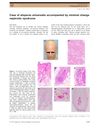
August 2015 in “Journal of dermatology” A possible link exists between minimal change nephrotic syndrome and complete hair loss.
 2 citations
,
February 2014 in “Hair therapy & transplantation”
2 citations
,
February 2014 in “Hair therapy & transplantation” Alopecia Areata is an autoimmune condition causing hair loss, influenced by genetics, environment, and possibly improved by anti-MIF therapy, with many patients experiencing regrowth within a year.
2 citations
,
December 2011 in “[Thesis]. Manchester, UK: The University of Manchester; 2011.” Immune system failure in hair follicles causes lichen planopilaris, leading to hair loss.
2 citations
,
November 2007 in “Clinics in dermatology” Tofacitinib may be an effective and safe treatment for adolescent alopecia areata.
 1 citations
,
October 2022 in “Springer eBooks”
1 citations
,
October 2022 in “Springer eBooks” Testosterone is key for male sexual function, and treating hormone imbalances can improve sexual issues.
 1 citations
,
December 2017 in “Journal of The European Academy of Dermatology and Venereology”
1 citations
,
December 2017 in “Journal of The European Academy of Dermatology and Venereology” Vertex baldness has higher DHT levels than frontal baldness, but testosterone and PSA levels are similar.
 1 citations
,
February 2014 in “Archiv Der Pharmazie”
1 citations
,
February 2014 in “Archiv Der Pharmazie” Carbamates may help treat androgen-dependent conditions by changing how certain lipid enzymes are produced.
 1 citations
,
March 2012 in “Journal of Dermatological Science”
1 citations
,
March 2012 in “Journal of Dermatological Science” Testosterone, progesterone, and levonorgestrel change enzyme levels related to fat production in hamster skin, which could affect skin oil and acne.
 1 citations
,
January 2008 in “Proceedings of the 9th World Rabbit Congress, Verona, Italy, 10-13 June 2008”
1 citations
,
January 2008 in “Proceedings of the 9th World Rabbit Congress, Verona, Italy, 10-13 June 2008” Furless male rabbits grew slightly faster and heavier than furred ones, but testosterone levels were not the cause.
1 citations
,
September 2025 in “Frontiers in Immunology” Folate receptor β helps suppress the immune system in macrophages and affects cancer growth and hair health.
1 citations
,
July 2025 in “Barrier Immunity” A holistic approach is crucial for treating skin disorders and restoring barrier function.
1 citations
,
September 2024 in “Journal of the American Academy of Dermatology” Farudodstat may effectively treat alopecia areata without harmful side effects.
1 citations
,
November 2023 in “Journal of Investigative Dermatology” Farudodstat may effectively treat alopecia areata without harming hair follicles.
1 citations
,
August 2023 in “Journal of Investigative Dermatology” Farudodstat may help treat alopecia areata by protecting hair follicles.
 1 citations
,
June 2023 in “Biomolecules & therapeutics”
1 citations
,
June 2023 in “Biomolecules & therapeutics” Nitric oxide is important for skin functions and both helps protect against and contributes to skin inflammation and sensitization.
 1 citations
,
January 2023 in “Advances in animal and veterinary sciences”
1 citations
,
January 2023 in “Advances in animal and veterinary sciences” Most cats with dermatophytosis had fungal infections, mainly caused by M. canis.
 1 citations
,
June 2022 in “The Egyptian Journal of Hospital Medicine”
1 citations
,
June 2022 in “The Egyptian Journal of Hospital Medicine” Understanding the genetics of alopecia areata could lead to better treatments.
1 citations
,
March 2022 in “bioRxiv (Cold Spring Harbor Laboratory)” Biodegradable scaffolds help regenerate wounds and hair by activating the immune system.
1 citations
,
December 2021 Cats likely have a reactive skin condition, while dogs may have a more complex, possibly cancerous one.
1 citations
,
June 2021 in “bioRxiv (Cold Spring Harbor Laboratory)” UV exposure harms skin by causing fibroblast loss, but T cells help fibroblast survival.
 1 citations
,
June 2020 in “bioRxiv (Cold Spring Harbor Laboratory)”
1 citations
,
June 2020 in “bioRxiv (Cold Spring Harbor Laboratory)” Fetal skin has unique immune cells different from adult skin.
 1 citations
,
April 2018 in “Journal of Investigative Dermatology”
1 citations
,
April 2018 in “Journal of Investigative Dermatology” Tofacitinib helped most patients with alopecia areata regrow hair and changes in immune cells were linked to the treatment's effectiveness.
1 citations
,
April 2017 in “Journal of Investigative Dermatology” ZNF750 and MPZL3 are important in causing seborrheic dermatitis.
 1 citations
,
January 2017 in “Springer eBooks”
1 citations
,
January 2017 in “Springer eBooks” Understanding the immune-related causes of Alopecia Areata has led to potential treatments like JAK inhibitors.
1 citations
,
December 2013 in “The journal of investigative dermatology. Symposium proceedings/The Journal of investigative dermatology symposium proceedings” New treatments and strategies are needed for Alopecia Areata, focusing on immune response and better trial designs.
 1 citations
,
January 2010 in “Elsevier eBooks”
1 citations
,
January 2010 in “Elsevier eBooks” Any drug can cause skin reactions, but antibiotics, NSAIDs, and psychotropic drugs are more common, with some reactions being life-threatening.

Different types of hair loss and gender affect facial heat patterns, which may help diagnose and treat hair loss.
1 citations
,
August 2005 in “Springer eBooks” Alopecia areata is an autoimmune disease with genetic links, treatable with certain medications, and can affect mental health.