 69 citations
,
September 2006 in “Human Reproduction”
69 citations
,
September 2006 in “Human Reproduction” Women with PCOS have fewer activated T cells in their ovarian follicles, which might affect fertility.
 June 2023 in “Medeniyet medical journal”
 People with alopecia areata have similar retinal structures but thicker choroidal regions compared to those without the condition.
 March 2014 in “Journal of The American Academy of Dermatology”
 Azathioprine may help with severe hair loss, a new topical treatment could counteract hair thinning, and trichoscopy can diagnose hair-pulling disorder effectively.
 July 1980 in “Journal of The American Academy of Dermatology”
 The conference concluded that understanding hair and nail disorders is important, iron deficiency may be linked to hair loss, and while some treatments for skin conditions are effective, they may have risks and high costs.
 December 2021 in “Research Square (Research Square)”
 M-CSF-stimulated myeloid cells can cause alopecia areata in mice.
April 2018 in “Veterinary Pathology” Tigers had a skin condition causing hair loss and inflammation, but the cause is unknown and treatment didn't work.
 September 2022 in “Intisasi sains media”
 A young child with complete hair loss improved significantly with a combination of hair growth treatments and laser therapy.
 20 citations
,
November 2005 in “Journal of Investigative Dermatology Symposium Proceedings”
20 citations
,
November 2005 in “Journal of Investigative Dermatology Symposium Proceedings” IFN-γ and IL-2 are important for T cell activation in hair loss in mice.
 2 citations
,
August 2015 in “Journal of dermatology”
2 citations
,
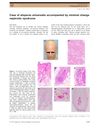
August 2015 in “Journal of dermatology” A possible link exists between minimal change nephrotic syndrome and complete hair loss.
July 2025 in “Journal of Investigative Dermatology” Discoid lupus erythematosus involves immune activation and fibrosis around hair follicles, with shared pathways across humans, dogs, and mice, suggesting potential treatments for both humans and animals.
 January 2025 in “bioRxiv (Cold Spring Harbor Laboratory)”
 Potential therapeutic targets for scarring hair loss are identified.
127 citations
,
January 2000 in “Journal of Investigative Dermatology” Cytotoxic T cells cause hair loss in chronic alopecia areata.
 July 2016 in “Journal of Investigative Dermatology”
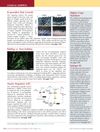
 R-spondin2 may help treat hair loss, gene differences could explain baldness, a peptide's regulation is linked to psoriasis, B-defensin gene copies may affect a skin condition's risk and severity, and potential markers and targets for alopecia areata were identified.
286 citations
,
August 2007 in “Journal of Clinical Investigation” Alopecia areata is an autoimmune disease where T cells attack hair follicles.
 34 citations
,
October 2017 in “Archivos Argentinos De Pediatria”
34 citations
,
October 2017 in “Archivos Argentinos De Pediatria” Alopecia Areata is a complex, unpredictable autoimmune hair loss condition with limited treatment options and a significant psychological impact.
 17 citations
,
July 1994 in “Journal of Dermatological Science”
17 citations
,
July 1994 in “Journal of Dermatological Science” The cause of alopecia areata is likely a mix of genetics, immune system issues, and environmental factors, with more research needed to understand it fully.
 4 citations
,
March 2018 in “Daehan han'yi hag'hoeji/Journal of Korean medicine”
4 citations
,
March 2018 in “Daehan han'yi hag'hoeji/Journal of Korean medicine” Astragalus membranaceus helps regrow hair and reduce hair loss symptoms.
 1 citations
,
January 2017 in “Springer eBooks”
1 citations
,
January 2017 in “Springer eBooks” Understanding the immune-related causes of Alopecia Areata has led to potential treatments like JAK inhibitors.
 July 2024 in “Romanian Journal of Veterinary Sciences”
 Cyclosporine improved skin condition in dogs with sebaceous adenitis.
 March 2023 in “Clinical, cosmetic and investigational dermatology”
 IL-33 is linked to hair follicle damage in psoriasis and could be a treatment target for hair loss in this condition.
 December 2022 in “Rossijskij žurnal kožnyh i veneričeskih boleznej”
 New treatments for child hair loss due to immune issues are effective but not yet officially approved.
 January 2017 in “Springer eBooks”
 The document concludes that Cutaneous Lupus Erythematosus has different forms, is influenced by genetic and environmental factors, and can be treated with various medications, but more targeted therapies are needed.
 November 1998 in “Journal of The European Academy of Dermatology and Venereology”
 A man's skin cancer improved and some of his hair grew back after treatment with a special light therapy and a medication.
 February 2016 in “The journal of allergy and clinical immunology/Journal of allergy and clinical immunology/The journal of allergy and clinical immunology”
 A new TP63 mutation was found in a baby with EEC syndrome, showing the need for TREC testing to check for immune issues.
 90 citations
,
July 2008 in “Dermatologic therapy”
90 citations
,
July 2008 in “Dermatologic therapy” Lichen planopilaris is a chronic, scarring hair loss condition with no definitive cure, requiring accurate diagnosis and treatment to manage symptoms.
 61 citations
,
September 2010 in “Genomics”
61 citations
,
September 2010 in “Genomics” The study found that immune responses disrupt hair growth cycles, causing hair loss in alopecia areata.
 22 citations
,
June 2013 in “Australasian Journal of Dermatology”
22 citations
,
June 2013 in “Australasian Journal of Dermatology” Early stage bald spots are linked to skin inflammation and damage to the upper part of the hair follicle.
 4 citations
,
January 2013 in “Acta dermato-venereologica”
4 citations
,
January 2013 in “Acta dermato-venereologica” Some patients with Alopecia Areata experience itch due to immune cells and enzymes that cause itching.
 June 2024 in “Archives of Medical Science”
 Telitacicept effectively improved hair regrowth in a woman with lupus and alopecia.

North American ginseng extract helped regrow hair in balding mice.