
Hair follicle stem cells are crucial for touch sensation and proper nerve structure in mice.

Skin stem cells in hair follicles are important for touch sensation.
 46 citations
,
July 2007 in “Journal of comparative neurology”
46 citations
,
July 2007 in “Journal of comparative neurology” Manatee whiskers are specially adapted for touch in water.
5 citations
,
August 2023 in “Skin Research and Technology” Hairy skin feels prickling more intensely than smooth skin.
 81 citations
,
June 2014 in “Cold Spring Harbor perspectives in medicine”
81 citations
,
June 2014 in “Cold Spring Harbor perspectives in medicine” Skin has specialized touch receptors that can tell different sensations apart.
1 citations
,
June 2017 in “The journal of investigative dermatology/Journal of investigative dermatology” The symposium highlighted the skin's role in sensing itch, pain, touch, and pleasure, and discussed new research and techniques for understanding and treating these sensations.
2 citations
,
August 2019 in “Electronics and Communications in Japan” The device mimics human hair follicles and detects tiny forces and moments with high sensitivity.
 6 citations
,
September 2021 in “Experimental Brain Research”
6 citations
,
September 2021 in “Experimental Brain Research” Rats have different touch receptors in their paws that help with movement and handling objects.
 142 citations
,
September 2020 in “Journal of neurophysiology”
142 citations
,
September 2020 in “Journal of neurophysiology” Young adults have about 230,000 tactile nerve fibers, decreasing 5-8% per decade with age.
 April 2022 in “Journal of The American Academy of Dermatology”
 The document suggests that nerve issues might contribute to hair loss and that testing sensation could predict these nerve problems.
 84 citations
,
June 2013 in “Stem Cells Translational Medicine”
84 citations
,
June 2013 in “Stem Cells Translational Medicine” New methods for skin and nerve regeneration can improve healing and feeling after burns.
 July 2025 in “The Journal of Physiology”
 C-tactile afferents are linked to emotional touch and social bonding through hair movement.
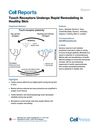 31 citations
,
November 2016 in “Cell Reports”
31 citations
,
November 2016 in “Cell Reports” Touch sensitivity in mouse skin decreases during hair growth due to changes in touch receptors.
63 citations
,
February 2010 in “Journal of Neurophysiology” Microstimulation of certain facial and mouth nerves can evoke specific sensations, while deeper nerves may require multiple stimulations to affect perception.
7 citations
,
July 2025 in “The Journal of Physiology” C-tactile nerves are sensitive to hair movement.
109 citations
,
November 2011 in “Nature Neuroscience”  1 citations
,
April 2022 in “Journal of The American Academy of Dermatology”
1 citations
,
April 2022 in “Journal of The American Academy of Dermatology” Hair loss in men (androgenetic alopecia) is significantly linked to decreased scalp sensitivity, but not temperature sensitivity. More research is needed to confirm this. Comparing this hair loss to leprosy is unsupported and stigmatizing.
35 citations
,
March 2010 in “BMC veterinary research” Goats with BSE or scrapie show varying symptoms, and using only clinical signs may not detect all scrapie cases.
 3 citations
,
August 2020 in “Journal of The American Academy of Dermatology”
3 citations
,
August 2020 in “Journal of The American Academy of Dermatology” Degenerative changes in the lower cervical spine are common in patients with abnormal scalp sensations, with some improvement seen using pain medication and physical therapy.
 1 citations
,
January 2012 in “Elsevier eBooks”
1 citations
,
January 2012 in “Elsevier eBooks” The document concludes that the skin is a complex organ providing protection, sensation, and healing, with challenges in treating conditions like itchiness.
 6 citations
,
January 2009 in “Elsevier eBooks”
6 citations
,
January 2009 in “Elsevier eBooks” The skin has multiple layers and cells, serves as a protective barrier, helps regulate temperature, enables sensation, affects appearance, and is involved in vitamin D synthesis.

Meis2 is essential for touch sensation and proper nerve connection to touch receptors in certain skin areas of mice.
660 citations
,
December 2011 in “Cell” Different hair follicles in the skin are innervated by unique combinations of mechanosensory neurons, crucial for touch sensation.
 277 citations
,
July 2011 in “Journal of the Dermatology Nurses’ Association”
277 citations
,
July 2011 in “Journal of the Dermatology Nurses’ Association” The skin's layers protect, sense, and regulate the body's internal balance, but can be prone to cancer.
 December 2025 in “Nature Communications”
 Club-like receptors detect light touch but not whisking.
October 2025 in “Journal of Neurophysiology” BK and Kv4.2 channels help Merkel cells in rat whiskers sense touch.
123 citations
,
November 2003 in “Neuroscience Letters” TRPV4 helps sense pressure in mouse skin.
70 citations
,
February 2016 in “EMBO reports” Scientists found a specific group of itch-sensing nerve cells in mice important for feeling itch but not for sensing heat or touch.
8 citations
,
October 2021 in “The international journal of risk and safety in medicine” The document sets criteria for diagnosing long-term sexual dysfunctions caused by certain medications.
January 2026 in “Journal of Clinical Medicine” Robotic technology in plastic surgery shows promise but needs more research and cost reduction for wider use.