28 citations
,
July 1980 in “British Journal of Dermatology” The hair disorder was caused by abnormal protein formation, making hair easily damaged.
 39 citations
,
April 2020 in “Clinical, Cosmetic and Investigational Dermatology”
39 citations
,
April 2020 in “Clinical, Cosmetic and Investigational Dermatology” Asian hair is generally straight and thick, with unique disorders and properties, and more research is needed to understand it fully.
10 citations
,
January 1997 in “Dermatology” Two siblings were diagnosed with Trichothiodystrophy, identified by brittle hair and low sulfur content.
12 citations
,
October 1996 in “Dermatologic clinics” Advances in genetics may lead to targeted treatments for hair disorders.
 January 2014 in “International Journal of Trichology”
 Hair is culturally and economically valuable, and its weight is now used to measure the effectiveness of hair growth treatments.
 April 2017 in “IOSR journal of dental and medical sciences”
 Netherton Syndrome is a non-treatable genetic disorder in children causing skin, hair, and allergy issues.
 4 citations
,
August 2014 in “Journal of molecular structure”
4 citations
,
August 2014 in “Journal of molecular structure” Chemical treatments on bleached black hair change its internal structure by breaking and reforming bonds, and treatments with hydrolyzed eggwhite protein help repair it.
January 2011 in “대한피부과학회지” A 7-year-old girl was diagnosed with trichothiodystrophy due to low sulfur levels in her hair.
Hydrophobic modifications make human hair less affected by water.
 July 2023 in “Al-Azhar Assiut Medical Journal”
 Trichoscopy helps diagnose and manage hair and scalp disorders in children.
1 citations
,
January 2013 in “PubMed” Permanent wave treatment with thioglycolic acid changes hair structure by altering disulfide bonds.

The document concludes that Loose Anagen Hair Syndrome is a benign condition where hair is thin and easily pulled out, often improving with age.
1 citations
,
March 2023 in “Journal of Natural Fibers” A gentler, less damaging method for curling hair using tyrosine works well initially but fades after washing.
 2 citations
,
January 2018 in “European journal of pediatric surgery reports”
2 citations
,
January 2018 in “European journal of pediatric surgery reports” A baby girl's hair turned straight on one side due to a neck tumor and surgery, but it returned to curly as she recovered.

Perms can damage hair and scalp, so proper assessment and care are essential.
4 citations
,
August 2013 in “Pediatric dermatology” Hair casts can be treated with physical removal and special shampoos.
Loose anagen syndrome causes easy hair shedding in children, often resolving on its own.
 September 2016 in “Journal of Dermatological Science”
 Björnstad syndrome causes twisted hair from birth.
13 citations
,
October 2008 in “PubMed” Japanese women's curved hair has an uneven internal structure and varying amino acid composition.
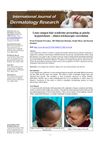 January 2026 in “International Journal of Dermatology Research”
 Early recognition of loose anagen hair syndrome is important to prevent misdiagnosis and unnecessary treatments.
 May 2016 in “American Academy of Pediatrics eBooks”
 Telogen effluvium is a condition that causes temporary hair loss.
January 2010 in “SÖFW-Journal” A natural moisturizer can make hair stronger.
7 citations
,
January 2012 in “International journal of trichology” Permanent hair removal with lasers may cure itchy black hair bristles on the back.
April 2017 in “Journal of Dermatological Science” Asymmetric hair follicle differentiation causes the unique shape of kinky hair.
March 2003 in “中華皮膚科醫學雜誌” Trichothiodystrophy causes unusual hair and developmental issues.
May 2010 in “Faculty Opinions – Post-Publication Peer Review of the Biomedical Literature” A mutation in the KRT74 gene causes woolly hair by affecting hair texture.
August 2021 in “Oxford University Press eBooks” New treatments for hair-pulling disorder focus on personalized approaches and combining therapies for better results.
1 citations
,
January 2017 in “International Journal of Trichology” A new mutation caused a rare hair disorder in a Polish girl, not inherited from her family.
November 2024 in “Elsevier eBooks” 2 citations
,
January 2017 Hair movement can indicate hair quality and health.