 3 citations
,
June 2019 in “Dermatologic Therapy”
3 citations
,
June 2019 in “Dermatologic Therapy” Biofibre hair implant is a safe, effective treatment for baldness with 95% patient satisfaction.
 33 citations
,
January 1991 in “The Journal of Dermatologic Surgery and Oncology”
33 citations
,
January 1991 in “The Journal of Dermatologic Surgery and Oncology” Incisional slit grafting for hair transplantation gives natural-looking results and has a high success rate.
 1 citations
,
July 2010 in “International Society of Hair Restoration Surgery”
1 citations
,
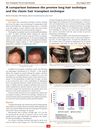
July 2010 in “International Society of Hair Restoration Surgery” The preview long hair technique offers immediate results and better satisfaction than the classic method.
January 2001 in “Chinese Journal of Medical Aesthetics and Cosmetology” Micrografts can grow natural hair and most patients are satisfied, but some need multiple procedures.
January 2013 in “Journal of Tissue Engineering and Reconstructive Surgery” Inserting hair follicle units improved the development of tissue-engineered skin.
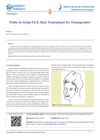
A hair transplant using hair from the back of the head and pubic area was successful in creating a feminine hairline for a male-to-female transgender person.
December 2023 in “Medicine” Platelet-rich gel is a simpler, cheaper, and painless option for scalp defects, but tissue expansion offers better hair growth despite more pain.
 30 citations
,
January 2014 in “Dermatologic Clinics”
30 citations
,
January 2014 in “Dermatologic Clinics” Tight hairstyles, especially on chemically treated hair, can cause reversible hair loss if caught early but may become permanent if not addressed.
 3 citations
,
January 2018 in “Open Access Macedonian Journal of Medical Sciences”
3 citations
,
January 2018 in “Open Access Macedonian Journal of Medical Sciences” Implant safely and effectively treats hair loss.
 July 2023 in “Clinical, Cosmetic and Investigational Dermatology”
 The sharp implanter method for hair graft placement is simpler and faster, allowing for dense packing of grafts with natural results.
 16 citations
,
June 2009 in “Dermatologic Surgery”
16 citations
,
June 2009 in “Dermatologic Surgery” A 17-year-old boy with Temporal Triangular Alopecia successfully grew new hair after a hair restoration surgery using follicular unit transplantation.
 April 2011 in “ISRN Dermatology (Print)”
 The wigs made from human hair and polypropylene were mostly well-tolerated and durable in rabbits, suggesting they could be a new option for people with extensive hair loss.
 2 citations
,
January 2001 in “Dermatologic Surgery”
2 citations
,
January 2001 in “Dermatologic Surgery” Poliglecaprone 25 is better than steel staples for hair transplant surgery, causing less discomfort and finer scars.
 1 citations
,
January 2017 in “Journal of Aesthetic & Reconstructive Surgery”
1 citations
,
January 2017 in “Journal of Aesthetic & Reconstructive Surgery” Combining FUT and FUE hair transplant methods in one session provides more grafts and higher patient satisfaction.
44 citations
,
January 2011 in “Journal of biotechnology” Scientists recreated human hair follicles in the lab that can grow hair.
January 2026 in “Updates in clinical dermatology”  1 citations
,
February 2019 in “Journal of The American Academy of Dermatology”
1 citations
,
February 2019 in “Journal of The American Academy of Dermatology” Using three-hair grafts from the back of the head for eyebrow transplantation offers a natural look and reduces scarring.
October 2022 in “Hair Transplantation” Reconstructing temporal points in hair restoration is crucial for a natural look.
 9 citations
,
September 1997 in “Dermatologic Surgery”
9 citations
,
September 1997 in “Dermatologic Surgery” The technique of transplanting micrografts in hair restoration surgery is fast, practical, and efficient, minimizing damage to follicles and grafts.
January 2023 in “Springer eBooks”  10 citations
,
May 2014 in “Facial Plastic Surgery”
10 citations
,
May 2014 in “Facial Plastic Surgery” Hair transplantation using PLFUT is effective for eyebrow restoration with natural-looking results and no scarring.
 September 2021 in “Hair transplant forum international”
 Synthetic hair implants can cause infection and scarring, so safer options like follicular unit excision are recommended.
 3 citations
,
February 2021 in “Journal of Cosmetic Dermatology”
3 citations
,
February 2021 in “Journal of Cosmetic Dermatology” Long hair FUE, a hair transplant without shaving, is becoming more popular and surgeons should learn it.
January 2021 in “Hair therapy & transplantation” June 2023 in “Zenodo (CERN European Organization for Nuclear Research)” 20 citations
,
February 2012 in “Archives of dermatology” Leg hair transplants can create a natural-looking hairline and show successful growth over several years.
Since 1995, we only use Follicular Unit Transplantation for hair restoration and stopped using minigrafting/micrografting techniques.