2 citations
,
September 2024 in “PLoS ONE” Bendamustine combined with tucidinostat may effectively treat adult T-cell leukemia.
 1 citations
,
May 2021 in “Scientific Reports”
1 citations
,
May 2021 in “Scientific Reports” Certain cancer drugs are strongly linked to nerve damage, requiring close monitoring and early treatment.
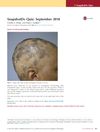 August 2018 in “Journal of Investigative Dermatology”
 Tofacitinib may help regrow hair in alopecia areata patients.
 11 citations
,
October 2001 in “Dermatologic Clinics”
11 citations
,
October 2001 in “Dermatologic Clinics” The document concludes that DAB389-IL2 is promising for treating refractory cutaneous T-cell lymphoma, but more research is needed on its effectiveness and side effect management.
January 2022 in “eJournal Kedokteran Indonesia” Both treatments are similarly effective, but paclitaxel-carboplatin is cheaper and has more severe side effects.
 145 citations
,
May 2008 in “Cancer Science”
145 citations
,
May 2008 in “Cancer Science” Cancer cells often have more copies of TERT and TERC genes, which helps them grow and could affect patient outcomes.
 January 2025 in “Nanoscale”
 Boron/nitrogen-doped carbon nano-onions improve targeted breast cancer treatment by enhancing drug delivery and reducing side effects.
July 2024 in “Journal of Controlled Release” Nanostructured lipid carriers effectively deliver tofacitinib to hair follicles, reversing hair loss in alopecia areata.
 2 citations
,
November 2023 in “Acta dermato-venereologica”
2 citations
,
November 2023 in “Acta dermato-venereologica” Tofacitinib is effective and safe for treating alopecia areata with a good drug survival rate.
 28 citations
,
December 2017 in “Journal of Investigative Dermatology Symposium Proceedings”
28 citations
,
December 2017 in “Journal of Investigative Dermatology Symposium Proceedings” Tofacitinib shows promise for treating severe hair loss in adults and teens, with many experiencing regrowth, but hair loss returns when treatment stops.
 70 citations
,
April 2016 in “Experimental Dermatology”
70 citations
,
April 2016 in “Experimental Dermatology” A patient with alopecia areata regrew hair after taking tofacitinib and showed changes in certain blood and skin markers.
 238 citations
,
November 2016 in “Journal of The American Academy of Dermatology”
238 citations
,
November 2016 in “Journal of The American Academy of Dermatology” Tofacitinib is effective and safe for severe hair loss, but full regrowth is less likely after 10 years of hair loss.
 3 citations
,
August 2020 in “Cutaneous and Ocular Toxicology”
3 citations
,
August 2020 in “Cutaneous and Ocular Toxicology” ATP helps prevent skin damage from vandetanib by reducing stress.
56 citations
,
July 2014 in “PloS one” SARMs may be an effective treatment for a certain type of breast cancer by blocking cancer growth and spread.
 4 citations
,
May 2019 in “Sultan Qaboos University Medical Journal”
4 citations
,
May 2019 in “Sultan Qaboos University Medical Journal” Tofacitinib helped regrow hair in a patient with severe hair loss and improved their quality of life without side effects.
3 citations
,
July 2025 in “Clinical and Experimental Dermatology” Ritlecitinib may be more effective for severe alopecia areata than conventional treatments.
 April 2023 in “Journal of the American Academy of Dermatology”
 Switching between the medications tofacitinib and baricitinib can be effective for treating hair loss in alopecia areata.
 3 citations
,
August 2024 in “Frontiers in Oncology”
3 citations
,
August 2024 in “Frontiers in Oncology” Targeted radionuclide therapy shows promise for improving head and neck cancer treatment but needs more research.
2 citations
,
March 2025 in “ESMO Open” Long-term treatment with palbociclib plus letrozole maintains quality of life in certain breast cancer patients.
 1 citations
,
September 2024 in “International Journal of Advanced Multidisciplinary Research and Studies”
1 citations
,
September 2024 in “International Journal of Advanced Multidisciplinary Research and Studies” Chemotherapy with carboplatin-paclitaxel causes hair loss in all patients.
 March 2018 in “International journal of basic and clinical pharmacology”
 Carboplatin-paclitaxel is preferred for advanced lung cancer due to its balance of affordability and patient well-being.
1 citations
,
February 2025 in “Pediatric Dermatology” Tofacitinib helps hair regrow in some kids with severe alopecia areata, but more research is needed on long-term effects.
 June 2017 in “Journal of the American Academy of Dermatology”
 Tofacitinib is effective and safe for treating severe alopecia areata and related conditions.
 February 2024 in “PloS one”
 Tofacitinib and adalimumab are promising treatments for cicatricial alopecia with few side effects.
 October 2018 in “Annals of oncology”
 Topical calcitriol (BPM31543) is safe for preventing hair loss from chemotherapy and shows some effectiveness.
 2 citations
,
June 2019 in “Boletín médico del Hospital Infantil de México”
2 citations
,
June 2019 in “Boletín médico del Hospital Infantil de México” Tofacitinib treatment is used for teenagers with alopecia areata.
 January 2020 in “bioRxiv (Cold Spring Harbor Laboratory)”
 Semecarpus anacardium leaf extracts may offer safe, effective cancer treatment alternatives.
June 2014 in “Dermatology Times E-News” An arthritis drug helped a person with severe hair loss regrow their hair.
 11 citations
,
January 2018 in “Acta dermato-venereologica”
11 citations
,
January 2018 in “Acta dermato-venereologica” Tofacitinib works better and is more tolerable for severe alopecia than conventional treatments and DPCP immunotherapy.
15 citations
,
December 2019 in “European Journal of Dermatology” Low-dose tofacitinib is effective and cheaper for severe alopecia areata.