 January 2014 in “Pathology”
 RET mutation is important in familial medullary thyroid carcinoma, and BRAF mutation in papillary thyroid carcinoma is linked to more aggressive cancer and higher death rates.
 January 2014 in “Pathology”
 Early subungual melanoma might be treated with less aggressive surgery because it invades the skin under the nail more slowly.
 April 2012 in “Informa Healthcare eBooks”
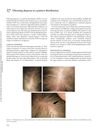
 Fibrosing alopecia in a pattern distribution is a unique hair loss condition with inflammation and scarring, resembling but distinct from common balding.

Hair follicles can be used to quickly assess drug effects in cancer treatment.
 June 2011 in “CRC Press eBooks”
 Low-Level Laser Therapy can stimulate healing and cell function, potentially leading to wider medical use.
 August 1994 in “Journal of dermatological science”
 Mouse hair cells respond to male hormones by growing less, and this can be stopped by certain blockers.
 January 1994 in “Journal of Dermatological Treatment”
 Spironolactone helped reduce excessive facial hair in a woman with porphyria cutanea tarda.

Dermal stem cells help regenerate hair follicles and heal skin wounds.
 February 2009 in “Journal of The American Academy of Dermatology”
 Female hair loss can be diagnosed using specific trichoscopy criteria.
 45 citations
,
January 2020 in “International Journal of Molecular Sciences”
45 citations
,
January 2020 in “International Journal of Molecular Sciences” Some natural compounds may help overcome drug resistance in certain cancers, but more research is needed.
 44 citations
,
November 2009 in “Archives of Dermatology”
44 citations
,
November 2009 in “Archives of Dermatology” CYLD mutations cause a variety of skin tumors with symptoms starting around age 16, and treatments are currently limited.
 43 citations
,
January 2011 in “Plastic and Reconstructive Surgery”
43 citations
,
January 2011 in “Plastic and Reconstructive Surgery” Stem cells have great potential for improving wound healing, but more research is needed to find the best types and ways to use them.
 38 citations
,
June 2017 in “The Journal of Dermatology”
38 citations
,
June 2017 in “The Journal of Dermatology” Aging in hair follicle stem cells leads to hair graying, thinning, and loss.
 33 citations
,
November 2008 in “European Journal of Pharmaceutical Sciences”
33 citations
,
November 2008 in “European Journal of Pharmaceutical Sciences” St. John's wort increases finasteride metabolism, reducing its effectiveness; use caution when combining them.
 29 citations
,
March 2019 in “British Journal of Dermatology”
29 citations
,
March 2019 in “British Journal of Dermatology” Acne is significantly influenced by genetics, and understanding its genetic basis could lead to better, targeted treatments.
 16 citations
,
December 2018 in “Plant Science”
16 citations
,
December 2018 in “Plant Science” Elevated CO2 can lessen the negative impact of water shortage on soybean roots and affects specific genes.
 10 citations
,
February 2006 in “Archives of dermatology”
10 citations
,
February 2006 in “Archives of dermatology” A man's chest hair turned white after a shingles infection, possibly due to virus-damaged pigment cells.
 9 citations
,
December 2010 in “Journal of The European Academy of Dermatology and Venereology”
9 citations
,
December 2010 in “Journal of The European Academy of Dermatology and Venereology” Latanoprost therapy potentially caused a woman's white hair to darken again.
 6 citations
,
February 2019 in “Scientific reports”
6 citations
,
February 2019 in “Scientific reports” A brain-produced steroid causes increased scratching in mice with a skin condition similar to eczema.
 6 citations
,
June 2016 in “Journal of Craniofacial Surgery”
6 citations
,
June 2016 in “Journal of Craniofacial Surgery” Reconstructing lower face gunshot injuries with a fibula and scalp flap is effective and gives good long-term results.
 5 citations
,
July 2000 in “Southern Medical Journal”
5 citations
,
July 2000 in “Southern Medical Journal” Male pattern baldness is often genetic and linked to a hormone, with treatments like finasteride and minoxidil being effective for some men.
 2 citations
,
February 2020 in “Journal of Investigative Surgery”
2 citations
,
February 2020 in “Journal of Investigative Surgery” Flutamide-induced hypospadias in rats slows down early wound healing.

Certain gut microbes are linked to better health in 14 conditions.
 April 2026 in “Frontiers in Bioengineering and Biotechnology”
 Cellulose membranes heal venous leg ulcers faster than standard dressings.
 April 2026 in “Dermatology and Therapy”
 Experts agree on understanding hair aging to improve diagnosis and treatments.
 August 2025 in “Archiv Euromedica”
 Gut microbiota changes might play a role in alopecia areata, and microbiome-targeted treatments show promise.
 May 2024 in “bioRxiv (Cold Spring Harbor Laboratory)”
 KAP-depleted hair causes less immune response and is more biocompatible for implants.
 January 2024 in “Editora Científica Digital eBooks”
 Fotobiomodulação uses light to help heal tissues and reduce inflammation.
 April 2019 in “Journal of Investigative Dermatology”
 Wnt-signaling is regulated differently in skin cells and immune responses during wound healing.
 191 citations
,
May 2018 in “British journal of dermatology/British journal of dermatology, Supplement”
191 citations
,
May 2018 in “British journal of dermatology/British journal of dermatology, Supplement” Alopecia areata is likely an autoimmune disease with unclear triggers, involving various immune cells and molecules, and currently has no cure.