175 citations
,
December 1980 in “Archives of Dermatology” Trichothiodystrophy is a condition with brittle hair and various physical and mental issues due to low sulfur in proteins.
 86 citations
,
October 2013 in “Dermatologic Clinics”
86 citations
,
October 2013 in “Dermatologic Clinics” Trichoscopy is a useful non-invasive method for diagnosing different hair loss conditions.
 March 2015 in “CRC Press eBooks”
 Telogen effluvium is a type of hair loss in women caused by many factors, and iron and thyroid tests are recommended for diagnosis.
39 citations
,
March 2009 in “Dermatology Online Journal” Erlotinib can cause persistent excessive hair growth.
May 2021 in “Research journal of topical and cosmetic sciences” TrichovitalsTM improved skin, hair, and nail health in adults after 12 weeks.
5 citations
,
February 2022 in “Stem cell reports” Thymic stromal lymphopoietin (TSLP) promotes hair growth, especially after skin injury.
 April 2023 in “Journal of Investigative Dermatology”
 Melatonin may help prevent hair loss caused by the chemotherapy drug paclitaxel.
 September 2024 in “Journal of the American Academy of Dermatology”
 The new hair treatment significantly reduces hair shedding safely.
 7 citations
,
July 2019 in “The Journal of Dermatology”
7 citations
,
July 2019 in “The Journal of Dermatology” Terbinafine effectively treated kerion celsi despite disrupted immune responses.
 April 2023 in “The journal of investigative dermatology/Journal of investigative dermatology”
 T cells with memory features grow in number and gather around hair follicles when there are not enough immune cells.
January 2026 in “Biomolecules” TSC22D genes are key in metabolic diseases and cancer, offering potential as treatment targets.
November 2025 in “JEADV Clinical Practice” Itraconazole is effective for treating scalp ringworm, and a Wood's lamp is a useful diagnostic tool.
September 2025 in “International Journal of Molecular Sciences” Bacteroides fragilis and Microbacterium sp. T32 may be linked to autoimmune activity in Hashimoto's thyroiditis and alopecia areata.
 66 citations
,
October 1984 in “Annual Review of Microbiology”
66 citations
,
October 1984 in “Annual Review of Microbiology” Toxic Shock Syndrome cases increased due to new factors, but decreased with public health measures and changes in tampon use.
 2 citations
,
August 2023 in “Pharmaceutics”
2 citations
,
August 2023 in “Pharmaceutics” New skin disease treatments using TDDS are improving but face challenges like side effects and high costs.
105 citations
,
February 2010 in “Endocrinology” The skin produces and responds to thyroid-stimulating hormone, which is controlled by other thyroid-related hormones.
April 2019 in “The journal of investigative dermatology/Journal of investigative dermatology” Disrupting the Tsc2 gene in certain cells leads to thicker skin, larger hair, and changes in hair growth signaling, which can be partly reversed with specific treatment.
 February 2020 in “The Pharmaceutical Society of Japan”
 The Echigo Shirayki Mushroom may help with hair growth.
2 citations
,
September 2022 in “Annals of Oncology” Mirvetuximab soravtansine improves quality of life and reduces symptoms more than standard chemotherapy in ovarian cancer patients.
 January 2026 in “Cosmoderma”
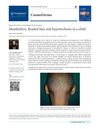
 A 9-year-old girl has a rare hair disorder causing beaded, sparse hair.
Trichoepithelioma and desmoplastic trichoepithelioma have distinct features that can be identified using reflectance confocal microscopy.
 6 citations
,
October 2012 in “Journal of Heredity”
6 citations
,
October 2012 in “Journal of Heredity” The Itpr3 gene causes a specific hair pattern in mice.
1 citations
,
April 2018 in “Journal of Investigative Dermatology” The Trichodysplasia spinulosa virus protein can cause abnormal hair growth in mice.
5 citations
,
September 2020 in “Proceedings - Baylor University. Medical Center” Tofacitinib successfully treated a woman's severe symptoms from a rare autoimmune condition.
 1 citations
,
July 2021 in “Anais Brasileiros de Dermatologia”
1 citations
,
July 2021 in “Anais Brasileiros de Dermatologia” The conclusion is that three signs can help diagnose hair loss after it happens, potentially avoiding more invasive tests.
December 2025 in “Biomedicines” Tyrosine kinase inhibitors for endocrine tumors often cause skin issues, requiring early management and treatment adjustments.
August 2024 in “Indian Journal of Dermatology Venereology and Leprology” 1 citations
,
January 2001 Cancer patients have lower immunity and higher virus and zinc levels in their hair.