 49 citations
,
October 2014 in “International Scholarly Research Notices”
49 citations
,
October 2014 in “International Scholarly Research Notices” Eclipta alba has many health benefits and contains compounds with potential for drug development.
November 2025 in “OPAL (Open@LaTrobe) (La Trobe University)” Tectona grandis leaves may help treat hair loss and inflammation.
 2 citations
,
July 2022 in “Frontiers in Cardiovascular Medicine”
2 citations
,
July 2022 in “Frontiers in Cardiovascular Medicine” Forsythiasides have multiple health benefits but may cause pseudoallergic reactions, and more research is needed.
 March 2024 in “Revista Agraria Academica”
 The Mediterranean dwarf palm has medicinal, nutritional, and craft uses, but more research is needed.
 46 citations
,
November 2011 in “Forest Ecology and Management”
46 citations
,
November 2011 in “Forest Ecology and Management” Understanding the fruiting patterns of Ficus trees can improve forest restoration by ensuring pollinators survive and biodiversity is supported.
2 citations
,
January 2023 in “Anais Brasileiros de Dermatologia” January 1976 in “Revista de Estudios Agrosociales” Frontal fibrosing alopecia and vitiligo might be linked by similar immune issues.
 November 2022 in “The journal of investigative dermatology/Journal of investigative dermatology”
 Linalool in personal care products may contribute to hair loss by damaging hair follicle stem cells and triggering harmful immune responses.
 February 2024 in “Planta”
 TRM21 helps control flavonoid production and root hair growth in Arabidopsis thaliana.
 1 citations
,
February 2021 in “Journal of Natural Remedies”
1 citations
,
February 2021 in “Journal of Natural Remedies” Ficus religiosa and Morus alba extracts improved hair growth and follicle regeneration in mice.
December 2025 in “Journal of the Bangladesh Agricultural University” Many weeds at Daffodil International University have important uses, like aiding hair growth and healing wounds.
Linalool in personal care products may worsen frontal fibrosing alopecia by damaging hair follicle stem cells and triggering harmful immune responses.
September 2024 in “Journal of Ethnopharmacology” Terminalia bellirica extracts effectively promote hair regrowth and treat androgenetic alopecia.

Maidenhair fern extract may help treat COVID-19 symptoms.
5 citations
,
January 2021 in “Pakistan Journal of Nematology” Citrullus colocynthis is a valuable natural option for medicine and pest control.
 January 2022 in “Pharmaceutical Sciences Asia”
 The extract from Clitoria ternatea flowers helps human skin cells grow and promotes hair growth in mice.
 November 2025 in “Zenodo (CERN European Organization for Nuclear Research)”
 Croton tiglium Linn. may promote hair growth but needs careful detoxification due to its toxicity.
 September 2022 in “Tropical grasslands-Forrajes tropicales”
 Leucaena feed helps farmers grow larger cattle herds and is good for fattening, but its safety for breeding cows is unclear.
 April 2016 in “Journal of The American Academy of Dermatology”
 The study found that Temporal Triangular Alopecia often starts in early childhood, while Folliculitis Decalvans is characterized by tufted hairs and redness around hair follicles.
1 citations
,
January 2024 in “Arab Board Medical Journal” Tofacitinib effectively regrows hair in alopecia areata patients, especially in younger individuals, with manageable side effects.
August 2025 in “Tropical Journal of Natural Product Research” Carthamus caeruleus L. extracts have strong antioxidant and anti-inflammatory effects.
 February 2022 in “Research Journal of Biotechnology”
 Eclipta alba L. is a medicinal plant with many health benefits, including treating diseases and promoting hair growth.
 20 citations
,
September 2015 in “Protein expression and purification”
20 citations
,
September 2015 in “Protein expression and purification” Scientists made safflower seeds produce a human growth factor that could help with hair growth and wound healing.
2 citations
,
June 2021 in “Sultan Qaboos University medical journal” Familial frontal fibrosing alopecia is rare, mostly affects women, and often occurs between sisters or mother-daughter pairs.
 January 2024 in “Deleted Journal”
 Thuja plants have medicinal properties and potential for developing new therapies.
 April 2016 in “Journal of The American Academy of Dermatology”
 The study found that Temporal Triangular Alopecia often starts in early childhood, mainly affects the left side of the scalp, and has no effective treatment except surgery.
 July 2018 in “Elsevier eBooks”
 Frontal Fibrosing Alopecia is a type of hair loss affecting mostly older women, with no agreed best treatment.
 March 2012 in “Al-Azhar Journal of Pharmaceutical Sciences”
 The plant Russelia equisetiformis has beneficial chemical compounds and effects.
 April 2012 in “Informa Healthcare eBooks”
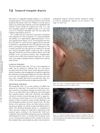
 Temporal triangular alopecia is a lifelong condition with hairless patches on the side of the head that may be present from birth.
 March 2023 in “PARIPEX INDIAN JOURNAL OF RESEARCH”
 Tofacitinib helped regrow hair in most patients with severe hair loss.