 January 2024 in “http://isrctn.com/”
 Teak leaf extract hair tonic was tested for hair growth and safety.
 August 2023 in “Journal of The American Academy of Dermatology”
 Valproic acid, a common antiepileptic medication, can cause reversible hair loss in patients.
 July 2023 in “Frontiers in veterinary science”
 Certain long non-coding RNAs are important for controlling hair growth cycles in sheep.
 May 2023 in “British Journal of Dermatology”
 COVID-19 can cause long-term skin problems and has changed how skin doctors work.
 November 2022 in “Journal of Investigative Dermatology”
 The fragrance cyclohexyl salicylate helps promote hair growth and increase hair stem cell numbers.
 June 2022 in “Journal of the turkish academy of dermatology”
 During the COVID-19 pandemic, some skin conditions became more common while others decreased.
 February 2022 in “CRC Press eBooks”
 Hair disorders include hair loss, excessive hair growth, and ingrown hairs, with various treatments available depending on the cause.
 January 2022 in “Journal of Dermatology and Dermatologic Surgery”
 Trichoscopy is useful for quickly diagnosing different types of hair loss without needing biopsies.
 September 2021 in “CRC Press eBooks”
 Lupus can cause a type of hair loss that doesn't scar, due to inflammation.
Skin diseases are common and need more specialized care.
 May 2021 in “Pakistan Journal of Medical and Health Sciences”
 Trichogram is useful for diagnosing hair disorders, but newer, non-invasive methods like trichoscopy are becoming more popular due to their sensitivity and ability to monitor treatment responses.
 March 2021 in “Research Square (Research Square)”
 Stress likely causes hair loss in Formosan macaques.
 March 2021 in “CRC Press eBooks”
 Physical exams are important in hair loss diagnosis, considering cosmetic history, systemic diseases, and classifying alopecia types.
 March 2021 in “CRC Press eBooks”
 Hair loss without scarring is more common than permanent hair loss with scarring, and is often due to genetic factors.
 January 2021 in “International journal of dermatology, venereology and leprosy sciences”
 Most adult women experiencing hair loss are aged 21-40, with the most common type being female pattern hair loss. Trichoscopy is a useful tool for diagnosing different types of hair loss.
 January 2021 in “Erciyes medical journal”
 The COVID-19 pandemic changed the types of skin conditions seen at a clinic, with fewer patients and varying numbers of specific conditions.
 September 2019 in “Journal of Investigative Dermatology”
 Sandalore® reduces hair shedding and increases hair volume in women with telogen effluvium.
 September 2019 in “Journal of Investigative Dermatology”
 Sandalore®, a synthetic scent, reduced hair loss and improved hair growth in women with telogen effluvium.
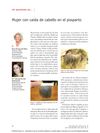 September 2016 in “Más dermatología”
 Postpartum hair loss usually stops within 4-6 months.
 January 2015 in “Springer eBooks”
 Understanding hair structure and growth is key for diagnosing hair diseases accurately.
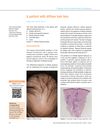 January 2015 in “Indian Dermatology Online Journal”
 The patient's hair loss is most likely due to diffuse alopecia areata.
 December 2014 in “PubMed”
 A scalp biopsy can help confirm hair loss types when other methods don't provide a clear diagnosis.
 January 2014 in “대한피부과학회지”
 A hepatitis B patient lost hair in patches after starting and stopping a treatment with pegylated interferon alpha2a.
 April 2012 in “Informa Healthcare eBooks”
 The document concludes that diagnosing hair loss requires evaluating multiple histological features, as no single feature is definitive on its own.

Early treatment is important for better hair regrowth in elderly women with hair loss.
 April 2010 in “Reactions Weekly”
 A woman's hair loss was likely caused by a cream used for skin treatment and improved after she stopped using it.
 January 2009 in “Springer eBooks”
 The document concludes that managing skin conditions during pregnancy is important and requires specialized care.
January 2005 in “한방재활의학과학회지” Most alopecia patients were young adults with oily scalps, often linked to stress and family history.
 July 2004 in “Dermatologic Surgery”
 A woman had temporary hair loss due to a stress-related condition after a facelift.
 October 1997 in “Dermatologic Surgery”
 The Epilight Hair Removal System is effective for temporary hair removal with few side effects, but more research is needed to confirm its safety and long-term results.