 February 2010 in “Journal of The American Academy of Dermatology”
 Surgery on a baby with a skin disorder improved eyelid position and eye health.
17 citations
,
August 2018 in “Ophthalmic Plastic and Reconstructive Surgery” In ptosis, brow elevation doesn't lift the eyelid but is driven by efforts to raise the eyelid.
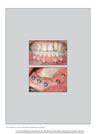 June 2017 in “International Journal of Periodontics & Restorative Dentistry”
 Using skin grafts from behind the ear for oral surgery in two patients with jaw injuries led to successful healing and good results.
 1 citations
,
November 2002 in “Neurosurgery Clinics of North America”
1 citations
,
November 2002 in “Neurosurgery Clinics of North America” The article concludes that cranial reconstruction should aim for the best aesthetic result, using various techniques tailored to individual needs and conditions.
 1 citations
,
June 2012 in “Revista Brasileira de Cirurgia Plástica”
1 citations
,
June 2012 in “Revista Brasileira de Cirurgia Plástica” The procedure is effective for reducing the forehead despite potential for visible scars.
 September 2009 in “Hair transplant forum international”
 Changing the direction of cuts can make it easier to put in implants.
 6 citations
,
November 2008 in “Hair transplant forum international”
6 citations
,
November 2008 in “Hair transplant forum international” Using a special knife helps improve hairline scars from surgery.
July 2024 in “LA CIENCIA AL SERVICIO DE LA SALUD Y NUTRICIÓN” The condition is harmless, doesn't worsen, and needs no invasive treatment.
A wavy two-layer closure in hair transplants makes scars nearly invisible for most patients.
 January 2018 in “Springer eBooks”
 Congenital triangular alopecia is a harmless, non-spreading hair loss condition often seen in young children.
January 2025 in “Surgical & Cosmetic Dermatology” Forehead reduction surgery can fix forehead defects and improve appearance.
20 citations
,
January 2014 in “International Journal of Oral and Maxillofacial Surgery” Using superficial temporal fascia helps prevent Frey syndrome after parotid surgery.
 29 citations
,
September 1989 in “Journal of The American Academy of Dermatology”
29 citations
,
September 1989 in “Journal of The American Academy of Dermatology” Abnormal scalp whorls can indicate brain development issues but may also be seen in neurologically normal people.
 April 2016 in “Plastic and reconstructive surgery. Global open”
 Surgery may help infants with sagittal craniosynostosis develop more typical language processing.
 March 2026 in “Clinical Cosmetic and Investigational Dermatology”
 Effective hair removal is crucial for better cosmetic results in forehead flap reconstruction, with laser hair removal being the preferred method.
 5 citations
,
October 2018 in “Dermatologic therapy”
5 citations
,
October 2018 in “Dermatologic therapy” Recognizing congenital triangular alopecia is crucial to avoid unnecessary treatments.
 July 2018 in “Nasza Dermatologia Online”
 Frontal fibrosing alopecia and ulerythema ophryogenes may be related and can evolve from one to the other.
 2 citations
,
April 2014 in “International Wound Journal”
2 citations
,
April 2014 in “International Wound Journal” The V-Y-S plasty is a safe and effective one-stage method for repairing medium to large scalp defects.
November 2023 in “Neurosurgical Review” The incision along the superior temporal line is safe and looks good for bald male patients.
 June 2024 in “Archives of Plastic Surgery”
 Hair transplantation on a reconstructed scalp can effectively improve hair growth and appearance.
 August 1998 in “Dermatologic Surgery”
 Dr. George A. Farber recommends using follicular unit transplantation for hair restoration because it gives a more natural look and has fewer problems compared to the older miniflap technique.
 October 2022 in “Indian journal of anatomy and surgery of head, neck and brain”
 The nasolabial flap is effective for repairing the mouth in patients with oral submucous fibrosis.
June 2022 in “Indian Journal of Ophthalmology/Indian journal of ophthalmology” Early and aggressive treatment is crucial for preserving vision in infants with AEC syndrome.
 73 citations
,
January 1997 in “British Journal of Ophthalmology”
73 citations
,
January 1997 in “British Journal of Ophthalmology” The coronal approach is effective and safe for reducing eye bulging in Graves' eye disease.
 57 citations
,
July 2005 in “Clinics in Plastic Surgery”
57 citations
,
July 2005 in “Clinics in Plastic Surgery” Reconstruct lips with proper planning, templates, and revisions for appearance and function.
 15 citations
,
January 2011 in “Annals of Dermatology”
15 citations
,
January 2011 in “Annals of Dermatology” The study concluded that neonatal occipital alopecia is common, not caused by physical friction, and usually resolves on its own without treatment.
 1 citations
,
December 2019 in “American journal of ophthalmology. Case reports”
1 citations
,
December 2019 in “American journal of ophthalmology. Case reports” A rare skin condition caused droopy and outward-turning eyelids in a patient.
 3 citations
,
May 2004 in “Journal of neurosurgery”
3 citations
,
May 2004 in “Journal of neurosurgery” Endoscopy-assisted surgery for craniosynostosis showed excellent outcomes with minimal complications and most patients went home the day after surgery.
 July 2025 in “Journal of Medical Science And clinical Research”
 A 21-year-old male has a rare scalp condition with excessive skin folds.
 50 citations
,
May 1999 in “Journal of Reconstructive Microsurgery”
50 citations
,
May 1999 in “Journal of Reconstructive Microsurgery” Microsurgical reconstruction effectively covers complex scalp defects but doesn't improve survival for cancer-related cases.