 July 2016 in “Journal of Cutaneous Medicine and Surgery”
 Receding hairlines in men are uneven, with the right side larger than the left.
 21 citations
,
November 2012 in “Plastic and Reconstructive Surgery”
21 citations
,
November 2012 in “Plastic and Reconstructive Surgery” Both genetic and lifestyle factors significantly affect female hair loss.
 23 citations
,
April 2021 in “Journal of Clinical Medicine”
23 citations
,
April 2021 in “Journal of Clinical Medicine” Frontal Fibrosing Alopecia's cause is unclear, affects mainly postmenopausal women, and current treatments focus on stopping hair loss rather than regrowth.
 175 citations
,
November 2009 in “PLOS ONE”
175 citations
,
November 2009 in “PLOS ONE” Women look young for their age due to larger lips, less sun damage, and genes that prevent gray hair and wrinkles.
 57 citations
,
January 2003 in “Clinical and experimental dermatology”
57 citations
,
January 2003 in “Clinical and experimental dermatology” Postmenopausal frontal fibrosing alopecia is a type of hair loss in postmenopausal women that may stop on its own but has no effective treatment.
 37 citations
,
April 2013 in “Plastic and Reconstructive Surgery”
37 citations
,
April 2013 in “Plastic and Reconstructive Surgery” Genetic and environmental factors, like smoking and exercise, affect male hair loss.
 23 citations
,
November 2018 in “Journal of the European Academy of Dermatology and Venereology”
23 citations
,
November 2018 in “Journal of the European Academy of Dermatology and Venereology” The study concluded that severity of Frontal fibrosing alopecia is not linked to how long someone has it, can start before menopause, and eyebrow loss may be an early sign.
 19 citations
,
May 2013 in “Annals of Oncology”
19 citations
,
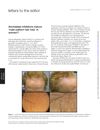
May 2013 in “Annals of Oncology” Aromatase inhibitors cause male pattern hair loss in women.
 9 citations
,
August 2018 in “Journal der Deutschen Dermatologischen Gesellschaft”
9 citations
,
August 2018 in “Journal der Deutschen Dermatologischen Gesellschaft” Most patients with frontal fibrosing alopecia are middle-aged women, often have thyroid disease, and some treatments can help stabilize the condition.
 4 citations
,
April 2013 in “Actas Dermo-Sifiliográficas”
4 citations
,
April 2013 in “Actas Dermo-Sifiliográficas” Most Spanish Caucasian women have a widow's peak, and their hormone levels suggest they process certain hormones faster.
 1 citations
,
July 2016 in “British Journal of Dermatology”
1 citations
,
July 2016 in “British Journal of Dermatology” Men with a certain type of hair loss often use facial moisturizers, and a specific antibiotic treatment may help another hair condition.
 December 2024 in “Indian Journal of Dermatology Venereology and Leprology”
 Atypical male hair loss may not respond to usual treatments.
 December 2024 in “Asian Journal of Medical Sciences”
 Low iron levels may be linked to hair loss in women with chronic telogen effluvium.
Local hairline measurements are important for better surgical results and early disease detection in Colombian women.
 169 citations
,
May 2006 in “Genes & Development”
169 citations
,
May 2006 in “Genes & Development” Keratin 17 is crucial for normal hair growth by regulating hair cycle transitions with TNFα.
50 citations
,
February 2016 in “Journal of Investigative Dermatology” A mutation in the KRT25 gene causes a rare hair disorder with thin, woolly hair.
 40 citations
,
November 1998 in “The journal of investigative dermatology/Journal of investigative dermatology”
40 citations
,
November 1998 in “The journal of investigative dermatology/Journal of investigative dermatology” S100A3 protein is crucial for hair shaft formation in mice.
 4 citations
,
December 2022 in “Frontiers in cell and developmental biology”
4 citations
,
December 2022 in “Frontiers in cell and developmental biology” Zebrafish larvae are used to study and find treatments for ear cell damage because they are easier to observe and test than mammals.
 2 citations
,
June 2020 in “BMC Health Services Research”
2 citations
,
June 2020 in “BMC Health Services Research” Health warnings and public health actions led to a significant drop in flutamide prescriptions for women, but off-label use still continues.
 1 citations
,
January 2019 in “Paediatrics and Child Health”
1 citations
,
January 2019 in “Paediatrics and Child Health” The document concludes that understanding hair biology and recognizing hair conditions are crucial for managing and treating hair loss in children.
 March 2026 in “International Journal of Molecular Sciences”
 A temporary capillary cell type helps skin repair after radiation by promoting blood vessel growth.
October 2025 in “Frontiers in Artificial Intelligence” "HairSentinel" accurately detects hairfall trends using simple user data, helping identify health risks early.
 July 2018 in “Elsevier eBooks”
 The most common cause of hair loss in children is tinea capitis, followed by alopecia areata and telogen effluvium.
 April 2016 in “Journal of The American Academy of Dermatology”
 The study found that Temporal Triangular Alopecia often starts in early childhood, while Folliculitis Decalvans is characterized by tufted hairs and redness around hair follicles.
 March 2026 in “International Journal of Science Strategic Management and Technology”
 WomenCare helps predict PCOD risk in women to encourage early medical consultation.
 April 2016 in “Journal of Investigative Dermatology”
 Blocking Prostaglandin D₂ (PGD₂) could help treat hair loss.
 January 2012 in “Journal of the Dermatology Nurses’ Association”
 The document explains hair growth, hair loss types, and other hair-related terms.
The document concludes that diagnosing female hair loss requires careful examination, with treatments varying by condition and psychological support often necessary.
 12 citations
,
January 1978 in “The Laryngoscope”
12 citations
,
January 1978 in “The Laryngoscope” Using a scalp flap for hair transplantation gives denser, faster results than older methods, but it's complex and needs careful planning.
 339 citations
,
February 2014 in “Journal of The American Academy of Dermatology”
339 citations
,
February 2014 in “Journal of The American Academy of Dermatology” Most patients with frontal fibrosing alopecia are postmenopausal women, and treatments like finasteride and dutasteride can improve or stabilize the condition.