25 citations
,
November 2005 in “PubMed” Finasteride changes androgen receptor location in rat epididymis without altering tissue structure.
193 citations
,
June 2007 in “The Plant Journal” GhDET2 is crucial for cotton fiber growth.
3 citations
,
April 2020 in “American Journal of Case Reports” A new mutation in the HJV gene was found in a young woman with juvenile hemochromatosis, causing unusual symptoms like secondary hypothyroidism.
 January 2025 in “BMJ Case Reports”
 Precocious puberty can signal familial adenomatous polyposis.
June 2008 in “The Knowledge Bank (The Ohio State University)” Smad2 and Smad3 are essential for normal skin development, and their absence causes severe skin issues and cancer.
 20 citations
,
May 2013 in “International Journal of Molecular Medicine”
20 citations
,
May 2013 in “International Journal of Molecular Medicine” Researchers found a new gene variant linked to a rare bone disease, which doesn't always cause symptoms in carriers.
 July 2011 in “British Journal of Dermatology”
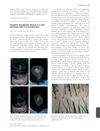
 Hormone treatment caused hair loss, finasteride helped regrowth.
37 citations
,
January 2010 in “Human Molecular Genetics” FTase and GGTase-I are essential for skin keratinocyte health.
43 citations
,
September 2001 in “Annals of Neurology” Hair root analysis can effectively detect somatic mosaicism in double cortex syndrome.
 November 2022 in “Journal of the Endocrine Society”
 A rare ovarian tumor caused high testosterone and excess hair in a woman, which was resolved after tumor removal.
 24 citations
,
November 2015 in “Annals of Nutrition and Metabolism”
24 citations
,
November 2015 in “Annals of Nutrition and Metabolism” Certain SHBG gene variants, like rs727428, are linked to higher testosterone levels in women with PCOS.
 111 citations
,
October 2008 in “Nature Genetics”
111 citations
,
October 2008 in “Nature Genetics” Researchers found a new gene area linked to male-pattern baldness, which, along with another gene, significantly increases the risk of hair loss in men.
30 citations
,
January 2013 in “Human Mutation” A mutation in the HOXC13 gene causes hair and nail problems in a Syrian family.
15 citations
,
August 2013 in “Gene” The MTHFR C677T mutation may increase the risk of alopecia areata in the Turkish population.
 May 2025 in “International Journal of Reproduction Contraception Obstetrics and Gynecology”
 Ovarian tumors should be considered when postmenopausal women show signs of virilization.
April 2019 in “Journal of Investigative Dermatology” Researchers created a new mouse model for studying scleroderma.
 81 citations
,
November 2012 in “Journal of the National Cancer Institute”
81 citations
,
November 2012 in “Journal of the National Cancer Institute” The tumor suppressor gene FLCN affects mitochondrial function and energy use in cells.
 November 2023 in “Scientific Reports”
 A gene mutation in Lama3 is linked to a common type of hair loss.
44 citations
,
December 2005 in “The Journal of Steroid Biochemistry and Molecular Biology” Combining 5α-reductase and aromatase inhibitors may better reduce estrogen levels.
 June 2025 in “International Journal of Applied Pharmaceutics”
 A testosterone-induced hair loss model in mice was successfully created for future research and treatment testing.
March 2021 in “AACE clinical case reports” A man with both Klinefelter syndrome and primary hyperparathyroidism showed a rare combination of symptoms and genetic patterns.
43 citations
,
April 2010 in “Clinical genetics” Truncating mutations in the C2orf37 gene cause Woodhouse–Sakati syndrome.
1 citations
,
June 2022 in “Frontiers in Neuroanatomy” Early hormones shape sex-specific differences in rat glands.
 May 2024 in “JCI insight”
 A variant in the ADAM17 gene causes hair loss by increasing protein degradation through TRIM47.
1 citations
,
July 2017 in “Cancer Research” Overexpressing NSD3 in mice causes breast cancer-like tumors and gland abnormalities.
April 2010 in “Dermatology Times” 
Testosterone in human pancreas cells boosts insulin production.
48 citations
,
October 2004 in “Molecular and Cellular Biology” Mice with a specific BRCA1 mutation have a higher risk of tumors, especially in the uterus and ovaries.
54 citations
,
December 2011 in “American Journal Of Pathology” A Gsdma3 mutation causes hair loss due to stem cell damage from skin inflammation.
 110 citations
,
October 2013 in “The Journal of Sexual Medicine”
110 citations
,
October 2013 in “The Journal of Sexual Medicine” Testosterone treatment in trans men increases body and facial hair and may lead to hair loss over time, but severe skin issues are rare.