36 citations
,
January 2000 in “British journal of dermatology/British journal of dermatology, Supplement” A mother and daughter had severe skin, hair, and eye issues linked to IFAP.
June 2025 in “British Journal of Dermatology” Tofacitinib was more effective than methotrexate for treating alopecia areata.
 15 citations
,
January 2020 in “BioMed Research International”
15 citations
,
January 2020 in “BioMed Research International” BTA safely and effectively treats hair loss, and works better with FNS.
June 2026 in “Virtual and Physical Prototyping” A new method creates precise, stable microscale structures with reduced friction and potential for complex designs.
July 2022 in “Journal of Cosmetic Dermatology” Isotretinoin with tacrolimus may be more effective short-term for treating frontal fibrosing alopecia than finasteride with tacrolimus.
990 citations
,
October 1999 in “Development” Activated LEF/TCF complexes are crucial for hair development and cycling.
June 2025 in “British Journal of Dermatology” Tofacitinib is more effective than methotrexate for treating moderate-to-severe alopecia areata.
3 citations
,
January 2025 in “Journal of the American Academy of Dermatology” Early diagnosis and a multidisciplinary approach are crucial for managing Frontal Fibrosing Alopecia.

Inhibiting AP-1 changes skin tumor types and affects tumor cell identity.
 32 citations
,
September 2017 in “Journal of the American Academy of Dermatology”
32 citations
,
September 2017 in “Journal of the American Academy of Dermatology” Oral isotretinoin effectively treats yellow facial papules in frontal fibrosing alopecia patients.
 76 citations
,
June 2018 in “EMBO Reports”
76 citations
,
June 2018 in “EMBO Reports” YAP and TAZ proteins are necessary for the development of two types of skin cancer.
 January 2025 in “Revista del Centro Dermatológico Pascua”
 Early diagnosis and treatment can help manage fibrosing alopecia in older women.
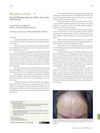 May 2019 in “Anais brasileiros de dermatologia/Anais Brasileiros de Dermatologia”
 Frontal fibrosing alopecia mostly affects postmenopausal women, with diagnosis often delayed by 3 years.

Traumatic anserine folliculosis is a harmless skin condition in young males that needs correct diagnosis to avoid unnecessary treatments.
 March 2023 in “Journal of Cosmetic Dermatology”
 A woman's progressive hair loss was correctly diagnosed as a rare condition called fibrosing alopecia in a pattern distribution after initially being mistaken for a more common type.
39 citations
,
May 2006 in “Molecular Plant-Microbe Interactions” Fusaric acid may help control Orobanche ramosa by activating plant defenses.
 April 2016 in “Plastic and reconstructive surgery. Global open”
 Tafluprost could be a potential treatment for hair loss by promoting hair growth phase changes.
 155 citations
,
September 2008 in “British journal of dermatology/British journal of dermatology, Supplement”
155 citations
,
September 2008 in “British journal of dermatology/British journal of dermatology, Supplement” FFA is more common in postmenopausal women, can affect younger women, and may stabilize over time.
321 citations
,
January 2012 in “Cell stem cell” TGF-β2 helps activate hair follicle stem cells by counteracting BMP signals.
July 2024 in “Journal of Investigative Dermatology” The Fas/FasL pathway may play a role in alopecia areata.
 16 citations
,
June 2009 in “Dermatologic Surgery”
16 citations
,
June 2009 in “Dermatologic Surgery” A 17-year-old boy with Temporal Triangular Alopecia successfully grew new hair after a hair restoration surgery using follicular unit transplantation.
7 citations
,
December 2023 in “International Journal of Molecular Sciences” Forsythiaside A helps protect cells and liver from damage by reducing oxidative stress and boosting antioxidants.
March 2005 in “Journal of the American Academy of Dermatology” Cosmetic treatments can replenish key amino acids in damaged hair, improving its strength and appearance.
April 2012 in “The FASEB Journal” LPA 4 helps control blood and lymph vessel development in zebrafish.
 September 1997 in “BioMed Research International”
 Female pattern hair loss often starts in teenage years, reduces hair density, and can impact quality of life.
 1 citations
,
May 2024 in “Dermatology and Therapy”
1 citations
,
May 2024 in “Dermatology and Therapy” Frontal Fibrosing Alopecia needs better diagnostics and treatments, with dutasteride showing promise.
60 citations
,
July 2014 in “Autophagy” The protein FLCN is involved in cellular cleanup and is regulated by ULK1.
 May 2024 in “International Seven Journal of Multidisciplinary”
 More research is needed to better understand and treat Fibrosing Frontal Alopecia.

Tofacitinib significantly improved symptoms in a patient with overlapping autoimmune disorders.
 68 citations
,
May 2016 in “Experimental dermatology”
68 citations
,
May 2016 in “Experimental dermatology” FFA's causes may include environmental triggers and genetic factors.