53 citations
,
June 2019 in “JEADV. Journal of the European Academy of Dermatology and Venereology/Journal of the European Academy of Dermatology and Venereology” Frontal fibrosing alopecia mainly affects postmenopausal women and may be linked to thyroid hormones.
20 citations
,
March 1975 in “Journal of steroid biochemistry/Journal of Steroid Biochemistry” The study concludes that a genetic mutation in TFM mice leads to reduced androgen receptor activity, affecting the body's response to male hormones.
 April 2023 in “World Journal Of Advanced Research and Reviews”
 Cosmetic products or emotional factors might contribute to Frontal Fibrosing Alopecia, and trichoscopy is useful for diagnosis.
 January 2025 in “International Journal of Dermatology Venereology and Leprosy Sciences”
 Tofacitinib improved hair regrowth and quality of life in children with alopecia areata, with mild side effects.
 February 2011 in “Annales de dermatologie et de vénéréologie”
 Tofacitinib shows promise for treating severe alopecia areata with good safety and effectiveness.
 October 2024 in “International Journal of Research in Dermatology”
 Tofacitinib is a promising and safe treatment for moderate to severe alopecia areata.
 September 2017 in “Journal of Investigative Dermatology”
 Thermal imaging is a useful non-invasive method to diagnose active inflammation in frontal fibrosing alopecia.
 23 citations
,
April 2021 in “Journal of Clinical Medicine”
23 citations
,
April 2021 in “Journal of Clinical Medicine” Frontal Fibrosing Alopecia's cause is unclear, affects mainly postmenopausal women, and current treatments focus on stopping hair loss rather than regrowth.
 36 citations
,
December 2017 in “Journal of the American Academy of Dermatology”
36 citations
,
December 2017 in “Journal of the American Academy of Dermatology” Most patients with frontal fibrosing alopecia stabilized with treatment, especially younger ones, using intralesional corticosteroids and tacrolimus.
 15 citations
,
November 2020 in “Pharmaceutics”
15 citations
,
November 2020 in “Pharmaceutics” Tofacitinib nanoparticles can safely and effectively treat alopecia areata by targeting hair follicles.
 13 citations
,
November 2021 in “Pediatric Dermatology”
13 citations
,
November 2021 in “Pediatric Dermatology” Tofacitinib taken by mouth helps treat hair loss in children.
 2 citations
,
April 2018 in “Journal of Investigative Dermatology”
2 citations
,
April 2018 in “Journal of Investigative Dermatology” Frontal fibrosing alopecia shows increased inflammation and JAK-STAT pathway activity without reduced hair proteins.
 February 2024 in “Skin research and technology”
 The research suggests that immune cells and a specific type of cell death called ferroptosis are involved in Frontal fibrosis alopecia.
Oral tofacitinib effectively treats alopecia areata long-term with manageable side effects.
July 2022 in “Journal of Cosmetic Dermatology” Isotretinoin with tacrolimus may be more effective short-term for treating frontal fibrosing alopecia than finasteride with tacrolimus.
 3 citations
,
February 2024 in “Journal of the American Academy of Dermatology”
3 citations
,
February 2024 in “Journal of the American Academy of Dermatology” Topical tofacitinib cream may help treat certain hair loss conditions with fewer risks.
 January 2025 in “Journal of Crohn s and Colitis”
 Tofacitinib is effective and safe for elderly patients with ulcerative colitis.
5 citations
,
September 2020 in “Proceedings - Baylor University. Medical Center” Tofacitinib successfully treated a woman's severe symptoms from a rare autoimmune condition.
 March 2020 in “Section 5: Patient safety and quality assurance”
 Tofacitinib and baricitinib had an acceptable level of side effects in rheumatoid arthritis patients.
 14 citations
,
July 2012 in “Journal of the American Academy of Dermatology”
14 citations
,
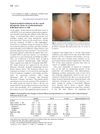
July 2012 in “Journal of the American Academy of Dermatology” Topical tacalcitol ointment can help improve symptoms of EFFC.
November 2025 in “Cancer Cell International” Cancer-associated fibroblasts promote tumor growth in skin cancer.
 1 citations
,
September 2021 in “CRC Press eBooks”
1 citations
,
September 2021 in “CRC Press eBooks” Frontal Fibrosing Alopecia is a hair loss condition mainly affecting postmenopausal women, with unclear causes and various clinical patterns.
 April 2018 in “Journal of Investigative Dermatology”
 Fetuin A may increase collagen production and promote scarring.
3 citations
,
May 2024 in “Indian Journal of Dermatology” Tofacitinib can cause a rare rash called SDRIFE, which resolves after stopping the drug.
39 citations
,
May 2006 in “Molecular Plant-Microbe Interactions” Fusaric acid may help control Orobanche ramosa by activating plant defenses.
 June 2017 in “Journal of the American Academy of Dermatology”
 Tofacitinib is effective and safe for treating severe alopecia areata and related conditions.
 2 citations
,
September 2022 in “Dermatologic Therapy”
2 citations
,
September 2022 in “Dermatologic Therapy” Tofacitinib is a promising treatment for severe alopecia areata, with many patients experiencing complete or partial hair regrowth.
 August 2021 in “Annals of Agricultural and Environmental Medicine”
 The article concludes that understanding Frontal Fibrosing Alopecia (FFA) is crucial for effective treatment, which includes medication like 5α-reductase inhibitors and hydroxychloroquine.
March 2005 in “Journal of the American Academy of Dermatology” Cosmetic treatments can replenish key amino acids in damaged hair, improving its strength and appearance.
 6 citations
,
January 2019 in “Medical Hypotheses”
6 citations
,
January 2019 in “Medical Hypotheses” Frontal Fibrosing Alopecia might be an autoimmune disease.