 August 2013 in “Nature Reviews Drug Discovery”
 New cancer treatments show promise in reducing tumor growth and improving skin regeneration in mice.
193 citations
,
June 2007 in “The Plant Journal” GhDET2 is crucial for cotton fiber growth.
The trichohyalin gene is located at chromosomal region 1q21 with other skin-related protein genes.
 33 citations
,
September 2017 in “Journal of clinical immunology”
33 citations
,
September 2017 in “Journal of clinical immunology” New treatments for immune disorders caused by FOXN1 deficiency are promising.
October 2017 in “DOAJ (DOAJ: Directory of Open Access Journals)” DA-9401 can protect against finasteride-induced reproductive damage in rats.
 45 citations
,
July 2009 in “Journal of human genetics”
45 citations
,
July 2009 in “Journal of human genetics” A gene variation is linked to hair thickness in Asians.
1 citations
,
October 2023 in “BMC Genomics” miRNAs in the Dlk1-Gtl2 region may improve lamb fur quality.
Vitamin D receptor helps prevent skin tumors.
 124 citations
,
September 1992 in “Endocrinology”
124 citations
,
September 1992 in “Endocrinology” The human type II 5α-reductase gene, linked to certain male health conditions, has a specific structure and low similarity to other related genes.
4 citations
,
May 2024 in “Cytotechnology” 12 citations
,
July 2004 in “Molecular genetics and genomics” A new mouse mutation causes skin and hair defects due to a gene change.
July 2026 in “bioRxiv (Cold Spring Harbor Laboratory)” FAKΔe4 helps cells sense and respond to different stiffness levels in their environment.
 8 citations
,
June 2012 in “PloS one”
8 citations
,
June 2012 in “PloS one” Mutations in Plcd1 and Plcd3 together cause severe hair loss in mice.
 April 2026 in “Frontiers in Medicine”
 Farudodstat may help prevent hair loss in alopecia areata by stopping immune attacks on hair follicles.
12 citations
,
March 2021 in “Journal of Investigative Dermatology” TRPM5 is crucial for maintaining hair growth.
28 citations
,
September 2014 in “Journal of Veterinary Internal Medicine” VDC-1101 shows potential as a treatment for canine cutaneous T-cell lymphoma.
Controlling Tslp can improve health in AEC syndrome patients.
 28 citations
,
March 2010 in “Histochemistry and cell biology”
28 citations
,
March 2010 in “Histochemistry and cell biology” Skin cells can help create early hair-like structures in lab cultures.
15 citations
,
January 1993 in “DNA sequence” KRT2.13 gene is similar to KRT2.9 but not expressed in hair follicles.
28 citations
,
June 2021 in “Frontiers in immunology” A protein called lfTSLP is important in causing allergic and other skin diseases and could be a target for treatment.
 82 citations
,
February 2017 in “Cold Spring Harbor Perspectives in Biology”
82 citations
,
February 2017 in “Cold Spring Harbor Perspectives in Biology” The TGF-β family helps control how cells change and move, affecting skin, hair, and organ development.
58 citations
,
February 2013 in “Journal of Biological Chemistry” LGR5 mainly stays inside cells, moving to the trans-Golgi network, and this process is important for its role in cell signaling.
22 citations
,
January 2009 in “Advances in experimental medicine and biology” FOXN1 mutations cause severe immunodeficiency, hair loss, nail issues, and thymus defects.
CRISPR gene editing reduces harmful molecules in cells from Emery–Dreifuss Muscular Dystrophy patients.
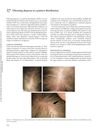 April 2012 in “Informa Healthcare eBooks”
 Fibrosing alopecia in a pattern distribution is a unique hair loss condition with inflammation and scarring, resembling but distinct from common balding.
578 citations
,
April 1993 in “Cell” TGFα gene mutation in mice causes abnormal skin, wavy hair, curly whiskers, and sometimes eye inflammation.
Matriptase-2 helps control iron levels by suppressing hepcidin, and its deficiency can cause iron-deficiency anemia.
 12 citations
,
June 2020 in “Frontiers in Cell and Developmental Biology”
12 citations
,
June 2020 in “Frontiers in Cell and Developmental Biology” The PP2A-B55α protein is essential for brain and skin development in embryos.
25 citations
,
October 2000 in “Gene” Gene regulatory regions evolve faster than protein coding regions, allowing new gene relationships without changing transcription factors.
1 citations
,
April 2021 in “IntechOpen eBooks” The PCR technique can identify genetic differences in a wool-related gene among different sheep breeds, which may help improve wool and pelt quality.