June 2007 in “Emergency medicine news” If someone has unexplained nerve pain and hair loss, doctors should check for thallium poisoning.
5 citations
,
March 2008 in “DMW - Deutsche Medizinische Wochenschrift” A man was poisoned with thallium, treated successfully, but still had some nerve issues after 6 months.
 1 citations
,
October 1935 in “Nature”
1 citations
,
October 1935 in “Nature” Potassium iodide prevents hair loss and reduces toxicity from thallium acetate.
January 2023 in “Indian Journal of Forensic and Community Medicine” Thallium poisoning is dangerous but treatable with specific medical interventions.
 May 2026 in “Sudovo-medična ekspertiza”
 Thallium poisoning is highly toxic, causing severe health problems and can be fatal.
 January 2024 in “Current research in toxicology”
 Thallium is highly toxic, causing severe health issues, and Prussian blue is the best antidote.
1 citations
,
May 2007 in “Emergency medicine news” Dr. Marina Kovalevsky and her daughter were hospitalized for suspected politically motivated thallium poisoning in Moscow.
 May 2026 in “The Scientific Issues of Ternopil Volodymyr Hnatiuk National Pedagogical University Series pedagogy”
 Thallium poisoning is highly toxic and can cause severe health issues or death.
 119 citations
,
June 1993 in “BMJ”
119 citations
,
June 1993 in “BMJ” Alopecia is a key indicator of thallium poisoning.
 February 2025 in “Frontiers in Veterinary Science”
 Prussian Blue successfully treated thallium poisoning in a dog.
 2 citations
,
June 2011 in “Journal of clinical and experimental investigations”
2 citations
,
June 2011 in “Journal of clinical and experimental investigations” Oral zinc sulphate is an effective and safe treatment for thallium poisoning, especially for skin and hair symptoms.
 March 2011 in “Journal of clinical and experimental investigations”
 Thallium poisoning can cause hair loss, skin rashes, and nerve damage, and can be fatal if not correctly diagnosed and treated.
 June 2011 in “Journal of clinical and experimental investigations”
 Oral zinc sulphate is an effective and safe treatment for thallium poisoning.
52 citations
,
May 2009 in “Human & experimental toxicology” Hair loss and polyneuropathy improved, but severe vision impairment persisted.
27 citations
,
January 2017 in “Journal of clinical and diagnostic research” A woman poisoned with thallium was successfully treated with activated charcoal and Prussian blue.
13 citations
,
October 2016 in “Journal of Clinical Neuroscience” Thallium poisoning can cause worsening nerve damage and vision loss without typical symptoms.
12 citations
,
January 2011 in “Journal of the Saudi Society of Dermatology & Dermatologic Surgery” Thallium poisoning from contaminated cake caused severe health issues in Baghdad, highlighting the need to ban thallium as a rodenticide.
June 2026 in “The Russian Archives of Internal Medicine” Thallium poisoning can be treated successfully with the right antidote.
 June 2025 in “Journal of Cluster Science”
 Metal nanoparticles show promise for treating hair loss but need more research to ensure safety.
December 2023 in “Ukraïnsʹkij žurnal sučasnih problem toksikologìï/Ukraïnsʹkij Žurnal Sučasnih Problem Toksikologìï” Better diagnosis and control of thallium poisoning are needed to prevent severe outcomes.
 7 citations
,
May 2014 in “Clinical practice”
7 citations
,
May 2014 in “Clinical practice” Cooling the scalp may prevent hair loss from chemotherapy, hair often grows back after treatment, and nail issues usually improve after stopping the drug.
26 citations
,
January 2018 in “Skin appendage disorders” Thallium, mercury, selenium, and colchicine strongly cause hair loss.
32 citations
,
December 1963 in “Pharmacological Reviews” Some drugs can cause hair loss and skin issues.
 December 2024 in “Problems of Biological Medical and Pharmaceutical Chemistry”
 Students from the Middle East and Moscow have different hair element levels due to their environments.
 January 1989 in “Side effects of drugs annual”
 Some cancer and immune system drugs can cause serious side effects, including heart, lung, nerve, and organ damage, which need careful monitoring and management.
 36 citations
,
January 2010 in “Human & experimental toxicology”
36 citations
,
January 2010 in “Human & experimental toxicology” Eating paradise nuts led to selenium poisoning, causing nausea, hair loss, and other symptoms in two women.
 18 citations
,
January 2015 in “Data series”
18 citations
,
January 2015 in “Data series” Hurricane Sandy increased contamination in estuarine sediments in New Jersey and New York.
 2 citations
,
September 1980 in “Experientia”
2 citations
,
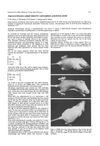
September 1980 in “Experientia” Polyethylene alanine caused hair loss in young lab animals but not in adults, with hair regrowth occurring within 20 days.
research Hair
3 citations
,
January 2014 in “Elsevier eBooks” Hair can reveal toxic elements and drugs in the body.