81 citations
,
February 2016 in “Veterinary pathology” Progeroid mouse models show signs of early aging similar to humans, helping us understand aging better.
45 citations
,
April 2009 in “Journal of anatomy” Cat claws stay sharp by shedding their outer layer through microcracks formed during activities.
19 citations
,
March 2008 in “Wound Repair and Regeneration” Prevent lower extremity arterial ulcers by screening for risk factors, using medical treatments, and involving interdisciplinary care.
3 citations
,
October 2021 in “Turkish Journal Of Neurology” Genetic analysis is crucial for diagnosing and managing cerebral arteriopathy.
November 2025 in “Preprints.org” New-onset fibromyalgia after COVID-19 is poorly understood and needs more research.
91 citations
,
May 2023 in “Journal of Cutaneous Medicine and Surgery” Alopecia Areata affects 2% globally, with treatments like essential oils, garlic, and JAK inhibitors showing promise, but more research is needed.
1 citations
,
May 2017 in “InTech eBooks” The chapter explains common scalp conditions, including infections, infestations, and tumors.
 1 citations
,
February 2017 in “Journal of gynecology and womens health”
1 citations
,
February 2017 in “Journal of gynecology and womens health” The document concluded that more research is needed to understand how estrogen affects the enzyme involved in hirsutism development.
81 citations
,
February 2014 in “EMBO molecular medicine” Activating Nrf2 in skin cells causes skin disease similar to chloracne in mice.
28 citations
,
June 1995 in “The Journal of Dermatology” The flaky skin mouse mutation is a natural model for studying human psoriasis.
 October 2020 in “Our Dermatology Online”
 Skin changes and high vitamin B12 levels can be early signs of cancer.
3 citations
,
October 2013 The new hydrogel and microemulsion could be better for hair loss treatment than current solutions.
 46 citations
,
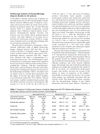
January 2015 in “Journal of The American Academy of Dermatology”
46 citations
,
January 2015 in “Journal of The American Academy of Dermatology” Trichoscopy helps diagnose and assess the severity of Frontal Fibrosing Alopecia.
 29 citations
,
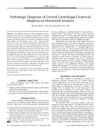
September 2014 in “American Journal of Dermatopathology”
29 citations
,
September 2014 in “American Journal of Dermatopathology” Horizontal sections of scalp biopsies are good for diagnosing Central Centrifugal Cicatricial Alopecia and help customize treatment.
 19 citations
,
November 1993 in “Mammalian Genome”
19 citations
,
November 1993 in “Mammalian Genome” A gene mutation in mice causes permanent hair loss and skin issues.
18 citations
,
March 1992 in “Archives of Dermatology” The man's scarring alopecia and skin issues did not improve with treatments.
10 citations
,
October 2018 in “JDDG Journal der Deutschen Dermatologischen Gesellschaft” Most skin conditions in Down syndrome are benign and involve dry or thickened skin.
 8 citations
,
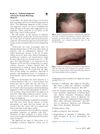
December 2017 in “Journal of The American Academy of Dermatology”
8 citations
,
December 2017 in “Journal of The American Academy of Dermatology” The authors updated the criteria for diagnosing frontal fibrosing alopecia, making it easier to diagnose without a biopsy.
 8 citations
,
September 2016 in “Pediatric dermatology”
8 citations
,
September 2016 in “Pediatric dermatology” People with Mucopolysaccharidoses often have skin problems like thick skin and extra hair, and recognizing these can help diagnose and treat the condition early.
 4 citations
,
March 2021 in “Parasitology Research”
4 citations
,
March 2021 in “Parasitology Research” Besnoitiosis, a parasitic disease, has been found in donkeys in Italy and may be more common in Europe than previously thought.
 2 citations
,
April 2017 in “Actas Dermo-Sifiliográficas”
2 citations
,
April 2017 in “Actas Dermo-Sifiliográficas” Best treatment for Frontal Fibrosing Alopecia is 5-alpha-reductase inhibitors and intralesional corticosteroids.
 1 citations
,
January 2020 in “Revista Brasileira de Ciência Veterinária”
1 citations
,
January 2020 in “Revista Brasileira de Ciência Veterinária” A cat in Brazil had severe skin issues worsened by improper treatment.
1 citations
,
November 2003 in “Annals of saudi medicine/Annals of Saudi medicine” A 17-year-old in Saudi Arabia was diagnosed with a rare skin condition causing red-brown facial patches.
 1 citations
,
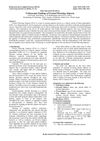
July 2020 in “Benha Journal of Applied Sciences”
1 citations
,
July 2020 in “Benha Journal of Applied Sciences” Trichoscopy is useful for diagnosing Frontal Fibrosing Alopecia.
 February 2025 in “Buletin Veteriner Udayana”
 The dog's scabies was successfully treated, leading to improved symptoms and hair regrowth.
 April 2024 in “Jurnal Ilmu Kesehatan Hewan”
 The cat fully recovered after treatment and showed no further symptoms.
 February 2024 in “Buletin Veteriner Udayana”
 Using sulfur soap helped improve skin problems in a dog with demodecosis.
 November 2023 in “The Bovine practitioner”
 A bull got very sick and had to be put down after eating hairy vetch for months.
 April 2023 in “The journal of investigative dermatology/Journal of investigative dermatology”
 The TRPV3 channel structure changes linked to severe itch and hyperkeratosis were identified using cryo-EM.
 December 2022 in “Exploratory animal and medical research”
 The study concluded that Acral lick dermatitis is most common in young male Labrador retrievers, often caused by psychological factors, and leads to skin inflammation and stress-related blood changes.