
Human hair keratins can be turned into useful 3D biomedical scaffolds through a freeze-thaw process.
 25 citations
,
May 2019 in “Heliyon”
25 citations
,
May 2019 in “Heliyon” Hair treatments cause significant structural changes, especially with excessive heat, regardless of ethnicity.
 4 citations
,
August 2014 in “Journal of molecular structure”
4 citations
,
August 2014 in “Journal of molecular structure” Chemical treatments on bleached black hair change its internal structure by breaking and reforming bonds, and treatments with hydrolyzed eggwhite protein help repair it.
 29 citations
,
August 2005 in “Biopolymers”
29 citations
,
August 2005 in “Biopolymers” L-cysteine slows down the breaking of bonds in hair due to electrostatic interactions.
 16 citations
,
October 2003 in “Journal of applied polymer science”
16 citations
,
October 2003 in “Journal of applied polymer science” 2-iminothiorane hydrochloride improves hair waving permanence without damage.
 13 citations
,
July 2017 in “Biopolymers”
13 citations
,
July 2017 in “Biopolymers” Recombinant keratins can form useful structures for medical applications, overcoming natural keratin limitations.
 6 citations
,
October 2016
6 citations
,
October 2016 Understanding how keratin structures in hair are arranged and interact is key for creating methods to extract and purify them.
 1 citations
,
July 2024 in “International Journal of Dermatology Venereology and Leprosy Sciences”
1 citations
,
July 2024 in “International Journal of Dermatology Venereology and Leprosy Sciences” Cysteine strengthens hair, and glutamine fuels hair growth.
 1 citations
,
January 2013
1 citations
,
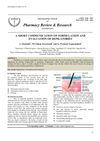
January 2013 Depilatories use chemicals to weaken hair for easy removal.
 20 citations
,
March 2013 in “Journal of Lipid Research”
20 citations
,
March 2013 in “Journal of Lipid Research” The research explains how a human enzyme binds and processes its substrate, which could relate to its role in biological functions and hair loss.
13 citations
,
September 2014 in “Journal of photochemistry and photobiology. B, Biology” UV radiation increases protein loss from hair and reduces hair protein quality.
8 citations
,
May 2020 in “International journal of biological macromolecules” Certain treatments can increase protein binding to natural hair but are less effective on permed hair.
10 citations
,
January 2012 in “International Journal of Cosmetic Science” Thioglycolic acid mainly affects the unordered areas in hair structure.
 January 2024 in “Molecules (Basel. Online)”
 Juglone from walnut extracts may help repair damaged hair.
January 2026 in “Colloids and Surfaces B Biointerfaces” A silicone treatment makes damaged hair more water-resistant and stronger.
70 citations
,
June 1998 in “Polymer” Permanent waving damages hair by disrupting its keratin structure.
51 citations
,
September 2012 in “Biomacromolecules” Disulfide bonds make keratin in hair stronger and tougher.
9 citations
,
January 1981 Nucleophilic reagents break down hair keratin, forming more lanthionine and lysinoalanine than in wool.
 February 2025 in “Biomimetics”
 The shampoo straightens hair while keeping it healthy and less damaged.
27 citations
,
May 2019 in “Cosmetics” The hair cuticle is made of tough proteins that protect the hair, but more research is needed to fully understand its structure.
 October 2024 in “Cosmetics”
 Afro-textured hair needs personalized care due to its unique genetic traits.
 May 2024 in “International Journal of Cosmetic Science”
 Disulfide bonds are crucial for hair's strength, especially when wet.
20 citations
,
December 2012 in “Journal of molecular structure” The study found that thioglycolic acid breaks down hair bonds more consistently than l-cysteine, which is less damaging to hair.
 August 2024 in “Cosmetics”
 K18® and Olaplex® both effectively repair bleached hair, improving its strength, smoothness, and overall health.
17 citations
,
January 2016 in “Journal of Drug Delivery” PEG and keratin scaffolds can effectively deliver protein drugs by controlling release based on pH levels.
 February 2026 in “Optics”
 Stretching wool changes its structure and improves fiber alignment.
August 2025 in “Applied Sciences” Peroxide-rich plasma-activated water is gentler on hair than nitrate-rich formulations.
 7 citations
,
September 2020 in “Journal of Cosmetic Dermatology”
7 citations
,
September 2020 in “Journal of Cosmetic Dermatology” Serum biomarkers like insulin-like growth factor-1 and vitamin D may help diagnose androgenetic alopecia.
 January 2013 in “Sen'i Gakkaishi”
 Microfibrils are key for permanent waves, and hydrolyzed keratin improves wave formation and hair condition.
 14 citations
,
April 2000 in “Animal Science/Animal science”
14 citations
,
April 2000 in “Animal Science/Animal science” Nutrients like vitamins, copper, zinc, and amino acids are crucial for healthy hair and wool growth.