
COVID-19 can cause skin problems and affect dermatology treatments, with recommendations for skin care and cautious use of certain drugs.
 May 2023 in “International Journal of Home Science”
 PCOS is linked to metabolic issues and infertility, needing more research.
 February 2023 in “Acta Scientific Women s Health”
 New treatments like PBMC, G-CSF, and PRP show promise for helping with repeated implantation failure.
 February 2023 in “Military Medical Science Letters”
 Platelet-rich plasma treatments reduce knee osteoarthritis inflammation, with pure PRP being more effective.
 January 2023 in “Pakistan Armed Forces Medical Journal”
  January 2023 in “World Journal of Clinical & Medical Images”
 Early diagnosis and prednisone treatment can improve outcomes in Cronkhite-Canada syndrome.
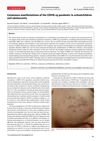 January 2023 in “Acta dermatovenerologica Alpina, Pannonica et Adriatica (Tiskana izd.)”
 The article concludes that schoolchildren and adolescents experienced various skin issues during the COVID-19 pandemic, including acne from masks and other skin reactions from the virus and vaccines.
 January 2023 in “Journal of men's health”
 Higher dihydrotestosterone may be linked to more inflammation in COVID-19 patients with low testosterone.

Lower LDL-c levels predict higher COVID-19 mortality.
 September 2022 in “Revista de la Asociación Colombiana de Dermatología y Cirugía Dermatológica”
 Skin symptoms appear in up to 20% of Covid-19 cases.
 July 2022 in “International Journal of Health Sciences”
 COVID-19 survivors may face long-term health issues affecting both mind and body.
Vitamin D is crucial for skin health and managing skin diseases.
 May 2022 in “Acta Scientific Women's Health”
 A woman lost over 80% of her hair due to a condition called telogen effluvium after having COVID-19.
 May 2022 in “Gastroenterology”
 Targeting NETs may help reduce fibrosis in Crohn's disease.
 April 2022 in “Archives of Medical Case Reports and Case Study”
 COVID-19 pneumonia requires more intensive care, including monitoring liver functions and DVT, due to higher D-dimer and procalcitonin levels.

No single biomarker is reliable enough for diagnosing and assessing SLE.
 March 2022 in “Scientific Journal of Kurdistan University of Medical Sciences”
 Oral contraceptives with desogestrel and drospirenone improve PCOS symptoms.
 January 2022 in “Journal Of Biotechnology And Crop Science”
 Liquorice has medicinal benefits, including antioxidant, anti-inflammatory, antimicrobial, antiulcer, and antiviral effects.
 January 2022 in “Dermatology Review”
 Higher IL-31 levels are linked to worse itching in chronic kidney disease patients.
 December 2021 in “Journal of oncology research reviews & reports”
 Polycystic Ovary Syndrome (PCOS) can lead to diabetes, heart disease, cancer, and mental health problems.
 May 2021 in “Letters in Applied NanoBioScience”
 Pranlukast and mirabegron may work as new diabetes drugs.
 April 2021 in “Journal of Law Public Policies and Human Sciences”
 The described COVID-19 treatments seemed effective in influencing the disease's course, duration, and severity.
 March 2021 in “Research Square (Research Square)”
 Strontium ranelate helps cartilage growth by blocking a specific cell pathway.
 February 2021 in “Indonesian Journal of Perinatology”
 Most pregnancies with SLE resulted in intrauterine growth restriction (IUGR).

Vaccination is crucial for public health, but anti-vaccine movements are a concern.
 November 2020 in “Elsevier eBooks”
 Antiandrogens and androgen inhibitors like spironolactone, finasteride, and dutasteride can treat hair loss and skin conditions, but they have risks and side effects, including potential harm to pregnant women and risks of cancer and heart issues. Herbal remedies also have antiandrogenic effects but lack safety validation.
 September 2020 in “Annals of the National Academy of Medical Sciences. India”
 COVID-19 can cause skin issues like "COVID toes," rashes, hair loss, and hand eczema, and dermatologists are important for recognizing these signs.
 September 2020 in “Journal of Education Health and Sport”
 Personalized treatment and teamwork among doctors can reduce chemotherapy side effects and improve patient outcomes.
 August 2020 in “Revista de chimie”
 Nitroglycerin ointment is now used to treat several skin conditions with fewer side effects.
 May 2020 in “Research Square (Research Square)”
 Hair follicle stem cells may help treat strokes.