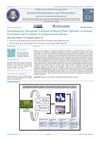
 3 citations
,
May 2024 in “Journal of Drug Delivery and Therapeutics”
3 citations
,
May 2024 in “Journal of Drug Delivery and Therapeutics” Aftimoon has potential health benefits for various diseases and could be integrated into modern healthcare.
1 citations
,
February 2025 in “Toxicology in Vitro” Diphlorethohydroxycarmalol may help treat hair loss better than current medications.
9 citations
,
March 2018 in “International journal of molecular sciences” Allopregnanolone changes gene expression in glioblastoma cells.
 May 2019 in “Asian Journal of Pharmaceutical and Clinical Research”
 Eclipta prostrata, particularly its chloroform fraction, effectively reduces inflammation and arthritis.
15 citations
,
July 2010 in “Journal of Allergy and Clinical Immunology” A new cream, DHMEQ, reduces allergic skin inflammation effectively.
 January 2021 in “Natural Products Chemistry & Research”
 Combining Datura metel leaf and flower extracts can enhance hair growth without skin irritation.
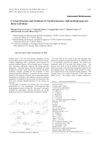 2 citations
,
October 2001 in “Analytical Sciences”
2 citations
,
October 2001 in “Analytical Sciences” A new compound that could treat various androgen-related conditions was created and analyzed.
 15 citations
,
June 2018 in “Journal of Chromatographic Science”
15 citations
,
June 2018 in “Journal of Chromatographic Science” Researchers developed a method to measure plant compounds in rat blood and found they are quickly absorbed and eliminated within 36 hours.
1 citations
,
January 2016 in “Journal of Clinical & Experimental Dermatology Research”  2 citations
,
August 2013 in “International Journal of Herbal Medicine”
2 citations
,
August 2013 in “International Journal of Herbal Medicine” No single treatment effectively cures hirsutism, and evidence for herbal remedies is weak.
32 citations
,
January 2012 in “Chinese Medicine” Urtica dioica (stinging nettle) is a potential natural antioxidant for medicinal and cosmetic use.
November 2025 in “Journal of Investigative Dermatology” Dithranol reduces inflammation in alopecia areata by lowering certain immune responses.
1 citations
,
April 2024 in “Journal of Dermatological Science”  February 2014 in “Revista Argentina de Cardiología”
 Androgens may increase arrhythmias in Brugada Syndrome, while Finasteride could reduce them.
July 2025 in “Journal of Food Chemistry and Nanotechnology” Snake gourd has health benefits and potential for use in medicine and supplements.
5 citations
,
January 1983 in “PubMed” Human skin releases different steroids, with some coming from sebaceous glands and others from sweat glands.
26 citations
,
January 1992 in “Carcinogenesis” TPA strongly increases ODC activity in certain skin cells, potentially aiding tumor growth.
![The Synthesis of (−)-4-Methyl-8-Chloro-Trans-1,2,3,4,4a,5,6,10b-Octahydrobenzo-[f]-Quinolin-3-One-[3-14C] (LY300502-14C) via a Circuitous Route](/images/assets/73bab8dc-bdf0-45e3-8ef7-73d0d4b93cb1/small/21074.jpg) 3 citations
,
October 1994 in “Journal of Labelled Compounds and Radiopharmaceuticals”
3 citations
,
October 1994 in “Journal of Labelled Compounds and Radiopharmaceuticals” Scientists made a carbon-14 labeled version of a drug with a 48% yield and over 99% purity.
 November 2022 in “Journal of Investigative Dermatology”
 Apocynin may protect skin cells from aging and damage caused by UVB light.
 March 2026 in “Frontiers in Pharmacology”
 Taxifolin, found in onions and milk thistle, has health benefits but needs more research for safe use.
16 citations
,
November 2018 in “Medicinal Chemistry” The compound GD-23 may reduce anxiety like diazepam by targeting the TSPO receptor.
January 2022 in “International Journal of Pharmacognosy and Pharmaceutical Sciences” Semecarpus anacardium Linn. has multiple medicinal benefits, including anti-inflammatory and antioxidant effects.
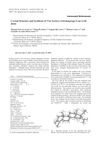 August 2002 in “Analytical Sciences”
 The document concludes that a compound with potential for treating prostate cancer and hair loss was successfully made and its detailed structure was confirmed.
6 citations
,
February 2023 in “Cosmetics” Nostoc verrucosum extracts may help reduce melanin production and have antioxidant properties.
 3 citations
,
March 2017 in “International Journal of Ayurvedic Medicine”
3 citations
,
March 2017 in “International Journal of Ayurvedic Medicine” Bhrungaraj (Eclipta alba) shows potential for drug development based on its traditional uses and pharmacological evidence.
January 2015 in “SciDok (Saarland University and State Library)” Clobetasol nanocarriers can be effectively delivered to hair follicles, with uptake improved by massage and affected by particle type.
 23 citations
,
November 2015 in “Phytotherapy Research”
23 citations
,
November 2015 in “Phytotherapy Research” Certain herbal compounds, especially from bitter melon, can inhibit cancer growth and promote hair growth by blocking PAK1.
January 2002 in “HAL (Le Centre pour la Communication Scientifique Directe)” The enzyme system in hair follicles is similar to the liver's and is inhibited by certain substances.
147 citations
,
August 2005 in “The Plant Cell” The TIP1 gene is crucial for normal plant cell growth in Arabidopsis.
 August 2011 in “Planta Medica”
 4-O-methylhonokiol from Magnolia Officinalis may promote hair growth by interfering with TGF-β1 effects in skin cells.