 April 2019 in “Dermatology reports”
 A 12-year-old boy's hair fully regrew after 8 weeks of treatment for tinea capitis, and dermoscopy was useful for diagnosis and monitoring.
 January 2019 in “Open access journal of mycology & mycological sciences”
 The article concludes that proper antifungal treatment is essential for treating scalp fungal infections in children, and trichoscopy is useful for diagnosis and monitoring.
September 2018 in “Digital Access to Scholarship at Harvard (DASH) (Harvard University)” FN nanofiber dressings improve wound healing and restore natural skin structure.

Hair loss due to a repaired brain bulge was successfully treated using a tissue expansion technique.
 June 2018 in “The Medical Journal of Cairo University/The Medical Journal of Cairo University”
 Dermoscopy can quickly and reliably distinguish Tinea Capitis from Alopecia Areata by identifying specific hair patterns.

Tinea capitis in adults often leads to misdiagnosis or delayed diagnosis due to atypical symptoms, requiring careful examination for proper treatment.
April 2018 in “Journal of Investigative Dermatology” African spiny mice can regenerate skin and hair after wounds due to specific tissue mechanics.
April 2018 in “Veterinary Pathology” Tigers had a skin condition causing hair loss and inflammation, but the cause is unknown and treatment didn't work.
February 2018 in “Archivio Istituzionale della Ricerca (Universita Degli Studi Di Milano)” Ferroportin in macrophages is crucial for hair growth and skin healing by managing iron distribution.
January 2018 in “eScholarship (California Digital Library)” Hair follicle stem cells may cause squamous cell carcinoma due to a metabolic shift towards glycolysis.
Griseofulvin is still the best treatment for tinea capitis.
 June 2017 in “Çocuk Enfeksiyon Dergisi/Journal of Pediatric Infection”
 Tinea capitis can rarely cause urticarial skin reactions in children.
 June 2017 in “International Journal of Research in Dermatology”
 Skin problems in Timbi were linked to jobs, education, and often improved by treating related health issues, but were worsened by steroid misuse.
April 2017 in “The journal of investigative dermatology/Journal of investigative dermatology” Researchers developed a method to grow human hair follicles using 3D-printed skin models and modified cells.
December 2016 in “Indonesian Journal of Tropical and Infectious Disease/Indonesian Journal of Tropical an Infectious Disease” Double pulse dose terbinafine effectively treats kerion type of tinea capitis.
 December 2016 in “Journal of Pakistan Association of Dermatology”
 Tissue expansion is a safe primary method for hair restoration in patients with large scalp defects before hair transplantation.
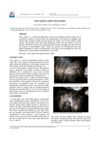
An adult Libyan woman was successfully treated for a rare scalp infection usually seen in children.
 April 2016 in “Journal of Investigative Dermatology”
 Scientists have found a way to grow hair follicles from human cells in a lab, which could help treat hair loss and skin damage.

Tissue from dog stem cells helped grow hair in mice.
August 2015 in “PubMed Central” Epithelial-derived Pop-Up Keratinocytes (ePUKs) may enhance wound healing in regenerative medicine.
 August 2015 in “MOJ proteomics & bioinformatics”
 ePUKs could be valuable for regenerative medicine due to their wound healing abilities.
 May 2015 in “Journal of The American Academy of Dermatology”
 Laser treatment is safe and can effectively treat toenail fungus, especially when combined with other treatments if no improvement is seen after about a year.
 January 2015 in “Farmatsevtychnyĭ zhurnal”
 The tincture made from nettle, sage, and horse chestnut in a 5:3:2 ratio is effective for treating telogen effluvium.
New bio-ink can print complex tissues and organs.
 December 2014 in “Berkala Ilmu Kesehatan Kulit dan Kelamin”
 Griseofulvin effectively treats tinea capitis kerion type.
January 2013 in “Journal of Tissue Engineering and Reconstructive Surgery” Inserting hair follicle units improved the development of tissue-engineered skin.
 April 2012 in “Journal of the American Academy of Dermatology”
 Dermoscopy can help diagnose tinea capitis in children by looking for comma hairs, black dots, and broken hairs with white bands.
Tissue engineering advancements are improving skin substitutes for better burn treatment.
November 2011 in “International Society of Hair Restoration Surgery” Keratins are key to developing and regenerating hair follicles for treating hair loss.
January 2011 in “Zhonghua zhongyiyao xuekan” Yiqi Huayu medicine can effectively reduce BPH in rats by lowering MMP-2 levels and blood vessel growth.