2 citations
,
January 2018 in “International Journal of Trichology” Two sisters had a rare hair condition without other usual symptoms.
 April 2023 in “Journal of Investigative Dermatology”
 Melatonin may help prevent hair loss caused by the chemotherapy drug paclitaxel.
April 2026 in “The Plant Journal” MYB83 limits root hair growth and helps plants tolerate nutrient deficiencies.
3 citations
,
April 2025 in “Science Advances” Loss of Ten1 in mice causes telomere shortening and symptoms similar to human dyskeratosis congenita.
25 citations
,
September 2005 in “Journal of Investigative Dermatology Symposium Proceedings” Adding zinc to pyrithione zinc improves its effectiveness against scalp conditions like dandruff.
28 citations
,
October 1987 in “PubMed” Lithium temporarily stops cell division in plant cells, but this can be reversed with certain chemicals.
 11 citations
,
December 2016 in “Journal of Molecular Neuroscience” January 2020 in “Archivio Istituzionale della Ricerca (Universita Degli Studi Di Milano)”
11 citations
,
December 2016 in “Journal of Molecular Neuroscience” January 2020 in “Archivio Istituzionale della Ricerca (Universita Degli Studi Di Milano)” Polycomb Repressive Complex 1 is crucial for keeping stem cells stable and maintaining healthy adult tissues.
 19 citations
,
August 2012 in “Cell death and differentiation”
19 citations
,
August 2012 in “Cell death and differentiation” Intu gene is crucial for hair follicle formation by helping keratinocytes differentiate through primary cilia.
 1 citations
,
May 2025 in “Natural Products and Bioprospecting”
1 citations
,
May 2025 in “Natural Products and Bioprospecting” PEVIII is a promising treatment for Pseudomonas aeruginosa keratitis.
5 citations
,
June 2015 in “The Journal of Dermatology” HTLV-1-associated lichenoid dermatitis (HALD) is linked to an immune response against HTLV-1-infected cells.
January 2026 in “Journal of Dermatological Science” DcR3 helps heal wounds and regrow hair by changing macrophages to a repair-focused type.
January 2011 in “Linchuang pifuke zazhi” 1 citations
,
June 2012 in “OhioLink ETD Center (Ohio Library and Information Network)” A new 3-D bioreactor system improves drug screening and reduces animal testing.
January 2013 in “eScholarship (California Digital Library)” Activating Wnt signaling improves the efficiency and safety of creating stem cells.
333 citations
,
March 2000 in “Proceedings of the National Academy of Sciences” Overexpressing GLI-1 in mice skin can cause tumors like human basal cell carcinomas.
4 citations
,
October 2016 in “The journal of investigative dermatology/Journal of investigative dermatology” Using an anti-ICAM-1 antibody with rapamycin improves hair transplant survival in monkeys.
 54 citations
,
July 1967 in “Science”
54 citations
,
July 1967 in “Science” Decomposed tritiated thymidine is less accurate for DNA tracing, and hair changes can indicate malnutrition.
1 citations
,
January 1998 in “International journal of cancer” Rubbing vitamin D3 on skin can help prevent hair loss from chemotherapy and slow breast tumor growth in mice.
215 citations
,
November 2000 in “Journal of Investigative Dermatology” The system allows precise control of gene expression in mouse skin, useful for studying skin biology.
 23 citations
,
January 2005 in “Nihon Ishinkin Gakkai zasshi”
23 citations
,
January 2005 in “Nihon Ishinkin Gakkai zasshi” Nested PCR can reliably identify fungal infections when traditional methods fail.
1 citations
,
August 2025 in “Epigenetics & Chromatin” H3K4me3 helps control RSPO3 to influence hair growth and development.
 February 2026 in “Zenodo (CERN European Organization for Nuclear Research)”
 The F3 hair serum with curry leaves and butterfly pea flower is effective against dandruff and fungi.
 February 2026 in “Zenodo (CERN European Organization for Nuclear Research)”
 The F3 hair serum with curry leaves and butterfly pea flower is effective against dandruff and fungi.
 January 2013 in “Hair transplant forum international”
 The document's content couldn't be processed for a summary.
January 2009 in “OhioLink ETD Center (Ohio Library and Information Network)” p63 and p73 regulate the vitamin D receptor, affecting cancer cell behavior and vitamin D sensitivity.
 April 2012 in “Informa Healthcare eBooks”
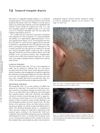
 Temporal triangular alopecia is a lifelong condition with hairless patches on the side of the head that may be present from birth.
 April 2016 in “The journal of investigative dermatology/Journal of investigative dermatology”
 RPGRIP1L helps skin cells stick together by blocking PKCβII, which can prevent skin blistering like in pemphigus.
 11 citations
,
June 2012 in “Acta histochemica”
11 citations
,
June 2012 in “Acta histochemica” Mice with a Gsdma3 gene mutation have thicker skin and longer hair follicle openings due to increased β-catenin levels.
 271 citations
,
March 1999 in “Developmental biology”
271 citations
,
March 1999 in “Developmental biology” The research shows that a gene called Wnt3 affects hair growth and structure, causing short hair and balding when overactive.